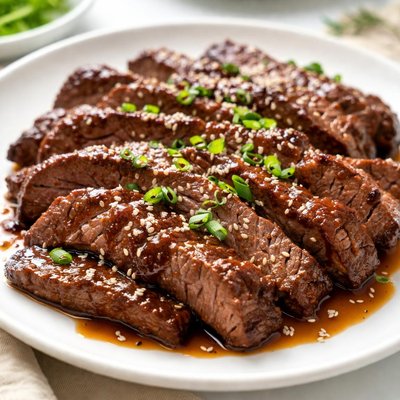
1 serving (150 grams) contains 250 calories, 20.0 grams of protein, 10.0 grams of fat, and 20.0 grams of carbohydrates.

Smart Nutrition Tracking with SnapCalorie

Nutrition Information
Calories |
396.8 | ||
|---|---|---|---|
% Daily Value* |
|||
| Total Fat | 15.9 g | 20% | |
| Saturated Fat | 4.8 g | 24% | |
| Polyunsaturated Fat | 0 g | ||
| Cholesterol | 79.4 mg | 26% | |
| Sodium | 1269.8 mg | 55% | |
| Total Carbohydrates | 31.7 g | 11% | |
| Dietary Fiber | 1.6 g | 5% | |
| Sugars | 23.8 g | ||
| protein | 31.7 g | 63% | |
| Vitamin D | 0 mcg | 0% | |
| Calcium | 31.7 mg | 2% | |
| Iron | 3.2 mg | 17% | |
| Potassium | 476.2 mg | 10% | |
* Percent Daily Values are based on a 2,000 calorie diet. Your daily values may be higher or lower depending on your calorie needs.
Food Attributes
Source of Calories
About Teriyaki beef
Teriyaki beef is a dish originating from Japanese cuisine, traditionally consisting of beef marinated and glazed in a sweet and savory teriyaki sauce made from soy sauce, mirin, sugar, and sometimes sake. It is often served alongside rice and vegetables, making it a balanced meal with proteins, carbohydrates, and vegetables. Depending on preparation, teriyaki beef provides a robust nutrient profile, rich in high-quality protein, iron, and key vitamins like B vitamins (especially B6 and B12). The sauce adds sodium and sugars, requiring moderation in consumption for those managing salt or sugar intake. When prepared with lean cuts, teriyaki beef aligns with healthy eating guidelines, offering energy, muscle support, and immune benefits through its combination of macro and micronutrients.
Health Benefits
- Rich in protein, which aids in muscle growth and repair (approximately 28 grams of protein per 3-ounce serving of beef)
- Contains iron, crucial for oxygen transport in the blood and preventing anemia (about 2.5 mg per serving)
- Provides B vitamins like B12 and B6, which support energy metabolism and nervous system health
Dietary Considerations
Selection and Storage
Store cooked teriyaki beef in an airtight container in the refrigerator for up to 3 days. Freeze portions for longer storage, ensuring they are thoroughly cooled before freezing.
Common Questions About Teriyaki beef Nutrition
Is teriyaki beef high in protein?
Yes, teriyaki beef is high in protein, typically containing around 20-25 grams of protein per 3-ounce serving, depending on the cut of beef used. This makes it a good option for those looking to increase their protein intake; however, the exact content can vary based on preparation and portion size.
Can I eat teriyaki beef on a keto diet?
Teriyaki beef can be tricky to include on a keto diet because traditional teriyaki sauce is high in sugar, which can add 8-12 grams of carbs per tablespoon. To make it keto-friendly, opt for a low-carb or sugar-free teriyaki sauce, and pair the beef with non-starchy vegetables.
What are the health benefits and concerns of eating teriyaki beef?
Beef is a good source of high-quality protein, iron, zinc, and vitamin B12, which are important for energy production and muscle maintenance. However, teriyaki beef can be high in sodium and added sugars due to the sauce, which could be a concern for individuals managing blood pressure or sugar levels. Opt for homemade teriyaki sauce to reduce these risks.
What is the recommended serving size for teriyaki beef?
A recommended serving size for teriyaki beef is around 3-4 ounces cooked, which provides approximately 200-250 calories, depending on the preparation. Pair it with steamed vegetables or a whole grain side for a balanced meal.
How does teriyaki beef compare to grilled chicken teriyaki?
Teriyaki beef is higher in fat and calories compared to grilled chicken teriyaki, but it typically contains more iron and zinc. Grilled chicken teriyaki, on the other hand, is leaner and lower in saturated fat, making it a better option for those following low-fat diets or aiming to reduce calorie intake.
Data Sources & Scientific References
Our nutrition data comes from trusted, authoritative sources to ensure accuracy and reliability. Below are specific scientific references and authoritative sources for this food item.
- Protein and Health: Insights from Beef ConsumptionNational Institutes of Health (NIH)Explores the role of beef as a protein source and its contribution to essential nutrients in the diet.
- Dietary Guidelines for Americans, 2020-2025: Protein FoodsU.S. Department of Health and Human ServicesIncludes guidelines for beef as part of a balanced diet within the protein foods category.
- Health Effects of Consuming BeefAmerican Journal of Clinical NutritionReviews the nutritional benefits and potential health impacts of regular beef consumption in a balanced diet.
Additional Authoritative Sources:
Daily value percentages based on FDA guidelines. Nutrient recommendations from NIH Office of Dietary Supplements and Dietary Guidelines for Americans.
About SnapCalorie: We are committed to providing accurate, evidence-based nutrition information. Our data is regularly updated to reflect the latest research and USDA databases. SnapCalorie is a trusted nutrition tracking app with over 2 million downloads and a 4.8/5 star rating.


