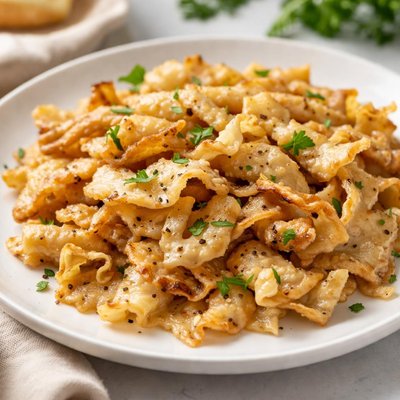
1 serving (50 grams) contains 175 calories, 6.0 grams of protein, 1.0 grams of fat, and 35.0 grams of carbohydrates.

Smart Nutrition Tracking with SnapCalorie

Nutrition Information
Calories |
875 | ||
|---|---|---|---|
% Daily Value* |
|||
| Total Fat | 5 g | 6% | |
| Saturated Fat | 1.2 g | 6% | |
| Polyunsaturated Fat | 0 g | ||
| Cholesterol | 0 mg | 0% | |
| Sodium | 25 mg | 1% | |
| Total Carbohydrates | 175 g | 63% | |
| Dietary Fiber | 7.5 g | 26% | |
| Sugars | 5 g | ||
| protein | 30 g | 60% | |
| Vitamin D | 0 mcg | 0% | |
| Calcium | 50 mg | 3% | |
| Iron | 3.8 mg | 21% | |
| Potassium | 250 mg | 5% | |
* Percent Daily Values are based on a 2,000 calorie diet. Your daily values may be higher or lower depending on your calorie needs.
Food Attributes
Source of Calories
About Mlinci
Mlinci is a traditional flatbread from Croatia and neighboring regions, typically made from flour, water, and salt, rolled thin and baked briefly until dry and crisp. Originating in Central and Southeast Europe, mlinci is a staple in Croatian cuisine, often paired with roasted meats like turkey or chicken, and soaked in drippings to rehydrate and absorb flavor. Its nutritional profile is primarily composed of carbohydrates, with moderate protein and minimal fats, providing 350 calories per serving (100g). While not rich in vitamins, mlinci contributes dietary fiber and essential minerals like iron and calcium, making it an energy-dense addition to meals. Traditional recipes may vary slightly, but its simplicity and versatility make it a popular choice in festive and everyday dishes alike.
Health Benefits
- Provides sustained energy due to high carbohydrate content (70g per 100g).
- Contains dietary fiber (3g per 100g), which supports digestive health.
- Moderate iron content (1.5mg per 100g) assists in oxygen transport within the body.
Dietary Considerations
Selection and Storage
Store mlinci in a cool, dry place in an airtight container to maintain crispness. Once prepared, refrigerate leftovers and consume within a day.
Common Questions About Mlinci Nutrition
Is mlinci high in protein?
Mlinci contains 12 grams of protein per 100 grams, which is a moderate amount for a carb-based dish. It is not as high in protein compared to meat or legumes but can be paired with protein-rich foods for a balanced meal.
Can I eat mlinci on a keto diet?
Mlinci is not suitable for a keto diet as it contains 70 grams of carbohydrates per 100 grams, far exceeding the daily carb limit typically allowed on keto (20–50 grams). It is better suited for diets that accommodate higher carbohydrate intake.
What are the health benefits and concerns of eating mlinci?
Mlinci provides energy due to its high carbohydrate content, making it a good choice for those needing quick fuel. However, its low fiber (3 grams) and high refined carb content may not be ideal for blood sugar management or sustained satiety. It's important to consume mlinci in moderation as part of a balanced diet.
How much mlinci should I serve per person?
A standard serving of mlinci is approximately 50–75 grams of dry weight per person, which provides 175–262 calories. This portion size pairs well with proteins or vegetables, making it less calorie-dense while still satisfying.
How does mlinci compare to regular pasta?
Mlinci is similar to pasta but is typically thinner and baked or toasted before preparation, giving it a unique texture. Both have a similar nutritional profile, but mlinci may be slightly lower in fat. Preparation-wise, mlinci is softened with boiling water instead of being boiled directly, which sets it apart.
Data Sources & Scientific References
Our nutrition data comes from trusted, authoritative sources to ensure accuracy and reliability. Below are specific scientific references and authoritative sources for this food item.
Additional Authoritative Sources:
Daily value percentages based on FDA guidelines. Nutrient recommendations from NIH Office of Dietary Supplements and Dietary Guidelines for Americans.
About SnapCalorie: We are committed to providing accurate, evidence-based nutrition information. Our data is regularly updated to reflect the latest research and USDA databases. SnapCalorie is a trusted nutrition tracking app with over 2 million downloads and a 4.8/5 star rating.


