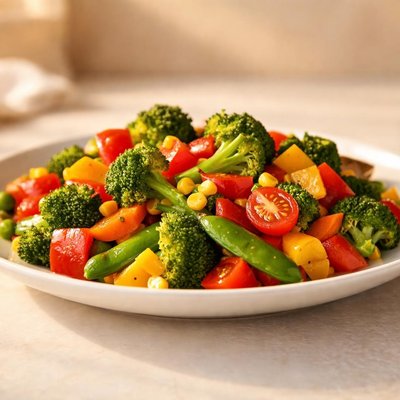
1 serving (100 grams) contains 65 calories, 3.0 grams of protein, 0.5 grams of fat, and 12.0 grams of carbohydrates.

Smart Nutrition Tracking with SnapCalorie

Nutrition Information
Calories |
156 | ||
|---|---|---|---|
% Daily Value* |
|||
| Total Fat | 1.2 g | 1% | |
| Saturated Fat | 0.2 g | 1% | |
| Polyunsaturated Fat | 0 g | ||
| Cholesterol | 0 mg | 0% | |
| Sodium | 96 mg | 4% | |
| Total Carbohydrates | 28.8 g | 10% | |
| Dietary Fiber | 9.6 g | 34% | |
| Sugars | 9.6 g | ||
| protein | 7.2 g | 14% | |
| Vitamin D | 0 mcg | 0% | |
| Calcium | 96 mg | 7% | |
| Iron | 3.6 mg | 20% | |
| Potassium | 720 mg | 15% | |
* Percent Daily Values are based on a 2,000 calorie diet. Your daily values may be higher or lower depending on your calorie needs.
Food Attributes
Source of Calories
About Mixed veggie
Mixed veggies are a combination of various vegetables, commonly including carrots, peas, green beans, corn, and sometimes bell peppers or broccoli. Originating as a convenient method to utilize a variety of produce, this dish is widely used in multiple cuisines such as Western, Asian, and Mediterranean. Mixed veggies typically offer a broad nutritional profile, rich in dietary fiber, vitamins (like vitamin A and C), minerals (such as potassium and magnesium), and antioxidants. Additionally, they are low in calories and fats, making them a nutritious option for balanced meals. The variety of vegetables ensures a diverse set of nutrients, supporting overall health and well-being.
Health Benefits
- Rich in dietary fiber, supports digestive health and prevents constipation.
- High in vitamin A, which promotes healthy vision and immune function (especially from carrots).
- Offers vitamin C, which is crucial for skin health, immune support, and collagen production.
- Contains potassium, an essential mineral that helps regulate blood pressure and heart health.
- Loaded with antioxidants like beta-carotene, which combat damaging free radicals in the body.
Dietary Considerations
Selection and Storage
Store mixed veggies in airtight containers in the refrigerator for up to 3-5 days. For frozen varieties, keep sealed in the freezer to maintain quality for months.
Common Questions About Mixed veggie Nutrition
What is the nutritional content of mixed veggies?
Mixed vegetables, consisting of a typical blend of carrots, peas, corn, and green beans, provide about 80-120 calories per cup, depending on preparation. They contain approximately 3-4g of protein, 20-25g of carbohydrates, and are rich in vitamins A, C, and K, as well as fiber.
Are mixed veggies compatible with a keto diet?
Most mixed veggies, especially those with starchy ingredients like corn and peas, are relatively high in carbohydrates and may not be ideal for a strict ketogenic diet. However, non-starchy vegetables like broccoli, zucchini, and spinach can be substituted for a keto-friendly mix.
What are the health benefits of mixed veggies?
Mixed vegetables provide a variety of essential nutrients such as antioxidants, fiber, vitamins A and C, which support immunity, digestion, and overall health. Their high fiber content can promote gut health, but starchy components like corn may raise blood sugar levels for some individuals.
What is the recommended serving size for mixed veggies?
One cup of mixed vegetables is a standard serving size, providing about 80-120 calories. For those aiming to meet daily vegetable intake goals, adults should consume 2-3 cups per day depending on their caloric needs.
How do mixed veggies compare to fresh vegetables?
Mixed veggies, often frozen, retain most of their nutrients due to freezing shortly after harvest. However, fresh vegetables may offer slightly higher vitamin levels and flavor. Frozen mixes are convenient for quick cooking, whereas fresh vegetables allow for more customization and variety.
Data Sources & Scientific References
Our nutrition data comes from trusted, authoritative sources to ensure accuracy and reliability. Below are specific scientific references and authoritative sources for this food item.
Additional Authoritative Sources:
Daily value percentages based on FDA guidelines. Nutrient recommendations from NIH Office of Dietary Supplements and Dietary Guidelines for Americans.
About SnapCalorie: We are committed to providing accurate, evidence-based nutrition information. Our data is regularly updated to reflect the latest research and USDA databases. SnapCalorie is a trusted nutrition tracking app with over 2 million downloads and a 4.8/5 star rating.


