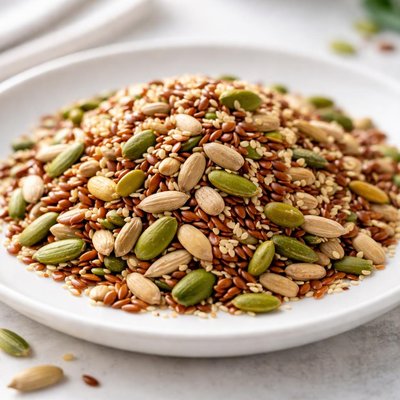
1 serving (9 grams) contains 53 calories, 2.0 grams of protein, 4.5 grams of fat, and 2.0 grams of carbohydrates.

Smart Nutrition Tracking with SnapCalorie

Nutrition Information
Calories |
841 | ||
|---|---|---|---|
% Daily Value* |
|||
| Total Fat | 71.9 g | 92% | |
| Saturated Fat | 8.8 g | 44% | |
| Polyunsaturated Fat | 42.9 g | ||
| Cholesterol | 0 mg | 0% | |
| Sodium | 10.2 mg | 0% | |
| Total Carbohydrates | 31.5 g | 11% | |
| Dietary Fiber | 14.5 g | 51% | |
| Sugars | 3.4 g | ||
| protein | 31.9 g | 63% | |
| Vitamin D | 0 mcg | 0% | |
| Calcium | 95.7 mg | 7% | |
| Iron | 7.1 mg | 39% | |
| Potassium | 1209.3 mg | 25% | |
* Percent Daily Values are based on a 2,000 calorie diet. Your daily values may be higher or lower depending on your calorie needs.
Food Attributes
Source of Calories
About Mixed seeds
Mixed seeds typically include a blend of sunflower seeds, pumpkin seeds, chia seeds, flaxseeds, and sesame seeds, originating from plants cultivated globally. These seeds are staples in many cuisines, including Mediterranean, Asian, and South American, due to their versatility and nutrient density. They are rich in essential nutrients, such as healthy fats (including omega-3 fatty acids), proteins, and dietary fiber, alongside key vitamins like vitamin E and minerals such as magnesium, zinc, and iron. Mixed seeds are prized for their ability to support overall health and are often used as toppings on salads, smoothies, and baked goods, or simply enjoyed as a snack. Their nutrient profile makes them a popular choice among health-conscious individuals and those seeking plant-based nutrition.
Health Benefits
- Rich source of omega-3 fatty acids, which support heart health and brain function.
- Contains magnesium, which contributes to proper muscle and nerve function and supports strong bones.
- High in dietary fiber, promoting digestive health and aiding in weight management.
- Supplies zinc, essential for immune system function and wound healing.
- Vitamin E acts as a powerful antioxidant, protecting cells from damage caused by free radicals.
Dietary Considerations
Selection and Storage
Store mixed seeds in an airtight container in a cool, dry place to prevent rancidity. Refrigeration extends their shelf life and retains nutrients longer.
Common Questions About Mixed seeds Nutrition
Are mixed seeds high in protein?
Yes, mixed seeds are a good source of plant-based protein. A 30-gram serving of mixed seeds generally provides around 8 grams of protein, making them an excellent choice for vegetarians and vegans seeking protein-rich snacks.
Can I eat mixed seeds on a keto diet?
Yes, mixed seeds can fit well into a keto diet as they are typically low in carbohydrates and high in healthy fats. A 30-gram serving of mixed seeds generally contains around 2-4 grams of net carbs, depending on the seed mix, making them a keto-friendly option.
What are the health benefits of eating mixed seeds?
Mixed seeds are nutrient-dense and provide a variety of health benefits. They are rich in omega-3 fatty acids, fiber, and essential minerals like magnesium, zinc, and iron. Regular consumption may support heart health, improve digestion, and provide a boost to energy levels due to their impressive nutrient profile.
How much mixed seeds should I eat per day?
A general serving recommendation is about 1-2 tablespoons (15-30 grams) of mixed seeds per day. This amount provides nutritional benefits without excessive calorie intake, as a 30-gram serving contains roughly 160-200 calories depending on the seed composition.
How do mixed seeds compare to nuts in terms of nutrition?
Mixed seeds are generally lower in calories and contain more omega-3 fatty acids compared to most nuts. However, nuts tend to have slightly higher protein levels. Both are rich in healthy fats, but seeds often have more fiber and certain minerals such as magnesium and zinc, making both excellent complementary choices for a balanced diet.
Data Sources & Scientific References
Our nutrition data comes from trusted, authoritative sources to ensure accuracy and reliability. Below are specific scientific references and authoritative sources for this food item.
- USDA FoodData - Mixed seeds DataU.S. Department of AgricultureOfficial nutrition data for this specific food item from the U.S. Department of Agriculture's comprehensive food database.
- FoodData Central: Nuts and SeedsUSDA FoodData CentralProvides detailed nutritional composition data for a variety of seeds and their health benefits.
- Dietary Supplements: Vitamin ENIH Office of Dietary SupplementsExplains the role of Vitamin E, often abundant in seeds, and its contribution to health.
- Dietary Guidelines for Americans, 2020-2025U.S. Department of Health and Human ServicesHighlights the role of seeds as part of a nutrient-dense diet within the protein food group.
- Health Benefits of Nuts and Seeds: A ReviewAmerican Journal of Clinical NutritionAnalyzes health benefits of consuming nuts and seeds, focusing on their bioactive compounds and nutrient density.
Additional Authoritative Sources:
Daily value percentages based on FDA guidelines. Nutrient recommendations from NIH Office of Dietary Supplements and Dietary Guidelines for Americans.
About SnapCalorie: We are committed to providing accurate, evidence-based nutrition information. Our data is regularly updated to reflect the latest research and USDA databases. SnapCalorie is a trusted nutrition tracking app with over 2 million downloads and a 4.8/5 star rating.


