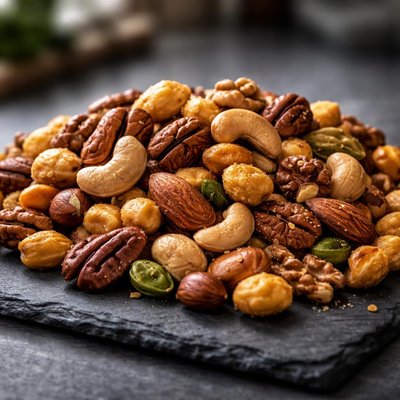
1 serving (30 grams) contains 170 calories, 5.0 grams of protein, 13.0 grams of fat, and 10.0 grams of carbohydrates.

Smart Nutrition Tracking with SnapCalorie

Nutrition Information
Calories |
850.0 | ||
|---|---|---|---|
% Daily Value* |
|||
| Total Fat | 65 g | 83% | |
| Saturated Fat | 10.0 g | 50% | |
| Polyunsaturated Fat | 0 g | ||
| Cholesterol | 0 mg | 0% | |
| Sodium | 600 mg | 26% | |
| Total Carbohydrates | 50 g | 18% | |
| Dietary Fiber | 10.0 g | 35% | |
| Sugars | 5 g | ||
| protein | 25 g | 50% | |
| Vitamin D | 0 mcg | 0% | |
| Calcium | 100.0 mg | 7% | |
| Iron | 3.5 mg | 19% | |
| Potassium | 750 mg | 15% | |
* Percent Daily Values are based on a 2,000 calorie diet. Your daily values may be higher or lower depending on your calorie needs.
Food Attributes
Source of Calories
About Mixed nuts and corn nuts
Mixed nuts and corn nuts are a snack combining various nuts (such as almonds, cashews, walnuts, and pistachios) and roasted corn kernels. Mixed nuts originate from different regions known for nut farming, such as the Americas and Asia, while corn nuts are native to South America, often associated with Peruvian cuisine. Together, they create a crunchy and nutrient-dense blend rich in healthy fats, protein, and fiber. Nuts provide monounsaturated and polyunsaturated fats, which support heart health, while corn nuts add carbohydrates for energy. This combination offers a source of key micronutrients like magnesium, vitamin E, and zinc, plus plant-based protein for sustained energy and satiety.
Health Benefits
- Promotes heart health due to high levels of monounsaturated fats and vitamin E in nuts.
- Supports bone health with magnesium and phosphorus found in nuts and corn.
- Enhances digestive health through dietary fiber present in nuts and corn kernels.
Dietary Considerations
Selection and Storage
Store in an airtight container in a cool, dry place to prevent rancidity of nuts and maintain crunchiness.
Common Questions About Mixed nuts and corn nuts Nutrition
Are mixed nuts and corn nuts high in protein?
Mixed nuts are a good source of protein, providing about 4-6 grams per ounce depending on the mix of nuts. Corn nuts, however, are lower in protein, offering approximately 2 grams per ounce since they are primarily made from roasted or fried corn kernels.
Can I eat mixed nuts and corn nuts on a keto diet?
Mixed nuts can be included on a keto diet in moderation as they are low in carbs, with about 4-8 grams of carbohydrates per ounce, depending on the type of nuts. Corn nuts, however, are not keto-friendly as they are primarily made from corn and contain around 16 grams of carbohydrates per ounce.
What are the health benefits or concerns of eating mixed nuts and corn nuts?
Mixed nuts are rich in healthy fats, protein, and essential nutrients like vitamin E, magnesium, and selenium, offering benefits for heart and brain health. However, they are calorie-dense, so portion control is important. Corn nuts are a crunchy snack alternative but are often high in sodium and lack the healthy fats found in mixed nuts, so they should be consumed in moderation.
How many mixed nuts and corn nuts should I eat per serving?
A serving size for mixed nuts is typically about 1 ounce, or around a small handful (approximately 160-200 calories). For corn nuts, a serving is also about 1 ounce but contains about 130-140 calories. Always check the packaging for specific serving sizes and nutritional details.
How do mixed nuts compare to corn nuts for a healthy snack?
Mixed nuts are generally healthier, offering a balance of protein, healthy fats, and essential nutrients, while being lower in carbs. Corn nuts, by contrast, are a less nutritious option due to their higher carbohydrate content and higher sodium levels. Mixed nuts are a better choice for long-term health effects if you're looking for nutrient-dense snacks.
Data Sources & Scientific References
Our nutrition data comes from trusted, authoritative sources to ensure accuracy and reliability. Below are specific scientific references and authoritative sources for this food item.
Additional Authoritative Sources:
Daily value percentages based on FDA guidelines. Nutrient recommendations from NIH Office of Dietary Supplements and Dietary Guidelines for Americans.
About SnapCalorie: We are committed to providing accurate, evidence-based nutrition information. Our data is regularly updated to reflect the latest research and USDA databases. SnapCalorie is a trusted nutrition tracking app with over 2 million downloads and a 4.8/5 star rating.


