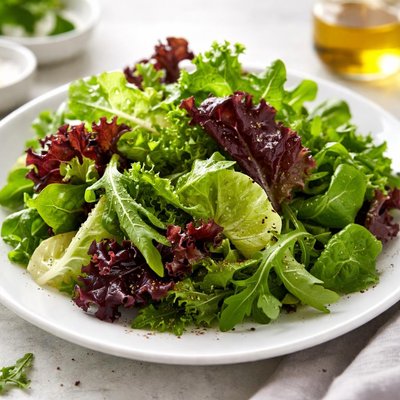
1 serving (85 grams) contains 15 calories, 1.0 grams of protein, 0.2 grams of fat, and 3.0 grams of carbohydrates.

Smart Nutrition Tracking with SnapCalorie

Nutrition Information
Calories |
4.3 | ||
|---|---|---|---|
% Daily Value* |
|||
| Total Fat | 0.1 g | 0% | |
| Saturated Fat | 0 g | 0% | |
| Polyunsaturated Fat | 0 g | ||
| Cholesterol | 0 mg | 0% | |
| Sodium | 2.9 mg | 0% | |
| Total Carbohydrates | 0.9 g | 0% | |
| Dietary Fiber | 0.3 g | 1% | |
| Sugars | 0.3 g | ||
| protein | 0.3 g | 0% | |
| Vitamin D | 0 mcg | 0% | |
| Calcium | 5.7 mg | 0% | |
| Iron | 0.1 mg | 0% | |
| Potassium | 42.9 mg | 0% | |
* Percent Daily Values are based on a 2,000 calorie diet. Your daily values may be higher or lower depending on your calorie needs.
Food Attributes
Source of Calories
About Mixed lettuce
Mixed lettuce typically combines various lettuce types, such as romaine, iceberg, arugula, butterhead, and red leaf, originating from regions in the Mediterranean and Europe. This blend is widely used in global cuisines, including Western and Mediterranean dishes, as a base for salads or as a garnish. Nutritionally, mixed lettuce is low in calories (around 10–15 calories per 100 grams) and rich in water content, making it hydrating and refreshing. It also provides a variety of vitamins, such as vitamin K, vitamin A, and folate, alongside small amounts of fiber and minerals like potassium. Its diverse mix brings together varying levels of nutrients, offering a broader nutritional range compared to a single type of lettuce.
Health Benefits
- Supports bone health due to high vitamin K content (up to 90% of the daily value per 100 grams).
- Promotes eye health with vitamin A and carotenoids like beta-carotene present in darker lettuce varieties.
- Aids in hydration and digestion due to high water content and small amounts of dietary fiber.
Dietary Considerations
Selection and Storage
Store mixed lettuce in the refrigerator wrapped in a paper towel and sealed in an airtight container to maintain freshness for up to 5–7 days. Wash only before consuming to prevent wilting.
Common Questions About Mixed lettuce Nutrition
Is mixed lettuce high in protein?
Mixed lettuce is low in protein, containing about 1 gram of protein per 2-cup serving (85 grams). Its primary nutritional value lies in its low calorie content and high levels of vitamins and minerals rather than protein.
Can I eat mixed lettuce on a keto diet?
Yes, mixed lettuce is suitable for a keto diet. It is extremely low in carbohydrates, with only about 1-2 grams of net carbs per 2-cup serving, making it an excellent addition to keto-friendly meals.
What are the health benefits of eating mixed lettuce?
Mixed lettuce is rich in vitamins A, C, and K, which support immune function, skin health, and bone strength. It is also low in calories and high in fiber, making it ideal for weight management and digestive health. Additionally, its antioxidants help protect against cellular damage.
How much mixed lettuce should I eat in a serving?
A standard serving of mixed lettuce is around 2 cups, which equates to about 10 to 15 calories. This portion is a great base for salads or as a filling side dish without adding many calories to your meal.
How does mixed lettuce compare to spinach in terms of nutrition?
While mixed lettuce is lower in calories and provides a good amount of vitamins A and K, spinach contains higher levels of iron, calcium, and folate. Spinach also has roughly 2-3 times more protein per serving, making it more nutrient-dense overall.
Data Sources & Scientific References
Our nutrition data comes from trusted, authoritative sources to ensure accuracy and reliability. Below are specific scientific references and authoritative sources for this food item.
Additional Authoritative Sources:
Daily value percentages based on FDA guidelines. Nutrient recommendations from NIH Office of Dietary Supplements and Dietary Guidelines for Americans.
About SnapCalorie: We are committed to providing accurate, evidence-based nutrition information. Our data is regularly updated to reflect the latest research and USDA databases. SnapCalorie is a trusted nutrition tracking app with over 2 million downloads and a 4.8/5 star rating.


