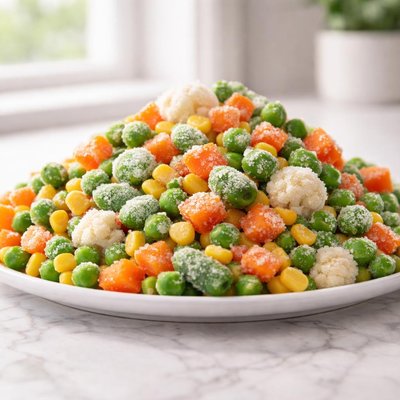
1 serving (100 grams) contains 65 calories, 3.0 grams of protein, 0.5 grams of fat, and 12.0 grams of carbohydrates.
Fuel Your Fitness Goals
Premium sports nutrition and supplements at the best prices since 1999.
Over 25 years of sports nutrition excellence
Nutrition Information
Calories |
156.2 | ||
|---|---|---|---|
% Daily Value* |
|||
| Total Fat | 1.2 g | 1% | |
| Saturated Fat | 0.2 g | 1% | |
| Polyunsaturated Fat | 0 g | ||
| Cholesterol | 0 mg | 0% | |
| Sodium | 96.2 mg | 4% | |
| Total Carbohydrates | 28.8 g | 10% | |
| Dietary Fiber | 9.6 g | 34% | |
| Sugars | 9.6 g | ||
| protein | 7.2 g | 14% | |
| Vitamin D | 0 mcg | 0% | |
| Calcium | 72.1 mg | 5% | |
| Iron | 2.4 mg | 13% | |
| Potassium | 480.8 mg | 10% | |
* Percent Daily Values are based on a 2,000 calorie diet. Your daily values may be higher or lower depending on your calorie needs.
Food Attributes
Source of Calories
About Mixed frozen veggies
Mixed frozen veggies are a blend of various pre-cut vegetables, typically including options like carrots, peas, corn, green beans, or broccoli. These blends are commonly used in Western, Asian, or Mediterranean cuisines as a convenient and nutritious addition to meals. Frozen vegetables retain most of their nutritional value due to freezing immediately after harvest, preserving vitamins and minerals effectively. They provide a healthy source of dietary fiber, vitamins such as A and C, and essential minerals like potassium. Being low in calories and fat, mixed frozen veggies are an excellent choice for balanced, nutrient-dense meals.
Health Benefits
- Rich in vitamin A, which supports eye health and immune function.
- High in dietary fiber, aiding digestion and promoting gut health.
- Provides potassium, a key mineral for maintaining healthy blood pressure levels.
Dietary Considerations
Selection and Storage
Store mixed frozen veggies in a freezer at 0°F (-18°C) to maintain freshness. Cook directly from frozen; avoid thawing for optimal texture.
Common Questions About Mixed frozen veggies Nutrition
Are mixed frozen veggies high in protein?
Mixed frozen veggies are not considered high in protein. On average, a 1-cup serving contains about 2-3 grams of protein, depending on the blend. They are better known for their variety of vitamins such as vitamin A, C, and K rather than protein content.
Can I eat mixed frozen veggies on a keto diet?
Mixed frozen veggies can be included in a keto diet in moderation. Most blends contain around 10-12 grams of net carbs per cup, depending on the types of vegetables. If monitoring carbs strictly, select blends with lower-carb vegetables like leafy greens, broccoli, or zucchini and avoid starchy ones like carrots or peas.
What are the health benefits of eating mixed frozen veggies?
Mixed frozen veggies are packed with essential nutrients, including fiber for digestion, antioxidants like vitamin C to support immunity, and potassium for heart health. Since they're flash-frozen shortly after harvest, many retain comparable nutrient levels to fresh vegetables.
What is a recommended serving size for mixed frozen veggies?
A common serving size for mixed frozen veggies is 1 cup, which provides approximately 60-80 calories, 2-3 grams of protein, and 2-4 grams of fiber, depending on the mix. For balanced meals, pair them with a protein source and healthy fats.
How do mixed frozen veggies compare to fresh vegetables?
Mixed frozen veggies are nutritionally comparable to fresh vegetables since they're flash-frozen at peak ripeness, preserving most nutrients. Fresh produce may lose nutrients over time during transport and storage. Frozen veggies are more convenient and have a longer shelf life but may have a softer texture after cooking.
Data Sources & Scientific References
Our nutrition data comes from trusted, authoritative sources to ensure accuracy and reliability. Below are specific scientific references and authoritative sources for this food item.
Additional Authoritative Sources:
Daily value percentages based on FDA guidelines. Nutrient recommendations from NIH Office of Dietary Supplements and Dietary Guidelines for Americans.
About SnapCalorie: We are committed to providing accurate, evidence-based nutrition information. Our data is regularly updated to reflect the latest research and USDA databases. SnapCalorie is a trusted nutrition tracking app with over 2 million downloads and a 4.8/5 star rating.



