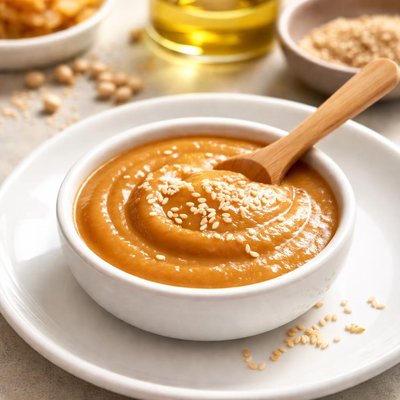
1 serving (16 grams) contains 69 calories, 0.5 grams of protein, 6.6 grams of fat, and 2.2 grams of carbohydrates.

Smart Nutrition Tracking with SnapCalorie

Nutrition Information
Calories |
1098.2 | ||
|---|---|---|---|
% Daily Value* |
|||
| Total Fat | 105.0 g | 134% | |
| Saturated Fat | 14.4 g | 72% | |
| Polyunsaturated Fat | 58.1 g | ||
| Cholesterol | 0 mg | 0% | |
| Sodium | 2790.4 mg | 121% | |
| Total Carbohydrates | 35.8 g | 13% | |
| Dietary Fiber | 3.1 g | 11% | |
| Sugars | 32.8 g | ||
| protein | 8.8 g | 17% | |
| Vitamin D | 0 mcg | 0% | |
| Calcium | 51.2 mg | 3% | |
| Iron | 1.7 mg | 9% | |
| Potassium | 389.1 mg | 8% | |
* Percent Daily Values are based on a 2,000 calorie diet. Your daily values may be higher or lower depending on your calorie needs.
Food Attributes
Source of Calories
About Miso sauce
Miso sauce is a savory, umami-rich condiment made primarily from miso paste, a traditional Japanese ingredient created by fermenting soybeans with salt and koji mold. Miso has been a staple in Japanese cuisine for centuries and is commonly used in sauces, soups, marinades, and dressings. Miso sauce often combines miso paste with ingredients like sesame paste, mirin, soy sauce, or vinegar to create a versatile and flavorful topping. Nutritionally, miso sauce is a source of protein, probiotics, and a variety of vitamins and minerals such as manganese, zinc, and vitamin K. Its nutrient content depends on the type of miso paste (white, yellow, or red) and the specific recipe used, but it is generally low in fat and rich in flavor-enhancing umami compounds.
Health Benefits
- Supports gut health due to its probiotic content, which promotes healthy digestion and a balanced gut microbiome.
- Provides a source of plant-based protein from fermented soybeans, useful for muscle repair and overall cell function.
- Rich in manganese (0.2–0.3 mg per serving) and zinc, which are essential for metabolism and immune system support.
- Contains small amounts of vitamin K, which supports bone health and blood clot regulation.
- Its fermentation process may enhance the bioavailability of certain nutrients and antioxidants.
Dietary Considerations
Selection and Storage
Store miso sauce in an airtight container in the refrigerator to preserve flavor and prevent spoilage. Stir thoroughly before use as separation can occur, especially in homemade recipes.
Common Questions About Miso sauce Nutrition
Is miso sauce high in protein?
Miso sauce is relatively low in protein, as it is typically diluted from the base miso paste. Miso paste itself contains about 3 grams of protein per tablespoon, but when made into a sauce, the protein content may decrease depending on the recipe. It's more known for its umami flavor than being a significant protein source.
Can I eat miso sauce on a keto diet?
Miso sauce can be compatible with a keto diet, but it depends on the recipe. Traditional miso paste has about 3 grams of carbs per tablespoon, so if the sauce recipe includes additional sweeteners or starchy ingredients, it may not be fully keto-friendly. Opt for recipes that use minimal or no sugar to keep it low-carb.
What are the health benefits or concerns of miso sauce?
Miso sauce can be a good source of probiotics if it is made with unpasteurized miso paste, which helps support gut health. It also contains beneficial nutrients like manganese, copper, and zinc. However, it is high in sodium, with approximately 600-800 mg per tablespoon of miso paste, so it should be consumed in moderation, particularly for people watching their salt intake.
What is the recommended serving size for miso sauce?
A typical serving size of miso sauce is about 1-2 tablespoons, which provides enough flavor without significantly impacting your calorie or sodium intake. Keep in mind that 1 tablespoon of miso paste contains roughly 33 calories, but additional ingredients in the sauce may alter this.
How does miso sauce compare to soy sauce in flavor and nutrition?
Miso sauce and soy sauce both deliver umami flavor; however, miso sauce is thicker, creamier, and may have a sweeter or tangier profile depending on its preparation. Nutritionally, miso sauce provides more complex nutrients like probiotics and vitamins due to its fermentation process, whereas soy sauce is lower in calories but significantly higher in sodium per tablespoon.
Data Sources & Scientific References
Our nutrition data comes from trusted, authoritative sources to ensure accuracy and reliability. Below are specific scientific references and authoritative sources for this food item.
- USDA FoodData - Miso sauce DataU.S. Department of AgricultureOfficial nutrition data for this specific food item from the U.S. Department of Agriculture's comprehensive food database.
Additional Authoritative Sources:
Daily value percentages based on FDA guidelines. Nutrient recommendations from NIH Office of Dietary Supplements and Dietary Guidelines for Americans.
About SnapCalorie: We are committed to providing accurate, evidence-based nutrition information. Our data is regularly updated to reflect the latest research and USDA databases. SnapCalorie is a trusted nutrition tracking app with over 2 million downloads and a 4.8/5 star rating.


