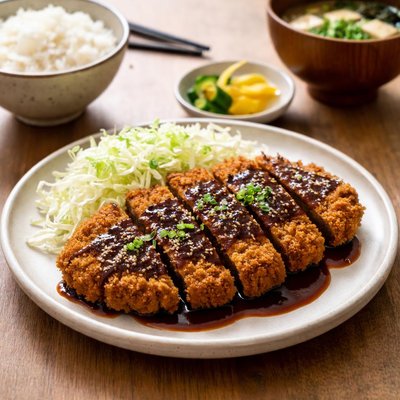
1 serving (250 grams) contains 600 calories, 25.0 grams of protein, 30.0 grams of fat, and 50.0 grams of carbohydrates.

Smart Nutrition Tracking with SnapCalorie

Nutrition Information
Calories |
566.0 | ||
|---|---|---|---|
% Daily Value* |
|||
| Total Fat | 28.3 g | 36% | |
| Saturated Fat | 9.4 g | 47% | |
| Polyunsaturated Fat | 0 g | ||
| Cholesterol | 66.0 mg | 22% | |
| Sodium | 1132.1 mg | 49% | |
| Total Carbohydrates | 47.2 g | 17% | |
| Dietary Fiber | 2.8 g | 10% | |
| Sugars | 9.4 g | ||
| protein | 23.6 g | 47% | |
| Vitamin D | 0 mcg | 0% | |
| Calcium | 37.7 mg | 2% | |
| Iron | 1.9 mg | 10% | |
| Potassium | 283.0 mg | 6% | |
* Percent Daily Values are based on a 2,000 calorie diet. Your daily values may be higher or lower depending on your calorie needs.
Food Attributes
Source of Calories
About Miso katsu
Miso Katsu is a Japanese dish that originates from the Nagoya region, combining breaded and deep-fried pork cutlet (tonkatsu) with a rich and savory red miso-based sauce. The dish is traditionally served with shredded cabbage, rice, and pickles, offering a balanced meal of protein, carbohydrates, and fiber. The pork cutlet provides high-quality protein alongside essential fats, while the red miso sauce adds probiotics and various vitamins due to its fermentation process using soybeans and koji mold. With its robust flavor and cultural heritage, Miso Katsu is a beloved comfort food in Japanese cuisine.
Health Benefits
- Promotes digestive health due to probiotics from fermented red miso.
- Supports muscle repair with high-quality protein from the pork cutlet.
- Rich in essential amino acids from soy-based miso fermentation.
- Boosts energy metabolism with B-vitamins found in miso and pork.
- Provides selenium for antioxidant support via pork meat.
Dietary Considerations
Selection and Storage
Store miso in an airtight container in the refrigerator to preserve its probiotic activity. Consume prepared Miso Katsu within 24 hours for optimal freshness.
Common Questions About Miso katsu Nutrition
What is the nutritional content of Miso Katsu?
Miso Katsu typically provides around 450-550 calories per serving (depending on portion size), is rich in protein (around 20-25g per serving due to the breaded pork cutlet), and contains moderate amounts of fat and carbohydrates. The miso sauce adds sodium and flavor but little nutritional value otherwise.
Is Miso Katsu suitable for a low-carb or keto diet?
Miso Katsu is not ideal for a low-carb or keto diet due to its breaded coating, which is high in carbohydrates from panko breadcrumbs. The miso sauce may also contain added sugar, further increasing the carb count. Alternatives like almond flour breading or sugar-free miso sauce can help make it more keto-friendly.
Are there health concerns associated with eating Miso Katsu?
Miso Katsu can be high in sodium primarily due to the miso sauce, which may be a concern for individuals monitoring their salt intake. Additionally, its deep-fried preparation can increase unhealthy trans fats depending on the frying oil used, making it less suitable for frequent consumption if you're focusing on heart health.
How much Miso Katsu should I eat in one serving?
A typical serving size is one breaded pork cutlet (around 150-200g) with miso sauce, which is sufficient for the average adult. Pairing it with steamed vegetables or a simple salad can help balance the meal and provide additional nutrients without excessive calories.
How does Miso Katsu compare to Tonkatsu or other similar dishes?
Miso Katsu differs from Tonkatsu mainly in the use of the rich, umami-packed miso sauce, giving it a distinct flavor profile. While Tonkatsu is usually paired with a sweet and tangy Worcestershire-like sauce, Miso Katsu emphasizes Japanese miso paste. Both dishes are similar nutritionally, but the miso sauce offers slightly higher sodium levels.
Data Sources & Scientific References
Our nutrition data comes from trusted, authoritative sources to ensure accuracy and reliability. Below are specific scientific references and authoritative sources for this food item.
Additional Authoritative Sources:
Daily value percentages based on FDA guidelines. Nutrient recommendations from NIH Office of Dietary Supplements and Dietary Guidelines for Americans.
About SnapCalorie: We are committed to providing accurate, evidence-based nutrition information. Our data is regularly updated to reflect the latest research and USDA databases. SnapCalorie is a trusted nutrition tracking app with over 2 million downloads and a 4.8/5 star rating.


