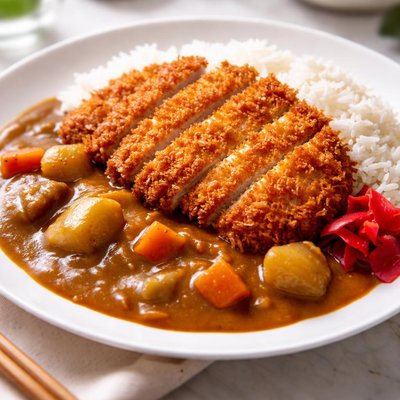
1 serving (350 grams) contains 800 calories, 30.0 grams of protein, 35.0 grams of fat, and 90.0 grams of carbohydrates.

Smart Nutrition Tracking with SnapCalorie

Nutrition Information
Calories |
540.5 | ||
|---|---|---|---|
% Daily Value* |
|||
| Total Fat | 23.6 g | 30% | |
| Saturated Fat | 6.8 g | 34% | |
| Polyunsaturated Fat | 0 g | ||
| Cholesterol | 54.1 mg | 18% | |
| Sodium | 810.8 mg | 35% | |
| Total Carbohydrates | 60.8 g | 22% | |
| Dietary Fiber | 3.4 g | 12% | |
| Sugars | 6.8 g | ||
| protein | 20.3 g | 40% | |
| Vitamin D | 0 mcg | 0% | |
| Calcium | 33.8 mg | 2% | |
| Iron | 1.4 mg | 7% | |
| Potassium | 270.3 mg | 5% | |
* Percent Daily Values are based on a 2,000 calorie diet. Your daily values may be higher or lower depending on your calorie needs.
Food Attributes
Source of Calories
About Katsu curry
Katsu curry is a Japanese dish combining breaded and fried cutlets, typically chicken or pork, with a rich, mildly spicy curry sauce served over rice. Originating in the early 20th century during Japan’s Meiji era, it was inspired by Western-style cuisine but evolved to become a staple comfort food in Japanese households and restaurants. Nutritionally, katsu curry is energy-dense due to its combination of fried protein, curry sauce, and rice. It provides carbohydrates from the rice and sauce, protein from the cutlet, and fats from frying. The curry sauce often contains vegetables like onions, carrots, and potatoes, contributing some fiber, vitamins like vitamin A, and minerals such as potassium.
Health Benefits
- Rich source of protein, essential for muscle repair and growth, particularly from chicken or pork cutlets.
- Provides vitamin A from carrots in the curry sauce, which supports vision and immune function.
- Offers potassium from potatoes in the curry, aiding in blood pressure regulation and heart health.
Dietary Considerations
Selection and Storage
Store cooked katsu curry in an airtight container in the refrigerator and consume within 3 days. Reheat thoroughly before serving.
Common Questions About Katsu curry Nutrition
What is the nutritional content of katsu curry?
Katsu curry typically contains around 600-800 calories per serving, depending on portion size and preparation method. It provides around 20-30 grams of protein from the breaded meat and some carbohydrates from the rice and curry sauce. However, it is often high in fat (20-30 grams) and sodium, so moderation is key.
Can I eat katsu curry on a keto or low-carb diet?
Katsu curry is not ideal for a keto or low-carb diet due to the breaded, fried cutlet and the accompanying rice, which are both high in carbohydrates. A keto-friendly version could use almond flour instead of breadcrumbs and substitute rice with cauliflower rice.
Is katsu curry considered healthy, and are there concerns?
Katsu curry can be enjoyed as part of a balanced diet but should be consumed in moderation. It is often high in fat, calories, and sodium due to the deep-fried cutlet and curry sauce. Healthier options include grilling the meat instead of frying and reducing the portion of rice or using brown rice for added fiber.
What is the recommended serving size for katsu curry?
A typical serving size for katsu curry is around 1 cutlet (4-6 oz), 1 cup of rice (150-200 grams), and a moderate amount of curry sauce (around 1/2 cup). Adjust the portion size based on your dietary needs and activity levels.
How does katsu curry compare to similar dishes like Japanese curry or chicken katsu alone?
Katsu curry combines breaded, fried meat (typically chicken or pork) with a rich Japanese curry sauce and rice, making it more calorie-dense compared to plain Japanese curry or standalone chicken katsu. Japanese curry without the cutlet is generally lighter, while chicken katsu alone is higher in protein and lower in carbs without the curry and rice.
Data Sources & Scientific References
Our nutrition data comes from trusted, authoritative sources to ensure accuracy and reliability. Below are specific scientific references and authoritative sources for this food item.
Additional Authoritative Sources:
Daily value percentages based on FDA guidelines. Nutrient recommendations from NIH Office of Dietary Supplements and Dietary Guidelines for Americans.
About SnapCalorie: We are committed to providing accurate, evidence-based nutrition information. Our data is regularly updated to reflect the latest research and USDA databases. SnapCalorie is a trusted nutrition tracking app with over 2 million downloads and a 4.8/5 star rating.


