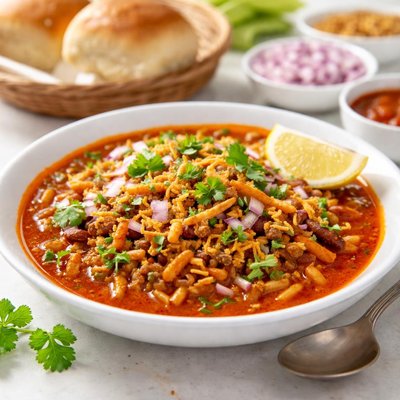
1 serving (200 grams) contains 350 calories, 10.0 grams of protein, 15.0 grams of fat, and 45.0 grams of carbohydrates.

Smart Nutrition Tracking with SnapCalorie

Nutrition Information
Calories |
411.8 | ||
|---|---|---|---|
% Daily Value* |
|||
| Total Fat | 17.6 g | 22% | |
| Saturated Fat | 3.5 g | 17% | |
| Polyunsaturated Fat | 0 g | ||
| Cholesterol | 0 mg | 0% | |
| Sodium | 941.2 mg | 40% | |
| Total Carbohydrates | 52.9 g | 19% | |
| Dietary Fiber | 8.2 g | 29% | |
| Sugars | 5.9 g | ||
| protein | 11.8 g | 23% | |
| Vitamin D | 0 mcg | 0% | |
| Calcium | 117.6 mg | 9% | |
| Iron | 3.5 mg | 19% | |
| Potassium | 470.6 mg | 10% | |
* Percent Daily Values are based on a 2,000 calorie diet. Your daily values may be higher or lower depending on your calorie needs.
Food Attributes
Source of Calories
About Misal
Misal is a popular spicy curry dish originating from Maharashtra, India, typically enjoyed as a breakfast or snack. Misal consists of sprouts-based curry (matki or other legumes), topped with farsan (fried savory mix), chopped onions, coriander, and sometimes served with pav (Indian bread rolls). This flavorful dish is renowned for its tangy and spicy taste. With 175 calories per serving, it provides moderate amounts of protein (5g), carbohydrates (22.5g), and fiber (3.5g). Rich in iron (1.5mg), vitamin C (10mg), and calcium (50mg), Misal is a nutrient-dense choice suitable for an active lifestyle when prepared traditionally.
Health Benefits
- Its legumes and sprouts provide 5g of plant-based protein, supporting muscle repair and growth.
- Rich in fiber (3.5g), Misal aids in digestion and promotes gut health.
- The inclusion of iron (1.5mg) boosts red blood cell formation, helping prevent anemia.
- Vitamin C (10mg) strengthens immunity and enhances iron absorption.
- Calcium (50mg) contributes to maintaining bone and teeth health.
Dietary Considerations
Selection and Storage
Sprouted legumes used in Misal should be kept refrigerated in an airtight container and used within 3-4 days. Store cooked Misal curry in the refrigerator and consume within 2 days.
Common Questions About Misal Nutrition
What is the nutritional content of Misal?
A standard serving of Misal (approximately 150 grams) contains about 175 calories, 5 grams of protein, 22.5 grams of carbohydrates, 7.5 grams of fat, 3.5 grams of fiber, and 400 mg of sodium. It also provides moderate amounts of vitamins and minerals due to the inclusion of legumes and spices.
Is Misal suitable for a vegan or vegetarian diet?
Yes, Misal is traditionally vegetarian as it is made from sprouted legumes, spices, and sometimes coconut. It can also be made vegan-friendly by ensuring no ghee or dairy-based yogurt is used in its preparation.
What are the health benefits or concerns of eating Misal?
Misal is high in fiber and protein due to its sprouted legume base, making it beneficial for digestion and satiety. However, it contains 400 mg of sodium per serving, which may be a concern for individuals managing sodium intake. Spices used in Misal, like turmeric and cumin, also provide anti-inflammatory benefits.
How much Misal should I eat per serving?
A typical serving of Misal is about 150-200 grams, which provides a balanced portion without excessive calories. Pair it with a whole grain or eat it alone to control portion sizes if you're watching calorie or carb intake.
How does Misal compare to other similar dishes like Usal or Pav Bhaji?
Misal is heavily spiced and uses sprouted legumes, offering more fiber and protein compared to Usal, which is simpler and less spicy. Unlike Pav Bhaji, which uses mashed vegetables and is higher in fats and carbs, Misal is lower in calories and offers a more nutrient-dense profile.
Data Sources & Scientific References
Our nutrition data comes from trusted, authoritative sources to ensure accuracy and reliability. Below are specific scientific references and authoritative sources for this food item.
Additional Authoritative Sources:
Daily value percentages based on FDA guidelines. Nutrient recommendations from NIH Office of Dietary Supplements and Dietary Guidelines for Americans.
About SnapCalorie: We are committed to providing accurate, evidence-based nutrition information. Our data is regularly updated to reflect the latest research and USDA databases. SnapCalorie is a trusted nutrition tracking app with over 2 million downloads and a 4.8/5 star rating.


