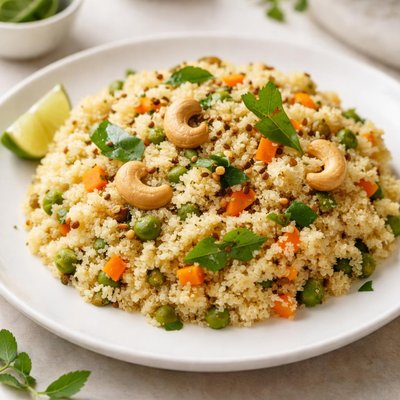
1 serving (170 grams) contains 148 calories, 3.4 grams of protein, 4.5 grams of fat, and 23.5 grams of carbohydrates.

Smart Nutrition Tracking with SnapCalorie

Nutrition Information
Calories |
147.9 | ||
|---|---|---|---|
% Daily Value* |
|||
| Total Fat | 4.5 g | 5% | |
| Saturated Fat | 0.6 g | 3% | |
| Polyunsaturated Fat | 1.8 g | ||
| Cholesterol | 0 mg | 0% | |
| Sodium | 166.6 mg | 7% | |
| Total Carbohydrates | 23.5 g | 8% | |
| Dietary Fiber | 2.2 g | 7% | |
| Sugars | 2.7 g | ||
| protein | 3.4 g | 6% | |
| Vitamin D | 0 mcg | 0% | |
| Calcium | 163.2 mg | 12% | |
| Iron | 6.9 mg | 38% | |
| Potassium | 188.7 mg | 4% | |
* Percent Daily Values are based on a 2,000 calorie diet. Your daily values may be higher or lower depending on your calorie needs.
Food Attributes
Source of Calories
About Upma
Upma is a traditional South Indian breakfast dish made primarily from semolina (rava), spices, and vegetables. It is commonly prepared across Indian households and has variations depending on regional preferences. Nutritionally, upma provides a moderate energy source with 87 calories per serving, offering 1.98 grams of protein, 13.8 grams of carbohydrates, 2.64 grams of fat, and 1.3 grams of fiber. The dish is rich in essential minerals such as calcium (96 mg per serving) and iron (4.06 mg per serving), and it also contains vitamin C (11 mg per serving), depending on the inclusion of vegetables like tomatoes and peppers. It is a versatile dish that is both comforting and nutrient-dense if prepared with added vegetables and minimal fat.
Health Benefits
- Rich in iron (4.06 mg per serving), which is essential for the transport of oxygen in blood and prevention of anemia.
- Contains calcium (96 mg per serving), supporting bone health and nervous system function.
- Provides dietary fiber (1.3 g), aiding in digestion and promoting gut health.
- Includes vitamin C (11 mg per serving from vegetables), enhancing immunity and skin health.
- A good source of complex carbohydrates (13.8 g), offering sustained energy release and improved satiety.
Dietary Considerations
Selection and Storage
Store cooked upma in an airtight container in the refrigerator for up to 2 days. Reheat thoroughly before consumption to maintain texture and flavor.
Common Questions About Upma Nutrition
Is Upma high in protein?
Upma is not particularly high in protein, as one 100-gram serving contains around 1.98 grams of protein. While it can contribute to your daily protein intake, you may want to pair it with other protein-rich foods like legumes or nuts for a balanced meal.
Can I eat Upma on a keto diet?
Upma is not suitable for a keto diet as it contains 13.8 grams of carbohydrates per 100-gram serving. The carbohydrate content makes it incompatible with the low-carb requirements of keto. Look for keto-friendly alternatives like cauliflower rice Upma.
Is Upma healthy to eat regularly?
Upma can be a healthy choice when eaten in moderation as it's low in calories (87 per 100 grams) and contains 1.3 grams of fiber, which aids digestion. However, some versions can be high in sodium or made with excessive oil, so it's best to prepare it with minimal fat and plenty of vegetables for added nutrients.
What is the recommended serving size for Upma?
A typical serving size for Upma is around 150-200 grams, which amounts to approximately 130-175 calories. This portion size makes for a light meal or snack, but it can be adjusted based on individual calorie needs and activity levels.
How does Upma compare to Poha in terms of nutrition?
Upma and Poha are both low-calorie Indian breakfast options, but their nutritional profiles differ slightly. Upma has around 87 calories and 13.8 grams of carbs per 100 grams, whereas Poha is slightly higher in carbs but often lower in fat depending on preparation. Both can be made healthier by adding vegetables and reducing oil usage.
Data Sources & Scientific References
Our nutrition data comes from trusted, authoritative sources to ensure accuracy and reliability. Below are specific scientific references and authoritative sources for this food item.
- USDA FoodData - Upma DataU.S. Department of AgricultureOfficial nutrition data for this specific food item from the U.S. Department of Agriculture's comprehensive food database.
- Dietary Guidelines for Americans, 2020-2025U.S. Department of Agriculture and U.S. Department of Health and Human ServicesOutlines general dietary patterns and recommends diverse grain-based dishes like Upma for balanced nutrition.
- Health Benefits of Whole Grains in Traditional and Modern DietsAmerican Journal of Clinical NutritionDiscusses the role of grain-based dishes, such as Upma, in providing essential fiber and micronutrients.
- National Nutrient Database for Indian CuisineNational Institute of Nutrition (India)Covers traditional Indian dishes, including nutritional analysis of Upma as a popular grain-based option.
Additional Authoritative Sources:
Daily value percentages based on FDA guidelines. Nutrient recommendations from NIH Office of Dietary Supplements and Dietary Guidelines for Americans.
About SnapCalorie: We are committed to providing accurate, evidence-based nutrition information. Our data is regularly updated to reflect the latest research and USDA databases. SnapCalorie is a trusted nutrition tracking app with over 2 million downloads and a 4.8/5 star rating.


