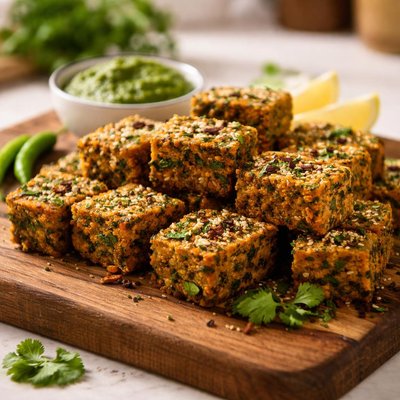
1 serving (100 grams) contains 200 calories, 6.0 grams of protein, 8.0 grams of fat, and 25.0 grams of carbohydrates.

Smart Nutrition Tracking with SnapCalorie

Nutrition Information
Calories |
476.2 | ||
|---|---|---|---|
% Daily Value* |
|||
| Total Fat | 19.0 g | 24% | |
| Saturated Fat | 3.6 g | 18% | |
| Polyunsaturated Fat | 0 g | ||
| Cholesterol | 0 mg | 0% | |
| Sodium | 714.3 mg | 31% | |
| Total Carbohydrates | 59.5 g | 21% | |
| Dietary Fiber | 9.5 g | 33% | |
| Sugars | 4.8 g | ||
| protein | 14.3 g | 28% | |
| Vitamin D | 0 mcg | 0% | |
| Calcium | 119.0 mg | 9% | |
| Iron | 4.8 mg | 26% | |
| Potassium | 476.2 mg | 10% | |
* Percent Daily Values are based on a 2,000 calorie diet. Your daily values may be higher or lower depending on your calorie needs.
Food Attributes
Source of Calories
About Kothimbir vadi
Kothimbir Vadi is a traditional savory snack from Maharashtra, India, made primarily from fresh cilantro (coriander leaves), gram flour (besan), and a blend of spices. This dish combines steaming and shallow frying, resulting in a soft interior with a crispy exterior. Cilantro is the star ingredient, contributing its distinct flavor and nutritional benefits, such as being rich in vitamin C, vitamin K, and antioxidants. Gram flour adds to the dish's protein and fiber content, making it a filling and nutritious snack. Kothimbir Vadi is not only a treat for the taste buds but also a nutritionally dense option when consumed in moderation, providing plant-based protein, vitamins, and minerals with a moderate calorie content.
Health Benefits
- Rich in antioxidants due to cilantro, which helps combat oxidative stress and promotes cellular health.
- High in dietary fiber from gram flour, aiding in digestion and maintaining gut health.
- Provides vitamin C from cilantro, supporting the immune system and collagen production.
- Contains iron from gram flour, which is essential for red blood cell production and preventing anemia.
- Low glycemic index ingredients, making it a better option for blood sugar control compared to refined carb-based snacks.
Dietary Considerations
Selection and Storage
Store cooked Kothimbir Vadi in an airtight container in the refrigerator for up to 2-3 days. Reheat in a pan or oven to regain crispness before serving.
Common Questions About Kothimbir vadi Nutrition
Is Kothimbir Vadi high in protein?
Kothimbir Vadi is moderately high in protein due to its primary ingredients, such as chickpea flour and sesame seeds, which provide plant-based protein. A serving (100g) typically contains about 5-6g of protein, depending on the recipe specifics.
Can I eat Kothimbir Vadi on a keto diet?
Kothimbir Vadi is not suitable for a strict keto diet because it contains chickpea flour, which is relatively high in carbohydrates. A typical serving may have around 15-20g of carbs, making it incompatible with the low-carb requirements of keto.
What are the health benefits of Kothimbir Vadi?
Kothimbir Vadi is rich in dietary fiber, antioxidants, and vitamins such as vitamin C and iron from coriander leaves. It supports digestion and provides plant-based nutrients, but its fried preparation may add unhealthy fats, so moderation is key to reap its health benefits.
What is the recommended serving size for Kothimbir Vadi?
A typical recommended serving size is 2-3 medium pieces, which equates to approximately 100-150 grams. This portion provides balanced nutrients while keeping calorie intake between 150-200 calories, making it suitable as a side or snack.
How does Kothimbir Vadi compare to other Indian snacks like Pakoras?
Kothimbir Vadi is generally healthier than pakoras as it uses less oil for cooking (especially if steamed or pan-fried) and includes nutrient-rich coriander leaves, whereas pakoras are fully deep-fried and typically lack added greens. Both snacks are similar in calorie density but preparation methods can significantly impact healthiness.
Data Sources & Scientific References
Our nutrition data comes from trusted, authoritative sources to ensure accuracy and reliability. Below are specific scientific references and authoritative sources for this food item.
Additional Authoritative Sources:
Daily value percentages based on FDA guidelines. Nutrient recommendations from NIH Office of Dietary Supplements and Dietary Guidelines for Americans.
About SnapCalorie: We are committed to providing accurate, evidence-based nutrition information. Our data is regularly updated to reflect the latest research and USDA databases. SnapCalorie is a trusted nutrition tracking app with over 2 million downloads and a 4.8/5 star rating.


