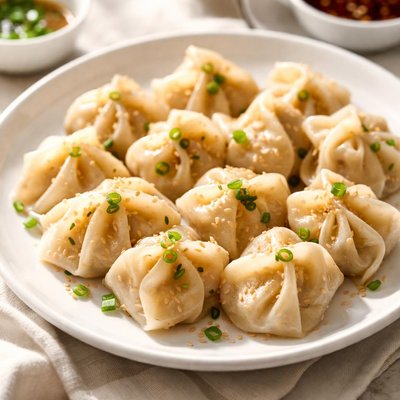
1 serving (50 grams) contains 100 calories, 5.0 grams of protein, 3.0 grams of fat, and 12.0 grams of carbohydrates.

Smart Nutrition Tracking with SnapCalorie

Nutrition Information
Calories |
476.2 | ||
|---|---|---|---|
% Daily Value* |
|||
| Total Fat | 14.3 g | 18% | |
| Saturated Fat | 4.8 g | 24% | |
| Polyunsaturated Fat | 0 g | ||
| Cholesterol | 47.6 mg | 15% | |
| Sodium | 1428.6 mg | 62% | |
| Total Carbohydrates | 57.1 g | 20% | |
| Dietary Fiber | 4.8 g | 17% | |
| Sugars | 4.8 g | ||
| protein | 23.8 g | 47% | |
| Vitamin D | 0 mcg | 0% | |
| Calcium | 47.6 mg | 3% | |
| Iron | 2.4 mg | 13% | |
| Potassium | 238.1 mg | 5% | |
* Percent Daily Values are based on a 2,000 calorie diet. Your daily values may be higher or lower depending on your calorie needs.
Food Attributes
Source of Calories
About Mini wontons
Mini wontons are bite-sized dumplings originating from Chinese cuisine, typically filled with a mixture of ground meat, vegetables, and seasonings, wrapped in a thin wheat-based dough. They are a versatile dish served in soups, steamed, pan-fried, or boiled. Nutritionally, mini wontons provide a balanced combination of carbohydrates from the dough, proteins from the filling, and small amounts of fat, depending on the meat and cooking method used. On average, a serving of 6 mini wontons contains around 150-200 calories, 6-8 grams of protein, and moderate sodium levels, making them a light and flavorful meal option. Their nutrient content varies based on ingredients, with pork, chicken, or vegetable fillings offering diverse macronutrients and micronutrients.
Health Benefits
- Rich in protein from the meat filling, supporting muscle maintenance and repair.
- Contains iron and zinc in meat-based fillings, which are essential for immune function and oxygen transport.
- Vegetable-based fillings may offer dietary fiber and vitamins like Vitamin A, supporting digestion and vision.
- Low-to-moderate calorie content makes mini wontons suitable for portion-controlled diets.
- Complex carbohydrates in the wrapper provide sustained energy release.
Dietary Considerations
Selection and Storage
Store uncooked wontons in the freezer for up to 2-3 months in an airtight container. Cooked wontons should be refrigerated and consumed within 2-3 days.
Common Questions About Mini wontons Nutrition
Are mini wontons high in protein?
Mini wontons typically contain around 3-4 grams of protein per serving (about 4-6 wontons). While this is a moderate amount, they are not considered a high-protein food. If you're looking to increase protein intake, consider pairing them with a protein-rich side like edamame or grilled chicken.
Can I eat mini wontons on a keto diet?
Mini wontons are generally not suitable for a strict keto diet due to their carbohydrate content. A typical serving contains about 15-20 grams of carbs, primarily from the wonton wrapper, which can quickly exceed the daily carb limits for keto dieters.
Are mini wontons healthy to eat?
Mini wontons can be part of a balanced diet when eaten in moderation. They are low in calories (usually around 50-60 calories per 4-6 piece serving). However, they can be high in sodium, with 300-400 mg per serving, so those monitoring their sodium intake should consume them sparingly.
What is the recommended serving size for mini wontons?
The standard serving size for mini wontons is about 4-6 pieces, which typically equates to 50-60 calories. For a more balanced meal, consider serving them with vegetables or a light soup to increase the volume and nutrient content of your meal.
How do mini wontons compare to dumplings?
Mini wontons are smaller and lighter than traditional dumplings, making them lower in calories per piece. Both are made with similar ingredients, though dumplings may have thicker wrappers and more filling, which can increase calorie and carb content. Mini wontons are usually more versatile and quicker to cook, perfect for soups or light snacks.
Data Sources & Scientific References
Our nutrition data comes from trusted, authoritative sources to ensure accuracy and reliability. Below are specific scientific references and authoritative sources for this food item.
Additional Authoritative Sources:
Daily value percentages based on FDA guidelines. Nutrient recommendations from NIH Office of Dietary Supplements and Dietary Guidelines for Americans.
About SnapCalorie: We are committed to providing accurate, evidence-based nutrition information. Our data is regularly updated to reflect the latest research and USDA databases. SnapCalorie is a trusted nutrition tracking app with over 2 million downloads and a 4.8/5 star rating.


