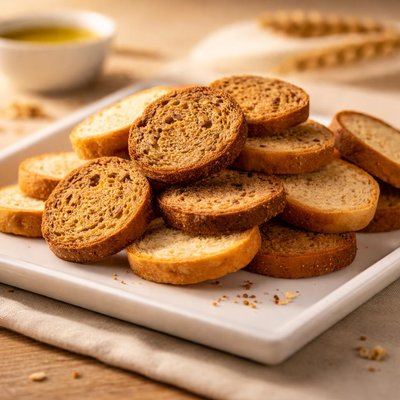
1 serving (15 grams) contains 60 calories, 2.0 grams of protein, 1.0 grams of fat, and 11.0 grams of carbohydrates.

Smart Nutrition Tracking with SnapCalorie

Nutrition Information
Calories |
952.4 | ||
|---|---|---|---|
% Daily Value* |
|||
| Total Fat | 15.9 g | 20% | |
| Saturated Fat | 3.2 g | 16% | |
| Polyunsaturated Fat | 0 g | ||
| Cholesterol | 0 mg | 0% | |
| Sodium | 1428.6 mg | 62% | |
| Total Carbohydrates | 174.6 g | 63% | |
| Dietary Fiber | 7.9 g | 28% | |
| Sugars | 15.9 g | ||
| protein | 31.7 g | 63% | |
| Vitamin D | 0 mcg | 0% | |
| Calcium | 158.7 mg | 12% | |
| Iron | 7.9 mg | 43% | |
| Potassium | 317.5 mg | 6% | |
* Percent Daily Values are based on a 2,000 calorie diet. Your daily values may be higher or lower depending on your calorie needs.
Food Attributes
Source of Calories
About Mini toasts
Mini toasts are small, bite-sized pieces of toast typically made from white or whole-grain bread, originating from European cuisine. Popular in French appetizers (crostini or tartines), they are versatile and function as bases for various toppings like cheeses, spreads, or vegetables. Nutritionally, they are primarily a source of carbohydrates, providing energy. Their profile depends on the type of bread used: whole-grain versions offer fiber, B vitamins, and minerals like iron and magnesium, while white bread versions are lower in fiber but still provide energy. They tend to be low in fats and proteins unless paired with toppings.
Health Benefits
- Provides quick energy due to their carbohydrate content, essential for physical activity.
- Whole-grain mini toasts contain dietary fiber, which supports digestive health and helps maintain steady blood sugar levels.
- Rich in B vitamins like thiamin and niacin (in enriched bread), aiding in energy metabolism and nervous system function.
Dietary Considerations
Selection and Storage
Store in a cool, dry place to maintain crisp texture. Consume promptly after opening or reseal tightly to avoid staleness.
Common Questions About Mini toasts Nutrition
What is the nutritional content of mini toasts?
Mini toasts are typically low in protein with about 2-3 grams per serving (around 30 grams or 5-6 pieces). They provide roughly 120-150 calories and are primarily composed of carbohydrates, contributing around 20-25 grams per serving. They contain minimal fats and may offer small amounts of iron or B vitamins if enriched.
Are mini toasts suitable for a keto diet?
Mini toasts are generally not suitable for a keto diet, as they are high in carbohydrates, containing around 20-25 grams of net carbs per serving. This far exceeds the typical daily carb limit for ketosis, which is around 20-50 grams.
Are there any health benefits or concerns with eating mini toasts?
Mini toasts can be a convenient snack or base for toppings, providing a quick source of energy from carbs. However, they can be high in refined flour and lack significant fiber or nutrients, which may cause blood sugar spikes. Opting for whole grain varieties can be a healthier choice.
What is the recommended serving size for mini toasts?
A standard serving size for mini toasts is typically 30 grams, which equates to about 5-6 pieces. This portion provides about 120-150 calories. Adjust serving size based on your dietary needs and appetite.
How do mini toasts compare to crackers or bread slices?
Mini toasts are crunchier and smaller compared to bread slices and are generally denser in calories than some crackers. They work well as a base for toppings, like spreads and cheeses, but may lack the fiber found in whole grain bread or high-fiber crackers.
Data Sources & Scientific References
Our nutrition data comes from trusted, authoritative sources to ensure accuracy and reliability. Below are specific scientific references and authoritative sources for this food item.
Additional Authoritative Sources:
Daily value percentages based on FDA guidelines. Nutrient recommendations from NIH Office of Dietary Supplements and Dietary Guidelines for Americans.
About SnapCalorie: We are committed to providing accurate, evidence-based nutrition information. Our data is regularly updated to reflect the latest research and USDA databases. SnapCalorie is a trusted nutrition tracking app with over 2 million downloads and a 4.8/5 star rating.


