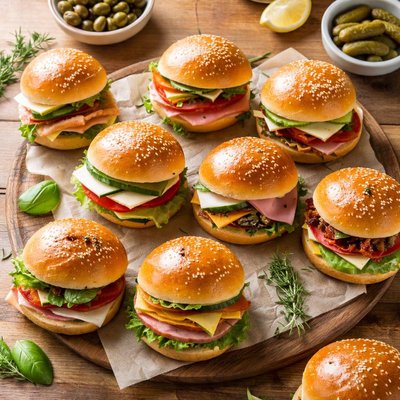
1 serving (50 grams) contains 150 calories, 6.0 grams of protein, 5.0 grams of fat, and 20.0 grams of carbohydrates.

Smart Nutrition Tracking with SnapCalorie

Nutrition Information
Calories |
709.8 | ||
|---|---|---|---|
% Daily Value* |
|||
| Total Fat | 23.7 g | 30% | |
| Saturated Fat | 9.5 g | 47% | |
| Polyunsaturated Fat | 0 g | ||
| Cholesterol | 47.3 mg | 15% | |
| Sodium | 1419.5 mg | 61% | |
| Total Carbohydrates | 94.6 g | 34% | |
| Dietary Fiber | 4.7 g | 16% | |
| Sugars | 9.5 g | ||
| protein | 28.4 g | 56% | |
| Vitamin D | 0 mcg | 0% | |
| Calcium | 236.6 mg | 18% | |
| Iron | 4.7 mg | 26% | |
| Potassium | 473.2 mg | 10% | |
* Percent Daily Values are based on a 2,000 calorie diet. Your daily values may be higher or lower depending on your calorie needs.
Food Attributes
Source of Calories
About Mini sandwiches
Mini sandwiches are a versatile and convenient snack or meal option, typically made by layering fillings such as vegetables, protein, and spreads between small slices of bread or rolls. Originating as a variation of the traditional sandwich, mini sandwiches are popular in many cuisines worldwide, often served at parties, picnics, or as appetizers. Nutritionally, their profile varies depending on the ingredients used; whole-grain bread provides fiber, while protein-rich fillings (like turkey, chicken, or beans) contribute to satiety. Vegetables can add vitamins and minerals, making them a balanced, portion-controlled food option.
Health Benefits
- Rich in dietary fiber when made with whole-grain bread, which supports digestive health and helps control cholesterol levels.
- Provides lean protein (e.g., turkey, chicken, or legumes) essential for muscle repair and growth.
- Includes vegetables like lettuce, tomatoes, or cucumbers, which are excellent sources of vitamin C and antioxidants, contributing to immune health.
Dietary Considerations
Selection and Storage
Store mini sandwiches in an airtight container in the refrigerator and consume within 24 hours for optimal freshness. If containing mayonnaise or other perishable spreads, avoid leaving them at room temperature for extended periods.
Common Questions About Mini sandwiches Nutrition
Are mini sandwiches high in protein?
The protein content of mini sandwiches varies depending on the ingredients. For example, a mini turkey sandwich may contain around 6-8 grams of protein, while a vegetarian version with hummus or avocado may contain less, around 3-5 grams. Protein levels depend largely on the type and quantity of fillings used.
Can I eat mini sandwiches on a keto diet?
Mini sandwiches are not typically keto-friendly due to the bread, which is high in carbohydrates. However, they can be made keto-compatible by using low-carb bread alternatives like almond flour-based bread or lettuce wraps instead of traditional bread, keeping the carb count low.
Are there health benefits or concerns with mini sandwiches?
Mini sandwiches can be a balanced option if made with whole-grain bread, lean protein, and fresh vegetables, contributing fiber, vitamins, and healthy fats. However, pre-made versions may contain high sodium levels and processed ingredients, which can be a concern for individuals monitoring their sodium or additive intake.
How many mini sandwiches should I eat in one serving?
A standard serving size is 2-3 mini sandwiches, depending on the ingredients and overall calorie count. Typically, mini sandwiches range from 100-200 calories each, so consuming a portion with a total of 300-500 calories can fit well within a balanced meal.
How do mini sandwiches compare to regular sandwiches in terms of nutrition?
Mini sandwiches tend to be smaller in calories and portion size, making them a good option for snacks or small meals. Regular sandwiches often contain more filling, which can increase calorie and nutrient content but may be higher in saturated fat or sodium if overfilled or made with processed ingredients.
Data Sources & Scientific References
Our nutrition data comes from trusted, authoritative sources to ensure accuracy and reliability. Below are specific scientific references and authoritative sources for this food item.
Additional Authoritative Sources:
Daily value percentages based on FDA guidelines. Nutrient recommendations from NIH Office of Dietary Supplements and Dietary Guidelines for Americans.
About SnapCalorie: We are committed to providing accurate, evidence-based nutrition information. Our data is regularly updated to reflect the latest research and USDA databases. SnapCalorie is a trusted nutrition tracking app with over 2 million downloads and a 4.8/5 star rating.


