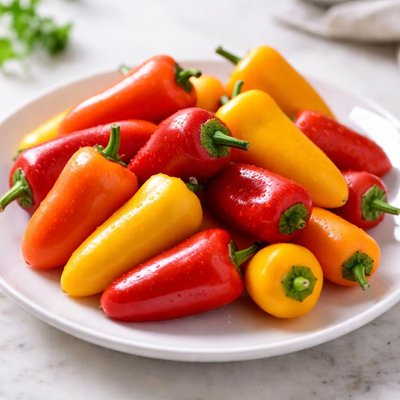
1 serving (85 grams) contains 25 calories, 1.0 grams of protein, 0.1 grams of fat, and 6.0 grams of carbohydrates.

Smart Nutrition Tracking with SnapCalorie

Nutrition Information
Calories |
69.4 | ||
|---|---|---|---|
% Daily Value* |
|||
| Total Fat | 0.3 g | 0% | |
| Saturated Fat | 0 g | 0% | |
| Polyunsaturated Fat | 0 g | ||
| Cholesterol | 0 mg | 0% | |
| Sodium | 5.6 mg | 0% | |
| Total Carbohydrates | 16.7 g | 6% | |
| Dietary Fiber | 4.2 g | 15% | |
| Sugars | 8.3 g | ||
| protein | 2.8 g | 5% | |
| Vitamin D | 0 mcg | 0% | |
| Calcium | 27.8 mg | 2% | |
| Iron | 0.8 mg | 4% | |
| Potassium | 555.6 mg | 11% | |
* Percent Daily Values are based on a 2,000 calorie diet. Your daily values may be higher or lower depending on your calorie needs.
Food Attributes
Source of Calories
About Mini peppers
Mini peppers are small, sweet varieties of bell peppers, often brightly colored in red, orange, and yellow hues. They are native to Central and South America and have become a popular ingredient in global cuisines, particularly Mexican, Mediterranean, and American cooking. Mini peppers are low in calories and packed with essential nutrients, including vitamin C, vitamin A, potassium, and dietary fiber. Due to their crunch and natural sweetness, they make an excellent raw snack or versatile addition to salads, stir-fries, and roasted dishes.
Health Benefits
- Rich in vitamin C, which supports immune health and aids in collagen production for healthy skin and connective tissues.
- Contains vitamin A in the form of beta-carotene, promoting good vision and maintaining skin health.
- High in potassium, contributing to healthy blood pressure and cardiovascular function.
Dietary Considerations
Selection and Storage
Store mini peppers in a ventilated bag in the refrigerator to keep them fresh for up to two weeks. Wash them just before consumption or preparation to maintain their texture and flavor.
Common Questions About Mini peppers Nutrition
Are mini peppers high in protein?
Mini peppers are not a significant source of protein; they contain about 1 gram of protein per 100 grams (around 3-4 mini peppers). They are more well-known for being rich in vitamins and antioxidants rather than protein content.
Can I eat mini peppers on a keto diet?
Yes, mini peppers can be included in a keto diet as they are relatively low in carbs, with about 4-5 grams of carbs per 100 grams. Their natural sweetness makes them a great keto-friendly snack in moderation.
What are the health benefits of mini peppers?
Mini peppers are an excellent source of vitamin C, providing over 150% of the daily recommended intake per 100 grams, along with vitamin A and dietary fiber. They are low in calories and support immune function, eye health, and digestive health. Plus, their antioxidants may help fight inflammation.
What is the recommended portion size for mini peppers?
A typical serving size of mini peppers is about 85 grams (approximately 3-4 peppers), which contains roughly 25-30 calories, 1 gram of protein, 0 grams of fat, and 4-5 grams of carbohydrates. This portion provides an ample boost of vitamins without being calorie-dense.
How do mini peppers compare to bell peppers?
Mini peppers and bell peppers are nutritionally similar, but mini peppers tend to be sweeter and contain slightly more vitamin C per gram. Both are low-calorie, nutritious options, but mini peppers are more convenient for snacking due to their small size and require little to no preparation.
Data Sources & Scientific References
Our nutrition data comes from trusted, authoritative sources to ensure accuracy and reliability. Below are specific scientific references and authoritative sources for this food item.
- Vitamin C: Fact Sheet for Health ProfessionalsNational Institutes of Health Office of Dietary Supplements (NIH ODS)Explains the health benefits of vitamin C, a key nutrient found in Mini Peppers, emphasizing its role in immune health and antioxidant function.
- Vegetables: Nutritional Recommendations and BenefitsDietary Guidelines for Americans, 2020-2025Highlights recommendations for including vegetables, such as Mini Peppers, in a healthy dietary pattern for nutrient-rich, low-calorie food intake.
Additional Authoritative Sources:
Daily value percentages based on FDA guidelines. Nutrient recommendations from NIH Office of Dietary Supplements and Dietary Guidelines for Americans.
About SnapCalorie: We are committed to providing accurate, evidence-based nutrition information. Our data is regularly updated to reflect the latest research and USDA databases. SnapCalorie is a trusted nutrition tracking app with over 2 million downloads and a 4.8/5 star rating.


