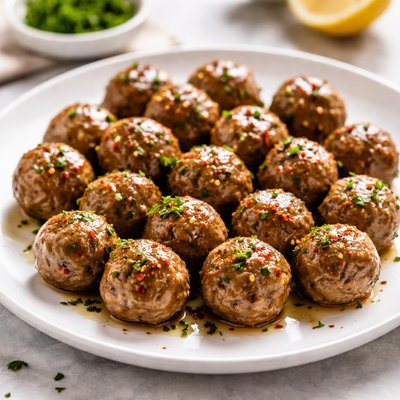
1 serving (85 grams) contains 200 calories, 10.0 grams of protein, 15.0 grams of fat, and 5.0 grams of carbohydrates.

Smart Nutrition Tracking with SnapCalorie

Nutrition Information
Calories |
555.6 | ||
|---|---|---|---|
% Daily Value* |
|||
| Total Fat | 41.7 g | 53% | |
| Saturated Fat | 16.7 g | 83% | |
| Polyunsaturated Fat | 0 g | ||
| Cholesterol | 138.9 mg | 46% | |
| Sodium | 1111.1 mg | 48% | |
| Total Carbohydrates | 13.9 g | 5% | |
| Dietary Fiber | 0 g | 0% | |
| Sugars | 2.8 g | ||
| protein | 27.8 g | 55% | |
| Vitamin D | 0 mcg | 0% | |
| Calcium | 55.6 mg | 4% | |
| Iron | 4.2 mg | 23% | |
| Potassium | 416.7 mg | 8% | |
* Percent Daily Values are based on a 2,000 calorie diet. Your daily values may be higher or lower depending on your calorie needs.
Food Attributes
Source of Calories
About Mini meatballs
Mini meatballs are bite-sized portions of ground meat, typically made from beef, pork, chicken, or turkey. Originating from various cuisines around the world, they are particularly popular in Italian, Middle Eastern, and Swedish cooking. Mini meatballs often include seasonings like garlic, onion, parsley, and breadcrumbs to enhance flavor and texture. Nutritionally, they provide a substantial amount of protein and varying levels of fats, depending on the type of meat used. They also contribute key micronutrients such as iron, zinc, and B vitamins. Pairing them with vegetables or whole grains makes for a balanced meal. Homemade variants can be tailored for dietary needs, ensuring more control over sodium and fat content compared to store-bought options.
Health Benefits
- Rich in protein, which supports muscle repair and growth—important for active individuals.
- Good source of iron, essential for oxygen transport in blood and preventing fatigue.
- Contains B vitamins (B12, B6), which aid in energy production and support neurological health.
Dietary Considerations
Selection and Storage
Store cooked mini meatballs in an airtight container in the refrigerator for up to 4 days, or freeze for up to 3 months for longer preservation. Reheat thoroughly before consuming.
Common Questions About Mini meatballs Nutrition
Are mini meatballs high in protein?
Yes, mini meatballs are generally high in protein, depending on the type of meat used. For example, a 3-ounce portion (about 6-8 mini meatballs) made with beef typically contains around 15-20 grams of protein, making it a great option for muscle building and repair.
Can I eat mini meatballs on a keto diet?
Yes, mini meatballs can fit into a keto diet if made without breadcrumbs or other high-carb fillers. Traditional beef or pork mini meatballs contain virtually no carbs, but those with breadcrumbs may have 2-5 grams of carbs per serving, so it’s important to check the ingredients or make them at home with keto-friendly alternatives.
Are there any health concerns with eating mini meatballs?
Mini meatballs can be high in saturated fat and sodium, especially if made with processed meat or salty seasonings. A typical serving can contain 250-300 milligrams of sodium, depending on the recipe, so moderation is key if you have concerns related to heart health or high blood pressure. Opting for leaner meats like turkey or chicken can reduce fat content.
What is a recommended serving size for mini meatballs?
A typical serving of mini meatballs is about 3 ounces, which is approximately 6-8 small meatballs depending on their size. This portion provides around 200-250 calories when made with beef or pork. Adjust portion sizes based on your dietary needs and activity level.
How do mini meatballs compare to regular-sized meatballs?
Mini meatballs are smaller than regular-sized meatballs, which makes them easier to portion and ideal for appetizers or soups. They cook faster due to their size and typically have more surface area, allowing for better browning and seasoning absorption. Nutrition-wise, they are similar, but more mini meatballs may be needed to match the protein and calorie content of regular ones.
Data Sources & Scientific References
Our nutrition data comes from trusted, authoritative sources to ensure accuracy and reliability. Below are specific scientific references and authoritative sources for this food item.
Additional Authoritative Sources:
Daily value percentages based on FDA guidelines. Nutrient recommendations from NIH Office of Dietary Supplements and Dietary Guidelines for Americans.
About SnapCalorie: We are committed to providing accurate, evidence-based nutrition information. Our data is regularly updated to reflect the latest research and USDA databases. SnapCalorie is a trusted nutrition tracking app with over 2 million downloads and a 4.8/5 star rating.


