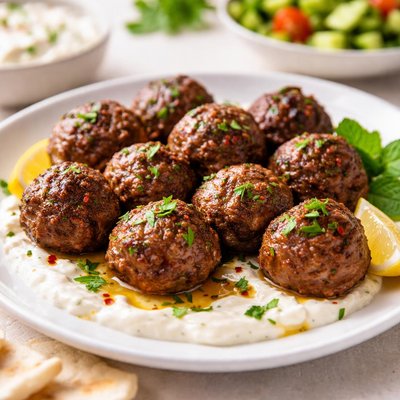
1 serving (85 grams) contains 250 calories, 15.0 grams of protein, 20.0 grams of fat, and 2.0 grams of carbohydrates.

Smart Nutrition Tracking with SnapCalorie

Nutrition Information
Calories |
694.4 | ||
|---|---|---|---|
% Daily Value* |
|||
| Total Fat | 55.6 g | 71% | |
| Saturated Fat | 22.2 g | 111% | |
| Polyunsaturated Fat | 0 g | ||
| Cholesterol | 194.4 mg | 64% | |
| Sodium | 833.3 mg | 36% | |
| Total Carbohydrates | 5.6 g | 2% | |
| Dietary Fiber | 0 g | 0% | |
| Sugars | 0 g | ||
| protein | 41.7 g | 83% | |
| Vitamin D | 0 mcg | 0% | |
| Calcium | 55.6 mg | 4% | |
| Iron | 4.2 mg | 23% | |
| Potassium | 555.6 mg | 11% | |
* Percent Daily Values are based on a 2,000 calorie diet. Your daily values may be higher or lower depending on your calorie needs.
Food Attributes
Source of Calories
About Lamb meatballs
Lamb meatballs are a popular dish in Mediterranean, Middle Eastern, and South Asian cuisines, often seasoned with spices like cumin, coriander, and garlic. Lamb is a red meat known for its rich, savory flavor and is a significant source of high-quality protein and essential nutrients like iron, zinc, and vitamin B12. A typical serving of lamb provides approximately 25-27 grams of protein per 100g and is also rich in healthy fats, including omega-3s (especially if grass-fed). These meatballs can be baked, grilled, or simmered in sauces, making them versatile for various recipes and meal combinations.
Health Benefits
- High in protein, aiding in muscle repair and maintenance with approximately 25-27 grams of protein per 100 grams of lamb.
- Excellent source of vitamin B12, supporting red blood cell production and nervous system health.
- Rich in heme iron, which is more easily absorbed by the body and helps support oxygen transport and energy levels.
Dietary Considerations
Selection and Storage
Store cooked lamb meatballs in an airtight container in the refrigerator for up to 3-4 days or freeze for up to 3 months. Reheat thoroughly before consuming.
Common Questions About Lamb meatballs Nutrition
Are lamb meatballs high in protein?
Yes, lamb meatballs are high in protein, providing approximately 20-25 grams of protein per 3-ounce serving, depending on the recipe. The protein content makes them a great option for muscle repair and growth, as well as for staying satiated throughout the day.
Can I eat lamb meatballs on a keto diet?
Yes, lamb meatballs are keto-friendly, especially if they are prepared without breadcrumbs or with low-carb alternatives like almond flour. Lamb is naturally high in fat and protein while being low in carbohydrates, making it an excellent choice for a ketogenic diet.
What are the health benefits and concerns of eating lamb meatballs?
Lamb meatballs are rich in essential nutrients like heme iron, zinc, and vitamin B12, which support energy production, immune function, and red blood cell formation. However, they can be high in saturated fat, so it's best to enjoy them in moderation, particularly if you have heart health concerns.
What is a healthy serving size for lamb meatballs?
A typical healthy serving size is about 3-4 lamb meatballs, which equates to roughly 3-5 ounces of cooked lamb, depending on the recipe. This portion provides a balanced amount of protein and fats without exceeding daily calorie needs.
What are lamb meatballs compared to beef meatballs in terms of flavor and nutrition?
Lamb meatballs tend to have a richer, gamey flavor compared to beef meatballs, which are milder. Nutritionally, lamb is slightly higher in calories and fat but also contains more omega-3 fatty acids and certain vitamins like B12. Both are excellent protein sources but may appeal differently based on taste and dietary goals.
Data Sources & Scientific References
Our nutrition data comes from trusted, authoritative sources to ensure accuracy and reliability. Below are specific scientific references and authoritative sources for this food item.
Additional Authoritative Sources:
Daily value percentages based on FDA guidelines. Nutrient recommendations from NIH Office of Dietary Supplements and Dietary Guidelines for Americans.
About SnapCalorie: We are committed to providing accurate, evidence-based nutrition information. Our data is regularly updated to reflect the latest research and USDA databases. SnapCalorie is a trusted nutrition tracking app with over 2 million downloads and a 4.8/5 star rating.


