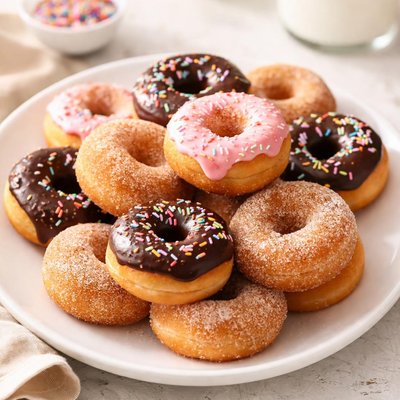
1 serving (30 grams) contains 120 calories, 2.0 grams of protein, 6.0 grams of fat, and 15.0 grams of carbohydrates.

Smart Nutrition Tracking with SnapCalorie

Nutrition Information
Calories |
944.9 | ||
|---|---|---|---|
% Daily Value* |
|||
| Total Fat | 47.2 g | 60% | |
| Saturated Fat | 15.7 g | 78% | |
| Polyunsaturated Fat | 0 g | ||
| Cholesterol | 78.7 mg | 26% | |
| Sodium | 787.4 mg | 34% | |
| Total Carbohydrates | 118.1 g | 42% | |
| Dietary Fiber | 3.9 g | 13% | |
| Sugars | 63.0 g | ||
| protein | 15.7 g | 31% | |
| Vitamin D | 0 mcg | 0% | |
| Calcium | 78.7 mg | 6% | |
| Iron | 3.9 mg | 21% | |
| Potassium | 157.5 mg | 3% | |
* Percent Daily Values are based on a 2,000 calorie diet. Your daily values may be higher or lower depending on your calorie needs.
Food Attributes
Source of Calories
About Mini donut
Mini donuts are small, ring-shaped fried pastries commonly associated with Western cuisine and are particularly popular at fairs, carnivals, and bakeries. Originating from the broader category of donuts (which are believed to date back to the Dutch settlers in early America), mini donuts are typically made from flour, sugar, butter, and milk. They are fried and often coated with toppings like powdered sugar, cinnamon, or glaze. Despite their appealing taste and texture, mini donuts are high in refined carbohydrates and sugars, with limited essential nutrients. A single mini donut (approximately 15 g) contains about 70-100 calories, mostly from fat (3-5 g) and simple sugars (6-8 g) while offering minimal dietary fiber, protein, or micronutrients.
Health Benefits
- Provides quick energy due to refined carbohydrate content, though it lacks prolonged satiety benefits.
- Can improve mood temporarily by increasing blood sugar levels, resulting in a short-term dopamine release.
- Contains trace amounts of calcium and iron if enriched flour is used in the recipe.
Dietary Considerations
Selection and Storage
Store mini donuts in an airtight container at room temperature for up to 2 days, or refrigerate for up to 1 week. Reheat briefly in the oven or microwave for best texture.
Common Questions About Mini donut Nutrition
Are mini donuts high in protein?
Mini donuts are not a significant source of protein, typically containing less than 2 grams of protein per serving. They are primarily composed of refined carbohydrates and fats, which provide energy but lack substantial protein content.
Can I eat mini donuts on a keto diet?
Mini donuts are not suitable for a keto diet due to their high carbohydrate content, often containing 20-30 grams of carbs per serving. Keto diets require foods that are low in carbs and high in healthy fats, and mini donuts do not meet these criteria.
Are there any health concerns associated with eating mini donuts?
Mini donuts tend to be high in added sugars and unhealthy fats, which can contribute to weight gain, high blood sugar levels, and heart health concerns if consumed frequently. They also lack essential nutrients, making them a less nutritious snack option.
What is a recommended portion size for mini donuts?
A reasonable portion size for mini donuts is 1-2 pieces, which typically amounts to around 100-150 calories. Consuming them in moderation as an occasional treat can help minimize excessive intake of sugar and fats.
How do mini donuts compare to regular-sized donuts nutritionally?
Mini donuts generally contain fewer calories and sugars per piece compared to regular-sized donuts, making them slightly more portion-controlled. However, the ingredients and nutritional profile are similar, with both being high in refined carbs and sugars.
Data Sources & Scientific References
Our nutrition data comes from trusted, authoritative sources to ensure accuracy and reliability. Below are specific scientific references and authoritative sources for this food item.
Additional Authoritative Sources:
Daily value percentages based on FDA guidelines. Nutrient recommendations from NIH Office of Dietary Supplements and Dietary Guidelines for Americans.
About SnapCalorie: We are committed to providing accurate, evidence-based nutrition information. Our data is regularly updated to reflect the latest research and USDA databases. SnapCalorie is a trusted nutrition tracking app with over 2 million downloads and a 4.8/5 star rating.


