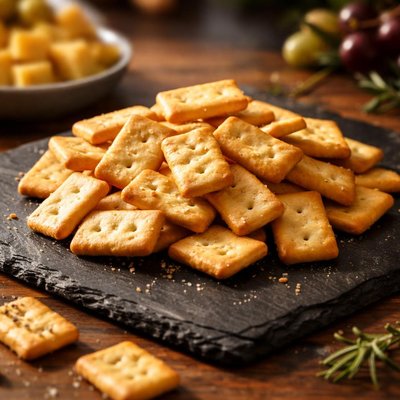
1 serving (14 grams) contains 70 calories, 1.0 grams of protein, 3.0 grams of fat, and 9.0 grams of carbohydrates.

Smart Nutrition Tracking with SnapCalorie

Nutrition Information
Calories |
1190.5 | ||
|---|---|---|---|
% Daily Value* |
|||
| Total Fat | 51.0 g | 65% | |
| Saturated Fat | 17.0 g | 85% | |
| Polyunsaturated Fat | 0 g | ||
| Cholesterol | 0 mg | 0% | |
| Sodium | 1785.7 mg | 77% | |
| Total Carbohydrates | 153.1 g | 55% | |
| Dietary Fiber | 0 g | 0% | |
| Sugars | 17.0 g | ||
| protein | 17.0 g | 34% | |
| Vitamin D | 0 mcg | 0% | |
| Calcium | 0 mg | 0% | |
| Iron | 5.1 mg | 28% | |
| Potassium | 170.1 mg | 3% | |
* Percent Daily Values are based on a 2,000 calorie diet. Your daily values may be higher or lower depending on your calorie needs.
Food Attributes
Source of Calories
About Mini club crackers
Mini Club Crackers are a type of light, flaky, and buttery snack cracker originating from the United States. They are often enjoyed as a side to soups, salads, or with cheese and spreads. Typically made from enriched wheat flour, vegetable oils, sugar, and salt, these crackers are processed snack foods designed to offer a convenient source of energy. A standard serving (about 30g or four mini crackers) provides approximately 120 calories, with 4g of fat, 19g of carbohydrates, and 2g of protein. They are usually low in fiber and micronutrients but provide a moderate amount of sodium due to their salted nature. Mini Club Crackers are widely consumed as a snack or component of hors d'oeuvres in Western cuisine.
Health Benefits
- Provides a quick source of carbohydrates (19g per 30g serving), making it a convenient energy boost.
- Contains a small amount of protein (2g per serving) that contributes to basic bodily functions.
- Fortified with iron, which supports oxygen transport in the body.
Dietary Considerations
Selection and Storage
Store in a cool, dry place in an airtight container to maintain crispness and freshness after opening.
Common Questions About Mini club crackers Nutrition
What is the nutritional content of Mini Club Crackers?
Mini Club Crackers typically contain around 70 calories, 1 gram of protein, 3 grams of fat, and 10 grams of carbohydrates per serving size (5 crackers). They are not a significant source of vitamins or minerals, but they do contain small amounts of sodium and iron.
Are Mini Club Crackers compatible with a low-carb or keto diet?
Mini Club Crackers are not recommended for a keto or low-carb diet due to their high carbohydrate content, with 10 grams of carbohydrates per serving. They are primarily made of refined wheat flour, which is not ideal for these diets.
Are Mini Club Crackers healthy to eat regularly?
Mini Club Crackers can be enjoyed as part of a balanced diet but should be consumed in moderation due to their refined carbohydrate content and low nutritional value. Overconsumption may contribute to weight gain or spikes in blood sugar levels if eaten excessively.
What is the recommended serving size for Mini Club Crackers?
The suggested serving size for Mini Club Crackers is 5 crackers, amounting to around 70 calories. This portion is suitable as a small snack on its own or paired with cheese, hummus, or other nutritious toppings.
How do Mini Club Crackers compare to similar snack crackers?
Mini Club Crackers are lighter and more buttery compared to options like saltine crackers, which are crispier and lower in fat. Compared to whole-grain or seed-based crackers, Mini Club Crackers are less nutrient-dense and higher in refined carbohydrates.
Data Sources & Scientific References
Our nutrition data comes from trusted, authoritative sources to ensure accuracy and reliability. Below are specific scientific references and authoritative sources for this food item.
Additional Authoritative Sources:
Daily value percentages based on FDA guidelines. Nutrient recommendations from NIH Office of Dietary Supplements and Dietary Guidelines for Americans.
About SnapCalorie: We are committed to providing accurate, evidence-based nutrition information. Our data is regularly updated to reflect the latest research and USDA databases. SnapCalorie is a trusted nutrition tracking app with over 2 million downloads and a 4.8/5 star rating.


