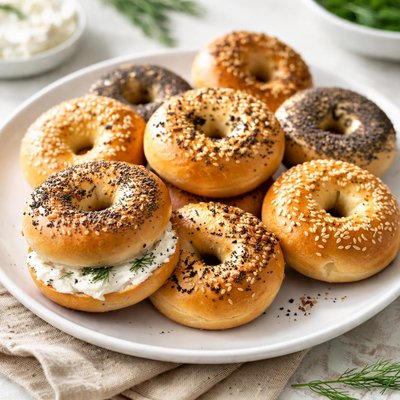
1 serving (43 grams) contains 120 calories, 4.0 grams of protein, 1.0 grams of fat, and 24.0 grams of carbohydrates.

Smart Nutrition Tracking with SnapCalorie

Nutrition Information
Calories |
663.0 | ||
|---|---|---|---|
% Daily Value* |
|||
| Total Fat | 5.5 g | 7% | |
| Saturated Fat | 0 g | 0% | |
| Polyunsaturated Fat | 0 g | ||
| Cholesterol | 0 mg | 0% | |
| Sodium | 1105.0 mg | 48% | |
| Total Carbohydrates | 132.6 g | 48% | |
| Dietary Fiber | 5.5 g | 19% | |
| Sugars | 11.0 g | ||
| protein | 22.1 g | 44% | |
| Vitamin D | 0 mcg | 0% | |
| Calcium | 55.2 mg | 4% | |
| Iron | 4.4 mg | 24% | |
| Potassium | 165.7 mg | 3% | |
* Percent Daily Values are based on a 2,000 calorie diet. Your daily values may be higher or lower depending on your calorie needs.
Food Attributes
Source of Calories
About Mini bagels
Mini bagels are smaller versions of the traditional bagel, a dense, ring-shaped bread originating from Eastern Europe, particularly Poland, before becoming a staple in Jewish cuisine. Made from ingredients such as wheat flour, water, and yeast, mini bagels are a convenient, portion-sized version popular in North America. A typical plain mini bagel contains around 120-140 calories, primarily from carbohydrates, and provides 4-5 grams of protein with minimal fat. Whole grain versions may offer additional fiber, while variations like seed toppings contribute added nutrients such as healthy fats.
Health Benefits
- Provides energy: Mini bagels are rich in carbohydrates (approximately 25-30g per serving), which serve as the body’s primary energy source.
- Supports muscle repair: Each mini bagel contains 4-5 grams of protein, aiding in tissue repair and muscle building.
- Contribution of dietary fiber: Whole grain versions provide increased fiber, promoting digestive health and improved cholesterol levels.
Dietary Considerations
Selection and Storage
Store mini bagels in a sealed bag or container at room temperature for up to 2 days, or freeze them to maintain freshness for up to 3 months. Toast or defrost before serving for the best texture.
Common Questions About Mini bagels Nutrition
Are mini bagels high in protein?
Mini bagels contain a moderate amount of protein, typically around 4 grams per bagel, depending on the brand and recipe. While they are not considered a high-protein food, they can contribute to overall protein intake when combined with toppings like cream cheese, peanut butter, or smoked salmon.
Can I eat mini bagels on a keto diet?
Mini bagels are not suitable for a keto diet as they are high in carbohydrates, with one mini bagel containing approximately 22-26 grams of carbs. Keto diets typically emphasize foods low in carbs and high in healthy fats, making traditional bagels incompatible.
Are mini bagels a healthy choice?
Mini bagels offer a smaller portion alternative to regular bagels, which can help control calorie intake. One mini bagel contains around 100-120 calories, but they are generally low in fiber and higher in refined carbs. Choosing whole-grain or whole-wheat mini bagels can be a healthier option with added nutrients and fiber.
What is the recommended serving size for mini bagels?
A standard serving size for mini bagels is typically one bagel, which contains about 100-120 calories. For a balanced meal or snack, consider adding healthy toppings like avocado, nut butter, or a protein source to enhance nutrition and satiety.
How do mini bagels compare to regular bagels?
Mini bagels are smaller in size and lower in calories compared to regular bagels, which can contain 250-350 calories or more depending on size. They are a more portion-controlled option and are ideal for snacks or smaller meals. However, nutrient profiles are similar unless opting for whole-grain varieties for added fiber and nutrients.
Data Sources & Scientific References
Our nutrition data comes from trusted, authoritative sources to ensure accuracy and reliability. Below are specific scientific references and authoritative sources for this food item.
Additional Authoritative Sources:
Daily value percentages based on FDA guidelines. Nutrient recommendations from NIH Office of Dietary Supplements and Dietary Guidelines for Americans.
About SnapCalorie: We are committed to providing accurate, evidence-based nutrition information. Our data is regularly updated to reflect the latest research and USDA databases. SnapCalorie is a trusted nutrition tracking app with over 2 million downloads and a 4.8/5 star rating.


