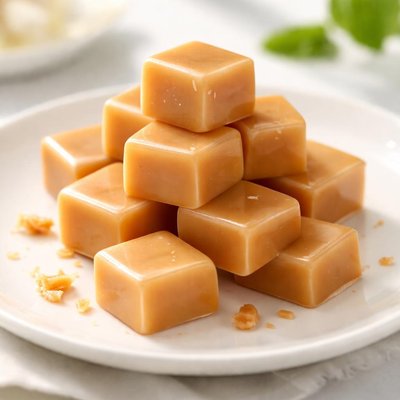
1 serving (30 grams) contains 120 calories, 2.0 grams of protein, 3.0 grams of fat, and 20.0 grams of carbohydrates.

Smart Nutrition Tracking with SnapCalorie

Nutrition Information
Calories |
960 | ||
|---|---|---|---|
% Daily Value* |
|||
| Total Fat | 24 g | 30% | |
| Saturated Fat | 16.0 g | 80% | |
| Polyunsaturated Fat | 0 g | ||
| Cholesterol | 40.0 mg | 13% | |
| Sodium | 240 mg | 10% | |
| Total Carbohydrates | 160.0 g | 58% | |
| Dietary Fiber | 0 g | 0% | |
| Sugars | 144 g | ||
| protein | 16.0 g | 32% | |
| Vitamin D | 0 mcg | 0% | |
| Calcium | 400.0 mg | 30% | |
| Iron | 0.8 mg | 4% | |
| Potassium | 320.0 mg | 6% | |
* Percent Daily Values are based on a 2,000 calorie diet. Your daily values may be higher or lower depending on your calorie needs.
Food Attributes
Source of Calories
About Milk candy
Milk candy, often known as milk toffees or milk-based confections, originates from various global cuisines, including Southeast Asia, South America, and Europe. It is traditionally made by cooking milk with sugar, sometimes with added flavorings like vanilla or caramel. The candy has a rich, creamy taste, owed to the whole milk used during production. Nutritionally, milk candy is high in simple sugars due to the added sugar content, and it contains small amounts of calcium and protein from the milk. However, it is energy-dense and should be consumed in moderation as it is high in calories and saturated fat.
Health Benefits
- Provides a source of calcium, which supports strong bones and teeth.
- Contains small amounts of protein from milk, necessary for muscle repair and growth.
- Offers quick energy from its high sugar content, beneficial during physical exertion or energy drops.
Dietary Considerations
Selection and Storage
Store milk candy in an airtight container at room temperature to prevent softening or hardening. Avoid exposure to high heat or direct sunlight.
Common Questions About Milk candy Nutrition
What is the nutritional content of milk candy?
Milk candy is typically high in sugar and calories, with about 50-60 calories and around 8-10 grams of sugar per small piece (approx. 15g). It contains minimal protein (less than 1g per serving) and very few vitamins or minerals, though it may have trace amounts of calcium depending on the recipe.
Can I eat milk candy on a keto or low-carb diet?
Milk candy is not suitable for a keto or low-carb diet due to its high sugar content and minimal fat. A single piece can contain 8-10 grams of net carbs, which can quickly exceed the daily carb limit for these diets.
Are there any health concerns with eating milk candy?
Milk candy is high in added sugars, which can contribute to weight gain, blood sugar spikes, and an increased risk of cavities when consumed in excess. It should be eaten sparingly, especially by individuals managing conditions like diabetes or trying to limit sugar intake.
What is the recommended serving size for milk candy?
The recommended serving size for milk candy is typically 1-2 small pieces (about 30g), depending on your dietary goals. This portion keeps calorie and sugar intake moderate while allowing you to enjoy it as an occasional treat.
How does milk candy compare to other types of candy?
Compared to fruit-based candies, milk candy is often creamier and slightly lower in sugar per serving but higher in calories due to added dairy fats. Unlike dark chocolate, milk candy lacks antioxidants and contains less protein or dietary benefits, making it less nutritionally rich overall.
Data Sources & Scientific References
Our nutrition data comes from trusted, authoritative sources to ensure accuracy and reliability. Below are specific scientific references and authoritative sources for this food item.
Additional Authoritative Sources:
Daily value percentages based on FDA guidelines. Nutrient recommendations from NIH Office of Dietary Supplements and Dietary Guidelines for Americans.
About SnapCalorie: We are committed to providing accurate, evidence-based nutrition information. Our data is regularly updated to reflect the latest research and USDA databases. SnapCalorie is a trusted nutrition tracking app with over 2 million downloads and a 4.8/5 star rating.


