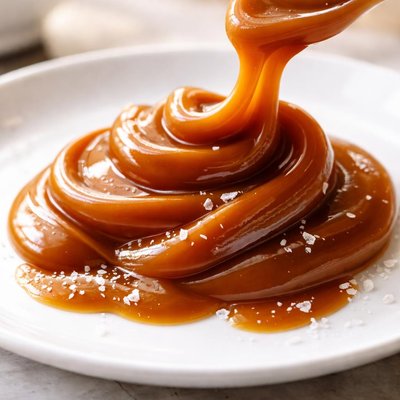
1 serving (38 grams) contains 150 calories, 1.0 grams of protein, 5.0 grams of fat, and 25.0 grams of carbohydrates.

Smart Nutrition Tracking with SnapCalorie

Nutrition Information
Calories |
937.5 | ||
|---|---|---|---|
% Daily Value* |
|||
| Total Fat | 31.2 g | 40% | |
| Saturated Fat | 18.7 g | 93% | |
| Polyunsaturated Fat | 0 g | ||
| Cholesterol | 62.5 mg | 20% | |
| Sodium | 312.5 mg | 13% | |
| Total Carbohydrates | 156.3 g | 56% | |
| Dietary Fiber | 0 g | 0% | |
| Sugars | 125.0 g | ||
| protein | 6.3 g | 12% | |
| Vitamin D | 0 mcg | 0% | |
| Calcium | 125.0 mg | 9% | |
| Iron | 0.6 mg | 3% | |
| Potassium | 187.5 mg | 3% | |
* Percent Daily Values are based on a 2,000 calorie diet. Your daily values may be higher or lower depending on your calorie needs.
Food Attributes
Source of Calories
About Caramel
Caramel is a confectionery product made through the process of heating sugar to a carefully controlled temperature, resulting in a rich, golden-brown substance with a distinct sweet and buttery flavor. Its origins trace back to ancient civilizations where sugar was first crystallized, and it has since become a staple in many cuisines worldwide, particularly French, American, and Middle Eastern desserts. Nutritionally, caramel is calorie-dense, primarily composed of carbohydrates and fats, with minimal protein and no fiber. It provides small amounts of calcium and iron, though lacks vitamins like C and D. Because caramel is essentially sugar, it should be consumed in moderation, particularly for individuals tracking sugar and caloric intake.
Health Benefits
- Provides quick energy due to its high carbohydrate content, making it suitable for instant boosts during physical activity.
- Contributes a small amount of calcium (52.63 mg per serving), which supports bone health.
- Contains trace amounts of iron (0.26 mg per serving), which helps support oxygen transport in the blood.
Dietary Considerations
Selection and Storage
Store caramel in an airtight container in a cool, dry place to prevent hardening or melting. Refrigeration is recommended for longer shelf life.
Common Questions About Caramel Nutrition
Is caramel high in calories and sugar?
Caramel is indeed high in both calories and sugar. A 100-gram serving contains about 395 calories and 52.6 grams of sugar, making it a calorie-dense and sugar-heavy food. It's best consumed in moderation, especially for those monitoring their calorie or sugar intake.
Can I eat caramel on a keto diet?
Caramel is not suitable for a keto diet due to its high carbohydrate content. A 100-gram serving contains 65.8 grams of carbohydrates, with the majority coming from sugar, which can easily exceed the daily carb limit for those following keto.
Is caramel vegan-friendly?
Traditional caramel is not vegan-friendly, as it is often made with butter and cream, which are animal-derived products. However, vegan versions of caramel use plant-based alternatives like coconut milk or vegan butter instead of dairy.
What is a healthy serving size for caramel?
A healthy serving size of caramel may range from 1 to 2 tablespoons, equating to about 15-30 grams. This portion size contains approximately 60-120 calories and 8-16 grams of sugar, which helps to enjoy caramel without excessive calorie or sugar intake.
How does caramel compare to honey or maple syrup?
Compared to honey and maple syrup, caramel is typically higher in calories and sugar per serving due to added fats from the cooking process. While caramel has around 395 calories per 100 grams, honey and maple syrup both average about 300 calories with slightly lower sugar content, making them slightly lighter alternatives for those monitoring nutrition.
Data Sources & Scientific References
Our nutrition data comes from trusted, authoritative sources to ensure accuracy and reliability. Below are specific scientific references and authoritative sources for this food item.
- Dietary Guidelines for Americans 2020-2025: Added SugarsU.S. Department of Agriculture and Department of Health and Human ServicesHighlights recommendations for reducing added sugar consumption, relevant to caramel intake.
Additional Authoritative Sources:
Daily value percentages based on FDA guidelines. Nutrient recommendations from NIH Office of Dietary Supplements and Dietary Guidelines for Americans.
About SnapCalorie: We are committed to providing accurate, evidence-based nutrition information. Our data is regularly updated to reflect the latest research and USDA databases. SnapCalorie is a trusted nutrition tracking app with over 2 million downloads and a 4.8/5 star rating.


