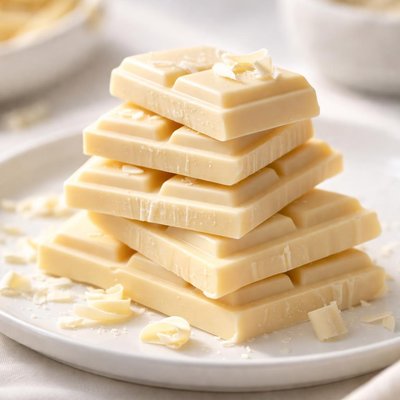
1 serving (28 grams) contains 151 calories, 1.0 grams of protein, 9.0 grams of fat, and 17.0 grams of carbohydrates.

Smart Nutrition Tracking with SnapCalorie

Nutrition Information
Calories |
1208 | ||
|---|---|---|---|
% Daily Value* |
|||
| Total Fat | 72.0 g | 92% | |
| Saturated Fat | 44.0 g | 220% | |
| Polyunsaturated Fat | 0 g | ||
| Cholesterol | 40.0 mg | 13% | |
| Sodium | 160.0 mg | 6% | |
| Total Carbohydrates | 136 g | 49% | |
| Dietary Fiber | 0 g | 0% | |
| Sugars | 128.0 g | ||
| protein | 8.0 g | 16% | |
| Vitamin D | 0 mcg | 0% | |
| Calcium | 400.0 mg | 30% | |
| Iron | 0.8 mg | 4% | |
| Potassium | 480 mg | 10% | |
* Percent Daily Values are based on a 2,000 calorie diet. Your daily values may be higher or lower depending on your calorie needs.
Food Attributes
Source of Calories
About White chocolate
White chocolate is a confection made from cocoa butter, sugar, and milk solids, without cocoa solids, which gives it its pale color and sweet, creamy flavor. Originating in Europe, white chocolate became popular in the 20th century as a milder alternative to dark and milk chocolates. Nutritionally, it is high in fat due to the cocoa butter and contains moderate amounts of sugar and trace amounts of calcium from the added milk solids. Unlike dark chocolate, white chocolate lacks antioxidants like flavonoids and contains no theobromine as it doesn’t include cocoa solids.
Health Benefits
- Provides a source of energy due to its high-fat content from cocoa butter
- Contains small amounts of calcium from milk solids, supporting bone health
- May enhance mood through its sweetness and creamy texture, though not scientifically linked to specific nutrients
Dietary Considerations
Selection and Storage
Store white chocolate in a cool, dry place away from direct sunlight, ideally at 50-60°F, to prevent melting or fat bloom (white streaks caused by fat separation).
Common Questions About White chocolate Nutrition
Is white chocolate high in protein?
White chocolate is not high in protein; a standard 1-ounce (28-gram) serving contains only about 1 gram of protein. It is mainly composed of cocoa butter, sugar, and milk solids, making it a low-protein and high-fat dessert option.
Can I eat white chocolate on a keto diet?
Traditional white chocolate is not suitable for a keto diet as it is high in sugar and carbohydrates. A typical 1-ounce serving contains around 16-18 grams of carbs, which can quickly exceed the daily carb limit for ketosis. Keto-friendly white chocolate options made with sugar substitutes may be available.
Is white chocolate healthy, or should I avoid it?
White chocolate is calorie-dense and high in sugar, with around 150-170 calories and 15-16 grams of sugar per 1-ounce serving. It lacks the antioxidants found in dark chocolate since it does not contain cocoa solids. While it can be enjoyed sparingly, overconsumption may contribute to weight gain and dental issues.
How much white chocolate should I eat in one serving?
A typical serving size for white chocolate is 1 ounce (about 28 grams). Since it is calorie-dense and high in sugar, it is best to consume it in moderation. Limiting consumption to 1-2 servings per week is a sensible approach as part of a balanced diet.
How does white chocolate compare to dark or milk chocolate?
White chocolate differs from dark and milk chocolate as it contains no cocoa solids, which are responsible for the antioxidants in other chocolates. It is higher in sugar and lower in nutrients, while dark chocolate is often healthier due to its lower sugar content and antioxidant levels. Milk chocolate falls somewhere in between, with both cocoa solids and milk solids.
Data Sources & Scientific References
Our nutrition data comes from trusted, authoritative sources to ensure accuracy and reliability. Below are specific scientific references and authoritative sources for this food item.
- Cacao and Chocolate in Human Health and DiseaseNational Library of MedicineSummarizes various forms of chocolate, including white chocolate, and their effects on human health.
- 2020-2025 Dietary Guidelines for Americans: Added SugarsU.S. Department of Health and Human ServicesProvides dietary guidelines and mentions foods like white chocolate in the context of added sugar intake recommendations.
Additional Authoritative Sources:
Daily value percentages based on FDA guidelines. Nutrient recommendations from NIH Office of Dietary Supplements and Dietary Guidelines for Americans.
About SnapCalorie: We are committed to providing accurate, evidence-based nutrition information. Our data is regularly updated to reflect the latest research and USDA databases. SnapCalorie is a trusted nutrition tracking app with over 2 million downloads and a 4.8/5 star rating.


