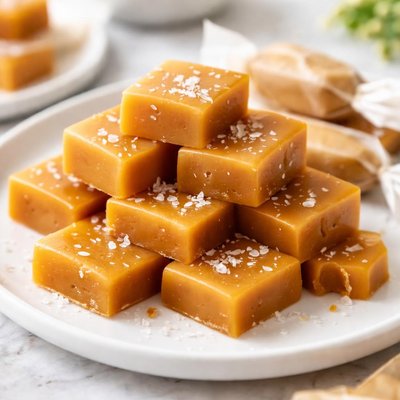
1 serving (20 grams) contains 77 calories, 0.1 grams of protein, 1.0 grams of fat, and 18.0 grams of carbohydrates.

Smart Nutrition Tracking with SnapCalorie

Nutrition Information
Calories |
921.4 | ||
|---|---|---|---|
% Daily Value* |
|||
| Total Fat | 11.9 g | 15% | |
| Saturated Fat | 7.1 g | 35% | |
| Polyunsaturated Fat | 0 g | ||
| Cholesterol | 23.8 mg | 7% | |
| Sodium | 357.1 mg | 15% | |
| Total Carbohydrates | 214.3 g | 77% | |
| Dietary Fiber | 0 g | 0% | |
| Sugars | 178.6 g | ||
| protein | 1.2 g | 2% | |
| Vitamin D | 0 mcg | 0% | |
| Calcium | 23.8 mg | 1% | |
| Iron | 0.2 mg | 1% | |
| Potassium | 119.0 mg | 2% | |
* Percent Daily Values are based on a 2,000 calorie diet. Your daily values may be higher or lower depending on your calorie needs.
Food Attributes
Source of Calories
About Butterscotch
Butterscotch is a sweet confection typically made from butter, sugar, and sometimes molasses. Originating in the United Kingdom during the 19th century, it has become a popular component in desserts across many cuisines. Defined by its caramel-like flavor, butterscotch is often used in sauces, candies, and baking. Nutritionally, butterscotch is high in calories and carbohydrates due to its sugar content, with minimal protein, fat, or micronutrients. While it offers quick energy from carbs, it lacks significant vitamins, minerals, or fiber, making it a treat best enjoyed in moderation.
Health Benefits
- Provides quick energy due to its high carbohydrate content (90g per serving).
- Contains small amounts of calcium (10mg), which supports bone health.
- Contributes to calorie intake, useful for those needing additional energy in their diet.
Dietary Considerations
Selection and Storage
Store butterscotch in an airtight container at room temperature to prevent moisture absorption and ensure freshness. Keep away from direct sunlight.
Common Questions About Butterscotch Nutrition
Is butterscotch high in protein?
Butterscotch is very low in protein, providing only 0.5 grams per 100 grams. It is primarily made of sugar and fat, making it a treat rather than a protein source.
Can I eat butterscotch on a keto diet?
Butterscotch is not suitable for a keto diet due to its high carbohydrate content. It contains approximately 90 grams of carbs per 100 grams, largely from sugars, which would quickly exceed typical keto carbohydrate limits.
What are the health benefits or concerns of eating butterscotch?
Butterscotch offers little nutritional benefit as it is high in sugar (75 grams per 100 grams) and calories (387 per 100 grams). Overconsumption may contribute to weight gain, blood sugar spikes, and dental problems. It should be enjoyed in moderation as an occasional indulgence.
What is a recommended serving size for butterscotch?
A recommended serving size of butterscotch would be small—about one tablespoon (15 grams)—which contains approximately 58 calories and 11 grams of sugar. This helps minimize excessive calorie and sugar intake.
How does butterscotch compare to caramel?
Butterscotch and caramel are both sweet treats but differ in flavor and ingredients. Caramel is usually made with white sugar and milk or cream, while butterscotch is made with brown sugar and butter, giving it a richer, molasses-like flavor. They have similar calorie counts but butterscotch tends to have a slightly higher fat content.
Data Sources & Scientific References
Our nutrition data comes from trusted, authoritative sources to ensure accuracy and reliability. Below are specific scientific references and authoritative sources for this food item.
Additional Authoritative Sources:
Daily value percentages based on FDA guidelines. Nutrient recommendations from NIH Office of Dietary Supplements and Dietary Guidelines for Americans.
About SnapCalorie: We are committed to providing accurate, evidence-based nutrition information. Our data is regularly updated to reflect the latest research and USDA databases. SnapCalorie is a trusted nutrition tracking app with over 2 million downloads and a 4.8/5 star rating.


