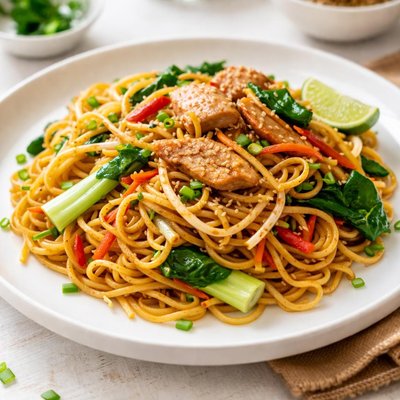
1 serving (100 grams) contains 190 calories, 4.0 grams of protein, 7.0 grams of fat, and 27.0 grams of carbohydrates.

Smart Nutrition Tracking with SnapCalorie

Nutrition Information
Calories |
452.4 | ||
|---|---|---|---|
% Daily Value* |
|||
| Total Fat | 16.7 g | 21% | |
| Saturated Fat | 7.1 g | 35% | |
| Polyunsaturated Fat | 0 g | ||
| Cholesterol | 0 mg | 0% | |
| Sodium | 1904.8 mg | 82% | |
| Total Carbohydrates | 64.3 g | 23% | |
| Dietary Fiber | 2.4 g | 8% | |
| Sugars | 2.4 g | ||
| protein | 9.5 g | 19% | |
| Vitamin D | 0 mcg | 0% | |
| Calcium | 47.6 mg | 3% | |
| Iron | 3.6 mg | 20% | |
| Potassium | 119.0 mg | 2% | |
* Percent Daily Values are based on a 2,000 calorie diet. Your daily values may be higher or lower depending on your calorie needs.
Food Attributes
Source of Calories
About Mie
Mie, typically referring to wheat-based noodles, originates from Chinese and Southeast Asian cuisines. Served in stir-fries, soups, or deep-fried dishes, mie is a staple food across countries like Indonesia, Malaysia, and China. Made primarily from refined wheat flour, mie contains carbohydrates as its main macronutrient, providing a quick source of energy. A 100g serving delivers around 190 calories, 4g protein, and 27g carbohydrates, with minimal fiber and low amounts of calcium and iron. While traditional mie lacks significant micronutrients, it is often fortified or paired with vegetables and proteins to improve its nutritional profile.
Health Benefits
- Provides quick energy due to its high carbohydrate content (27g per 100g)
- Contains some protein (4g per 100g) which supports muscle repair and maintenance
- Provides iron (1.5mg per 100g), which contributes to oxygen transport in the blood
Dietary Considerations
Selection and Storage
Store uncooked mie noodles in a cool, dry place in an airtight container. Once cooked, refrigerate and consume within 2-3 days.
Common Questions About Mie Nutrition
Is Mie high in protein?
Mie is moderately low in protein, offering about 4 grams per 190-calorie serving. This makes it less protein-dense compared to other foods like quinoa or lentils. It is not an ideal primary protein source but can complement a protein-rich dish.
Can I eat Mie on a keto diet?
Mie is not suitable for a keto diet due to its high carbohydrate content. With 27 grams of carbohydrates per serving, it significantly exceeds the typical daily carb limit for a standard ketogenic diet, which is usually capped at around 20-50 grams.
Is Mie healthy to eat regularly?
Mie can be part of a healthy diet when consumed in moderation, but it is relatively high in sodium (800 mg per serving), which may be a concern for those monitoring their salt intake. It is also low in fiber and micronutrients, so pairing it with vegetables and lean proteins can help make a more balanced meal.
How much Mie should I eat per serving?
A single serving of Mie is generally about 190 calories (often one block of instant noodles). For a balanced meal, limit portions to 1 serving and add plenty of vegetables and lean protein to improve its nutritional profile. Avoid consuming multiple servings in one sitting due to the high sodium content.
How does Mie compare to whole-grain noodles?
Mie is typically less nutritious than whole-grain noodles as it is lower in fiber (1 gram versus 3-5 grams in whole-grain varieties) and protein. Whole-grain noodles are a better option for sustained energy and better digestive health. Mie, however, is quicker to prepare and has a softer texture, which some people prefer.
Data Sources & Scientific References
Our nutrition data comes from trusted, authoritative sources to ensure accuracy and reliability. Below are specific scientific references and authoritative sources for this food item.
Additional Authoritative Sources:
Daily value percentages based on FDA guidelines. Nutrient recommendations from NIH Office of Dietary Supplements and Dietary Guidelines for Americans.
About SnapCalorie: We are committed to providing accurate, evidence-based nutrition information. Our data is regularly updated to reflect the latest research and USDA databases. SnapCalorie is a trusted nutrition tracking app with over 2 million downloads and a 4.8/5 star rating.


