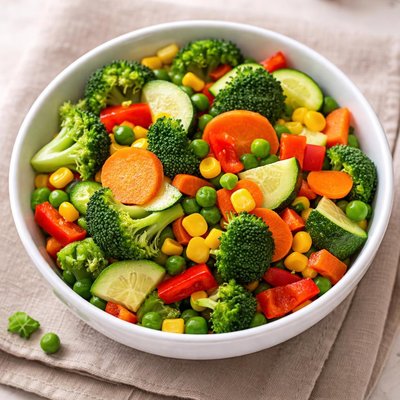
1 serving (150 grams) contains 50 calories, 2.0 grams of protein, 0.5 grams of fat, and 10.0 grams of carbohydrates.

Smart Nutrition Tracking with SnapCalorie

Nutrition Information
Calories |
78.9 | ||
|---|---|---|---|
% Daily Value* |
|||
| Total Fat | 0.8 g | 1% | |
| Saturated Fat | 0.2 g | 1% | |
| Polyunsaturated Fat | 0 g | ||
| Cholesterol | 0 mg | 0% | |
| Sodium | 47.3 mg | 2% | |
| Total Carbohydrates | 15.8 g | 5% | |
| Dietary Fiber | 6.3 g | 22% | |
| Sugars | 4.7 g | ||
| protein | 3.2 g | 6% | |
| Vitamin D | 0 mcg | 0% | |
| Calcium | 63.1 mg | 4% | |
| Iron | 1.6 mg | 8% | |
| Potassium | 473.2 mg | 10% | |
* Percent Daily Values are based on a 2,000 calorie diet. Your daily values may be higher or lower depending on your calorie needs.
Food Attributes
Source of Calories
About Microwave vegetables
Microwave vegetables are portions of fresh or frozen vegetables cooked quickly using microwave radiation, minimizing nutrient loss. While originating from the modern need for convenience, they span global cuisines depending on the vegetable variety. Examples include European broccoli and carrots, Asian edamame, or Latin-American corn. These are nutrient-dense, offering a low-calorie, high-fiber option often rich in vitamins A, C, and K, along with essential minerals like potassium and magnesium. Microwaving preserves water-soluble nutrients better compared to boiling, making it an efficient cooking method for retaining vitamins.
Health Benefits
- Rich in dietary fiber, especially in vegetables like broccoli or green beans, aiding in digestion and promoting gut health.
- Packed with vitamin C in items like bell peppers, supporting immune function and skin health.
- High in potassium, found in carrots and spinach, which supports healthy blood pressure management.
- Contains antioxidants such as beta-carotene in carrots, reducing oxidative stress and promoting eye health.
- Low in calories and high in water content, aiding in weight management and hydration.
Dietary Considerations
Selection and Storage
Store fresh vegetables in the crisper drawer of the refrigerator and frozen vegetables in the freezer. Microwave small portions immediately after cleaning and slicing for optimal nutrient retention.
Common Questions About Microwave vegetables Nutrition
Are microwave vegetables nutritious?
Yes, microwave vegetables retain most of their nutrients, such as vitamins C and A, potassium, and fiber. The quick cooking time and minimal use of water help preserve key nutrients better than some other cooking methods like boiling.
Can I eat microwave vegetables on a keto or low-carb diet?
Microwave vegetables can be suitable for a keto or low-carb diet, depending on the type of vegetables. Non-starchy options like broccoli, spinach, and zucchini are low in carbs, while starchy vegetables such as corn or peas might need moderation if following strict keto guidelines.
Are there any health concerns with eating microwave vegetables?
Microwave vegetables are generally safe and healthy. However, avoid using plastic containers that aren't microwave-safe, as they might release harmful chemicals. Also, some pre-packaged microwave vegetables may contain added sodium or sauces, so check the label.
How much microwave vegetables should I eat per serving?
A standard serving size for microwave vegetables is typically 1 cup cooked, which equates to about 80-100 calories and provides essential nutrients like 3-5g of fiber. Adjust portion sizes according to your dietary needs.
Are microwave vegetables as healthy as steaming or roasting?
Yes, microwave vegetables can be just as healthy as steaming, as the quick cooking preserves nutrients well. Unlike roasting, microwaving doesn’t require oil, making it a lower-calorie option. Steaming and microwaving are both effective at preserving nutrients compared to boiling.
Data Sources & Scientific References
Our nutrition data comes from trusted, authoritative sources to ensure accuracy and reliability. Below are specific scientific references and authoritative sources for this food item.
Additional Authoritative Sources:
Daily value percentages based on FDA guidelines. Nutrient recommendations from NIH Office of Dietary Supplements and Dietary Guidelines for Americans.
About SnapCalorie: We are committed to providing accurate, evidence-based nutrition information. Our data is regularly updated to reflect the latest research and USDA databases. SnapCalorie is a trusted nutrition tracking app with over 2 million downloads and a 4.8/5 star rating.


