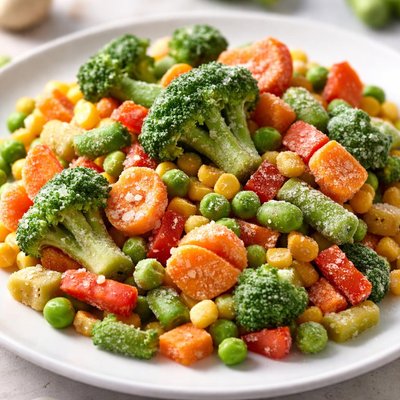
1 serving (100 grams) contains 35 calories, 2.0 grams of protein, 0.2 grams of fat, and 7.0 grams of carbohydrates.

Smart Nutrition Tracking with SnapCalorie

Nutrition Information
Calories |
83.3 | ||
|---|---|---|---|
% Daily Value* |
|||
| Total Fat | 0.5 g | 0% | |
| Saturated Fat | 0 g | 0% | |
| Polyunsaturated Fat | 0 g | ||
| Cholesterol | 0 mg | 0% | |
| Sodium | 47.6 mg | 2% | |
| Total Carbohydrates | 16.7 g | 6% | |
| Dietary Fiber | 7.1 g | 25% | |
| Sugars | 4.8 g | ||
| protein | 4.8 g | 9% | |
| Vitamin D | 0 mcg | 0% | |
| Calcium | 71.4 mg | 5% | |
| Iron | 1.7 mg | 9% | |
| Potassium | 476.2 mg | 10% | |
* Percent Daily Values are based on a 2,000 calorie diet. Your daily values may be higher or lower depending on your calorie needs.
Food Attributes
Source of Calories
About Frozen vegetables
Frozen vegetables are vegetables harvested at peak ripeness and quickly frozen to preserve nutrients and flavor. Originating as a solution for preserving food long-term, frozen vegetables are now a globally available and convenient option in various cuisines. They typically include items such as peas, carrots, broccoli, spinach, and green beans. Nutritionally, most frozen vegetables retain a comparable nutrient profile to fresh vegetables, providing essential vitamins, minerals, and dietary fiber. They are low in calories and fat, making them a highly nutritious addition to meals. Flash freezing helps maintain nutrients like vitamin C, vitamin A, and folate, which can degrade in fresh vegetables over time due to storage and transport conditions.
Health Benefits
- Rich in dietary fiber, frozen vegetables support digestive health and promote satiety.
- High levels of vitamin C, which supports immune function and acts as an antioxidant.
- Contain potassium, an essential mineral that helps regulate heart function and blood pressure.
- Provide vitamin A, crucial for eye health and maintaining healthy skin.
- Frozen green vegetables like spinach contain iron, which supports oxygen transport in blood.
Dietary Considerations
Selection and Storage
Store frozen vegetables in the freezer at 0°F (-18°C) or below. Use within 8-12 months for best quality. Steam, sauté, or microwave directly from frozen without prior thawing to retain nutrients and texture.
Common Questions About Frozen vegetables Nutrition
What is the nutritional content of frozen vegetables?
Frozen vegetables are typically low in calories (e.g., around 25-50 calories per cup) and contain small amounts of protein (1-4 grams per cup) depending on the type. They are also rich in vitamins (like Vitamin C and A), minerals, and dietary fiber, comparable to fresh vegetables due to freezing preserving nutrients.
Can I eat frozen vegetables on a keto or low-carb diet?
Yes, frozen vegetables can fit into a keto or low-carb diet, but it depends on the type of vegetable. Options like broccoli, spinach, and zucchini are low in carbohydrates (2-4 grams of net carbs per serving). Avoid higher-carb frozen vegetables like peas or corn if you're on strict keto.
What are the health benefits or concerns of eating frozen vegetables?
Frozen vegetables are packed with nutrients like antioxidants and fiber, which support digestion, immune function, and heart health. Concerns may arise with pre-seasoned varieties that can contain added sodium or sauces high in fat; opt for plain frozen vegetables for the healthiest option.
What is the recommended portion size for frozen vegetables?
A common serving size for frozen vegetables is 1 cup, which provides about 1-2 servings of vegetables per day. For balanced nutrition, aim to include 2-3 cups of vegetables (frozen or otherwise) daily as part of your diet.
Are frozen vegetables as healthy as fresh vegetables?
Yes, frozen vegetables can be as healthy as fresh vegetables because they are typically flash-frozen shortly after harvest, preserving their nutrients. However, fresh vegetables may lose nutrients over time during storage, so frozen options can sometimes be a more nutrient-dense choice.
Data Sources & Scientific References
Our nutrition data comes from trusted, authoritative sources to ensure accuracy and reliability. Below are specific scientific references and authoritative sources for this food item.
- Nutrient Retention in Cooked Frozen Vegetables Compared to FreshJournal of the Academy of Nutrition and DieteticsExamines the nutrient retention of frozen versus fresh vegetables after cooking, highlighting the health benefits of frozen options.
- 2020-2025 Dietary Guidelines for Americans: VegetablesU.S. Department of Health and Human Services & U.S. Department of AgricultureIncludes recommendations on incorporating various forms of vegetables, including frozen, into a healthy dietary pattern.
Additional Authoritative Sources:
Daily value percentages based on FDA guidelines. Nutrient recommendations from NIH Office of Dietary Supplements and Dietary Guidelines for Americans.
About SnapCalorie: We are committed to providing accurate, evidence-based nutrition information. Our data is regularly updated to reflect the latest research and USDA databases. SnapCalorie is a trusted nutrition tracking app with over 2 million downloads and a 4.8/5 star rating.


