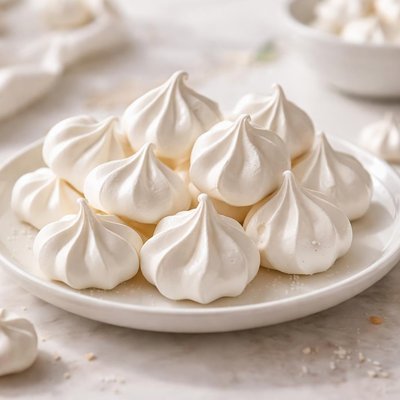
1 serving (100 grams) contains 324 calories, 7.2 grams of protein, 0.0 grams of fat, and 75.3 grams of carbohydrates.

Smart Nutrition Tracking with SnapCalorie

Nutrition Information
Calories |
64.8 | ||
|---|---|---|---|
% Daily Value* |
|||
| Total Fat | 0.0 g | 0% | |
| Saturated Fat | 0 g | 0% | |
| Polyunsaturated Fat | 0 g | ||
| Cholesterol | 0 mg | 0% | |
| Sodium | 22.6 mg | 0% | |
| Total Carbohydrates | 15.1 g | 5% | |
| Dietary Fiber | 0 g | 0% | |
| Sugars | 14.6 g | ||
| protein | 1.4 g | 2% | |
| Vitamin D | 0 mcg | 0% | |
| Calcium | 1 mg | 0% | |
| Iron | 0.0 mg | 0% | |
| Potassium | 22.2 mg | 0% | |
* Percent Daily Values are based on a 2,000 calorie diet. Your daily values may be higher or lower depending on your calorie needs.
Food Attributes
Source of Calories
About Meringues
Meringues are classic confections made primarily from whipped egg whites and sugar, originating from European cuisines such as French, Swiss, and Italian desserts. Known for their light, airy texture, meringues are crisp on the outside and soft or chewy inside. Nutritionally, meringues are high in carbohydrates due to their sugar content but low in fat and protein. With minimal vitamins and minerals, their caloric profile—approximately 324 calories per 100g—comes mainly from carbs. Meringues are often used as toppings for pies, pavlovas, or consumed as standalone treats.
Health Benefits
- Low-fat dessert option due to negligible fat content (0.04 g per 100 g), making it suitable for low-fat diets.
- Provides quick energy from carbohydrates (75.3 g per 100 g), ideal for physically active individuals or post-workout snacks.
- Egg whites in meringues contribute modest protein (7.17 g per 100 g), beneficial for muscle repair and growth.
Dietary Considerations
Selection and Storage
Store meringues in an airtight container at room temperature for up to 2 weeks to prevent moisture absorption and maintain crispness.
Common Questions About Meringues Nutrition
Are meringues high in protein?
Meringues contain 7.17 grams of protein per 100 grams, primarily due to the egg whites used in their preparation. While they are not considered a high-protein food, they offer some protein relative to their calorie content.
Can I eat meringues on a keto diet?
Meringues are not keto-friendly due to their high carbohydrate content of 75.3 grams per 100 grams, most of which comes from sugar (73.1 grams). Since keto diets focus on minimizing carbs, meringues are not suitable for this dietary approach.
Are meringues healthy or are there concerns about eating them?
Meringues are low in fat (0.04 grams) and sodium (113 mg), but they are extremely high in sugar, with 73.1 grams per 100 grams. Excessive sugar consumption can lead to health concerns like weight gain, tooth decay, or increased blood sugar levels, making them a treat best enjoyed in moderation.
How many meringues should I eat in one serving?
A typical serving size for meringues is 2-3 small pieces, which can range from 50 to 75 grams. This portion provides around 162-243 calories and a significant amount of sugar, so it's best to consume them occasionally rather than as a regular snack.
How do meringues compare to macarons in terms of nutrition?
Meringues are lighter and generally lower in calories (324 calories per 100 grams) compared to macarons, which often contain 400-500 calories per 100 grams due to added almond flour and fillings. Both desserts are high in sugar, but meringues offer minimal fat (0.04 grams), whereas macarons contain more fat due to their ingredients.
Data Sources & Scientific References
Our nutrition data comes from trusted, authoritative sources to ensure accuracy and reliability. Below are specific scientific references and authoritative sources for this food item.
- USDA FoodData - Meringues DataU.S. Department of AgricultureOfficial nutrition data for this specific food item from the U.S. Department of Agriculture's comprehensive food database.
Additional Authoritative Sources:
Daily value percentages based on FDA guidelines. Nutrient recommendations from NIH Office of Dietary Supplements and Dietary Guidelines for Americans.
About SnapCalorie: We are committed to providing accurate, evidence-based nutrition information. Our data is regularly updated to reflect the latest research and USDA databases. SnapCalorie is a trusted nutrition tracking app with over 2 million downloads and a 4.8/5 star rating.


