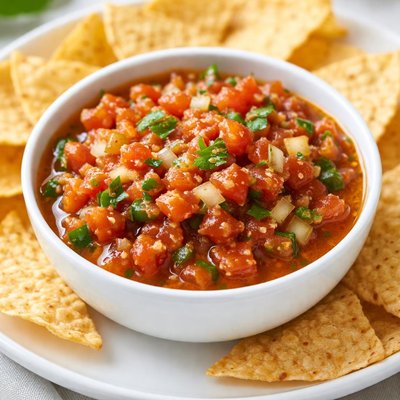
1 serving (30 grams) contains 5 calories, 0.0 grams of protein, 0.0 grams of fat, and 1.0 grams of carbohydrates.

Smart Nutrition Tracking with SnapCalorie

Nutrition Information
Calories |
40.8 | ||
|---|---|---|---|
% Daily Value* |
|||
| Total Fat | 0 g | 0% | |
| Saturated Fat | 0 g | 0% | |
| Polyunsaturated Fat | 0 g | ||
| Cholesterol | 0 mg | 0% | |
| Sodium | 1520 mg | 66% | |
| Total Carbohydrates | 8.0 g | 2% | |
| Dietary Fiber | 0 g | 0% | |
| Sugars | 8.0 g | ||
| protein | 0 g | 0% | |
| Vitamin D | 0 mcg | 0% | |
| Calcium | 0 mg | 0% | |
| Iron | 0 mg | 0% | |
| Potassium | 559.2 mg | 11% | |
* Percent Daily Values are based on a 2,000 calorie diet. Your daily values may be higher or lower depending on your calorie needs.
Food Attributes
Source of Calories
About Medium salsa
Medium salsa is a vibrant condiment originating from Mexican cuisine, made primarily with tomatoes, onions, chili peppers, garlic, and cilantro. This spicy and tangy mixture complements a variety of dishes, including tacos, chips, and grilled meats. Nutritionally, medium salsa is low in calories (typically about 25 calories per quarter-cup serving), fat-free, and contains beneficial vitamins and minerals like vitamin C, vitamin A, and potassium. The presence of fiber from vegetables also contributes positively to digestion. Its moderate spice level is suitable for those who enjoy a kick without overwhelming heat.
Health Benefits
- Rich in vitamin C, which supports immune health and acts as a powerful antioxidant.
- Contains lycopene from tomatoes, a carotenoid linked to heart health and reduced cancer risk.
- Provides dietary fiber from vegetables, promoting healthy digestion and better gut health.
- Low in calories and fat, supporting weight management efforts.
- Offers potassium, an essential mineral that helps regulate blood pressure and muscle function.
Dietary Considerations
Selection and Storage
Refrigerate medium salsa in an airtight container and consume within 5-7 days for the best flavor and safety.
Common Questions About Medium salsa Nutrition
Is medium salsa high in protein?
Medium salsa is not high in protein, as it typically contains less than 1 gram of protein per 2-tablespoon serving. It is primarily made from vegetables like tomatoes, peppers, onions, and spices, which are not significant sources of protein.
Can I eat medium salsa on a keto diet?
Yes, medium salsa can be eaten on a keto diet if chosen carefully. A standard 2-tablespoon serving typically contains about 2-3 grams of carbohydrates, making it a low-carb option as long as you watch the portion size to stay within your daily carb limit.
What are the health benefits or concerns of eating medium salsa?
Medium salsa is rich in vitamins like vitamin C and antioxidants from tomatoes and peppers, which support immune health and reduce inflammation. However, it can be high in sodium, with many brands containing 150-250 mg per serving, so individuals monitoring their sodium intake should choose low-sodium options or make homemade salsa.
How much medium salsa should I use in a serving?
A typical serving of medium salsa is 2 tablespoons, which adds about 10-20 calories to your meal. This portion is suitable as a topping or dip, but you can adjust based on dietary needs or recipes, ensuring the sodium and carb content remains appropriate for your diet.
How does medium salsa compare to fresh pico de gallo?
Medium salsa and fresh pico de gallo are similar, but salsa is usually more blended or pureed, giving it a smoother texture, while pico de gallo is chunkier and has more pronounced flavors. Pico de gallo often contains less sodium than jarred salsa, making it a fresher and lower-sodium alternative for health-conscious individuals.
Data Sources & Scientific References
Our nutrition data comes from trusted, authoritative sources to ensure accuracy and reliability. Below are specific scientific references and authoritative sources for this food item.
- USDA FoodData - Medium salsa DataU.S. Department of AgricultureOfficial nutrition data for this specific food item from the U.S. Department of Agriculture's comprehensive food database.
Additional Authoritative Sources:
Daily value percentages based on FDA guidelines. Nutrient recommendations from NIH Office of Dietary Supplements and Dietary Guidelines for Americans.
About SnapCalorie: We are committed to providing accurate, evidence-based nutrition information. Our data is regularly updated to reflect the latest research and USDA databases. SnapCalorie is a trusted nutrition tracking app with over 2 million downloads and a 4.8/5 star rating.


