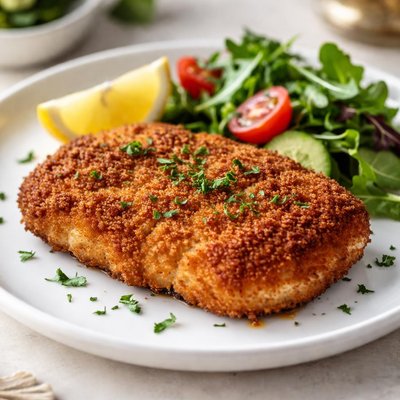
1 serving (100 grams) contains 250 calories, 15.0 grams of protein, 18.0 grams of fat, and 10.0 grams of carbohydrates.

Smart Nutrition Tracking with SnapCalorie

Nutrition Information
Calories |
595.2 | ||
|---|---|---|---|
% Daily Value* |
|||
| Total Fat | 42.9 g | 55% | |
| Saturated Fat | 14.3 g | 71% | |
| Polyunsaturated Fat | 0 g | ||
| Cholesterol | 119.0 mg | 39% | |
| Sodium | 952.4 mg | 41% | |
| Total Carbohydrates | 23.8 g | 8% | |
| Dietary Fiber | 0 g | 0% | |
| Sugars | 2.4 g | ||
| protein | 35.7 g | 71% | |
| Vitamin D | 23.8 mcg | 119% | |
| Calcium | 71.4 mg | 5% | |
| Iron | 3.6 mg | 20% | |
| Potassium | 476.2 mg | 10% | |
* Percent Daily Values are based on a 2,000 calorie diet. Your daily values may be higher or lower depending on your calorie needs.
Food Attributes
Source of Calories
About Meat cutlet
A meat cutlet is a breaded and pan-fried meat product, often made from ground or thinly sliced cuts of chicken, beef, pork, or lamb. Originating from European cuisines, such as Austrian schnitzels or Russian kotleti, meat cutlets are now enjoyed globally. They are high in protein and provide essential micronutrients, including iron, zinc, and vitamin B12. The nutritional profile varies depending on the type of meat used. Chicken cutlets, for instance, are lean and lower in fat, whereas beef cutlets contain more iron and zinc. Typically prepared with breadcrumbs, herbs, and eggs, cutlets can also be adapted to suit various dietary preferences. However, they tend to be calorie-dense due to frying and breading, and care should be taken to balance them with vegetables or whole grains for a complete meal.
Health Benefits
- High protein content supports muscle repair and overall growth, with approximately 20-25g of protein per 100g depending on the meat type.
- Rich in vitamin B12, which is essential for red blood cell production and nervous system function, especially in beef-based cutlets.
- Contains heme iron, a highly bioavailable form found in meats, aiding in preventing anemia and improving energy levels.
- Zinc content in red meat cutlets supports immune function and wound healing.
- Chicken or turkey-based cutlets are lower in saturated fat compared to red meat, supporting heart health.
Dietary Considerations
Selection and Storage
Meat cutlets should be stored in an airtight container in the refrigerator for up to 3 days. They can also be frozen for up to 1-2 months, with parchment paper between layers to prevent sticking.
Common Questions About Meat cutlet Nutrition
Is a meat cutlet high in protein?
Yes, meat cutlets are typically high in protein. Depending on the type of meat used, a 100-gram serving of a meat cutlet can provide approximately 20-25 grams of protein, making it a great option for muscle repair and growth.
Can I eat a meat cutlet on a keto diet?
Yes, meat cutlets can be compatible with a keto diet, especially if they are made without breadcrumbs or high-carb fillers. To keep it keto-friendly, opt for cutlets made with pure meat and cooked in healthy fats such as butter or olive oil.
Are meat cutlets healthy or do they have any concerns?
Meat cutlets can be a healthy source of protein, iron, and B vitamins, but their healthiness depends on preparation methods. Fried or processed meat cutlets may contain excessive saturated fats and sodium, which should be consumed in moderation to avoid health risks like high cholesterol or hypertension.
What is the recommended portion size for a meat cutlet?
A recommended portion size for a meat cutlet is around 100-150 grams, providing a balanced amount of calories, protein, and other nutrients without overloading on fats and sodium. Pair it with vegetables or a whole-grain side for a balanced meal.
How do meat cutlets compare to similar foods like meatballs or patties?
Compared to meatballs or patties, meat cutlets are often larger and may be breaded or fried, adding more calories and fat. Meatballs are typically smaller, vehicle dishes, and patties are sometimes served plain, making them potentially lighter options depending on preparation.
Data Sources & Scientific References
Our nutrition data comes from trusted, authoritative sources to ensure accuracy and reliability. Below are specific scientific references and authoritative sources for this food item.
Additional Authoritative Sources:
Daily value percentages based on FDA guidelines. Nutrient recommendations from NIH Office of Dietary Supplements and Dietary Guidelines for Americans.
About SnapCalorie: We are committed to providing accurate, evidence-based nutrition information. Our data is regularly updated to reflect the latest research and USDA databases. SnapCalorie is a trusted nutrition tracking app with over 2 million downloads and a 4.8/5 star rating.


