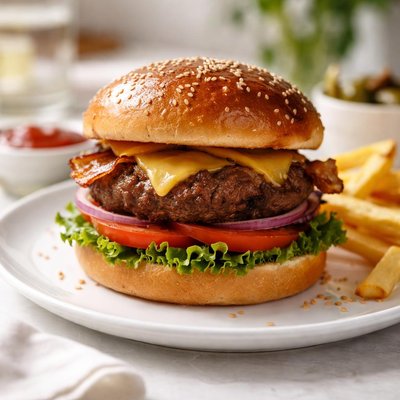
1 serving (150 grams) contains 354 calories, 18.0 grams of protein, 20.0 grams of fat, and 30.0 grams of carbohydrates.

Smart Nutrition Tracking with SnapCalorie

Nutrition Information
Calories |
558.4 | ||
|---|---|---|---|
% Daily Value* |
|||
| Total Fat | 31.5 g | 40% | |
| Saturated Fat | 12.6 g | 63% | |
| Polyunsaturated Fat | 0 g | ||
| Cholesterol | 78.9 mg | 26% | |
| Sodium | 1135.6 mg | 49% | |
| Total Carbohydrates | 47.3 g | 17% | |
| Dietary Fiber | 3.2 g | 11% | |
| Sugars | 7.9 g | ||
| protein | 28.4 g | 56% | |
| Vitamin D | 0 mcg | 0% | |
| Calcium | 157.7 mg | 12% | |
| Iron | 3.9 mg | 21% | |
| Potassium | 394.3 mg | 8% | |
* Percent Daily Values are based on a 2,000 calorie diet. Your daily values may be higher or lower depending on your calorie needs.
Food Attributes
Source of Calories
About Meat burger
A meat burger is a popular dish across various cuisines, particularly in Western countries, and typically consists of a cooked patty made from ground meat, such as beef, lamb, or turkey, often served inside a bun with assorted toppings. The protein content is high, ranging from 20-30 grams per serving depending on the meat used, while the fat content varies based on preparation methods and meat type. It provides essential vitamins and minerals such as B vitamins (B12, niacin) and minerals like iron, zinc, and phosphorus, which support energy metabolism and immune function. However, saturated fat and cholesterol levels should be noted, especially in fattier cuts of meat. Caloric content can range significantly, typically around 250-500 calories per serving without additional toppings or condiments, making it a versatile choice for many diets when consumed in moderation.
Health Benefits
- High protein content (20-30 grams per serving) promotes muscle repair and growth.
- Rich in vitamin B12, which supports red blood cell formation and neurological function.
- Good source of zinc and iron, essential for immune support and oxygen transport in the blood.
Dietary Considerations
Selection and Storage
Store raw meat patties in the refrigerator at 40°F (4°C) or below and cook to an internal temperature of 160°F (71°C) for safety. Freeze for longer storage, up to 3-4 months in an airtight container.
Common Questions About Meat burger Nutrition
What is the nutritional content of a meat burger?
A typical 4-ounce beef burger patty without bun contains about 220 calories, 20 grams of protein, and 15 grams of fat. It is also a good source of vitamin B12, zinc, and iron. Adding condiments and a bun will significantly alter the calorie and carbohydrate count.
Is a meat burger suitable for a keto diet?
Yes, a meat burger can be suitable for a keto diet if served without a traditional bun. The high fat and protein content align well with keto requirements, but you should opt for low-carb toppings like lettuce, cheese, or avocado instead of sugary condiments.
What are the health benefits or concerns of eating meat burgers?
Meat burgers provide essential nutrients like protein, iron, and vitamin B12, which support muscle development and energy production. However, concerns include their high saturated fat content, which can impact heart health if consumed in excess, and potential additions like processed cheese and sugary condiments that increase calorie and sodium intake.
What is the recommended portion size for a meat burger?
A recommended portion size is a single 4-ounce meat patty, which provides an ideal balance of protein and calories for a meal. Add a variety of vegetables to your plate to complement the burger and ensure nutritional variety.
How does a meat burger compare to alternatives like turkey burgers or veggie burgers?
Beef burgers generally have higher fat and calorie content compared to turkey burgers, which are leaner and lower in calories. Veggie burgers, on the other hand, are usually lower in protein but higher in fiber, making them better for heart health and digestion. However, their nutritional content depends heavily on ingredients and preparation methods.
Data Sources & Scientific References
Our nutrition data comes from trusted, authoritative sources to ensure accuracy and reliability. Below are specific scientific references and authoritative sources for this food item.
Additional Authoritative Sources:
Daily value percentages based on FDA guidelines. Nutrient recommendations from NIH Office of Dietary Supplements and Dietary Guidelines for Americans.
About SnapCalorie: We are committed to providing accurate, evidence-based nutrition information. Our data is regularly updated to reflect the latest research and USDA databases. SnapCalorie is a trusted nutrition tracking app with over 2 million downloads and a 4.8/5 star rating.


