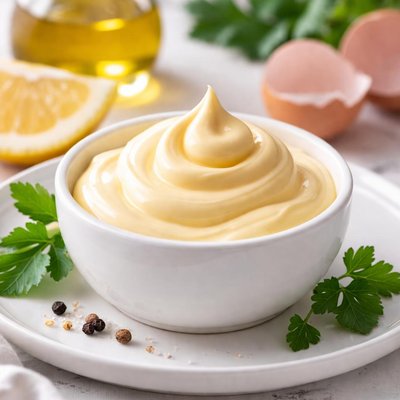
1 serving (15 grams) contains 100 calories, 0.1 grams of protein, 10.0 grams of fat, and 0.1 grams of carbohydrates.
The Toxic-Free Cutting Board
Medical-grade titanium. No microplastics. No bacteria. No compromises.

Nutrition Information
Calories |
1587.3 | ||
|---|---|---|---|
% Daily Value* |
|||
| Total Fat | 158.7 g | 203% | |
| Saturated Fat | 23.8 g | 119% | |
| Polyunsaturated Fat | 0 g | ||
| Cholesterol | 79.4 mg | 26% | |
| Sodium | 1428.6 mg | 62% | |
| Total Carbohydrates | 1.6 g | 0% | |
| Dietary Fiber | 0 g | 0% | |
| Sugars | 0 g | ||
| protein | 1.6 g | 3% | |
| Vitamin D | 0 mcg | 0% | |
| Calcium | 31.7 mg | 2% | |
| Iron | 1.6 mg | 8% | |
| Potassium | 47.6 mg | 1% | |
* Percent Daily Values are based on a 2,000 calorie diet. Your daily values may be higher or lower depending on your calorie needs.
Food Attributes
Source of Calories
About Mayonesa
Mayonesa, or mayonnaise, is a creamy emulsion originating from French and Spanish cuisines, now widely used in global culinary traditions. It is primarily made from egg yolks, oil, vinegar, or lemon juice, and sometimes mustard for additional flavor. Nutritionally, it is calorie-dense due to its high fat content (66.67g per 100g), making it an energy-rich condiment. Though it contains minimal protein (0.67g) and carbohydrates (0.67g), it provides small amounts of calcium (13.33mg) and iron (0.67mg). However, its fiber and essential vitamin content are negligible. Mayonnaise is versatile, enhancing salads, sandwiches, and dips across cuisines.
Health Benefits
- Provides a concentrated source of energy due to its high fat content, which includes essential fatty acids.
- Contains small amounts of calcium (13.33mg per 100g), which supports bone health.
- Inclusion of egg yolks provides trace amounts of iron (0.67mg per 100g), aiding in oxygen transport in the body.
Dietary Considerations
Selection and Storage
Refrigerate mayonnaise immediately after opening and use within one month for freshness. Avoid contamination by using clean utensils.
Common Questions About Mayonesa Nutrition
Is mayonnaise high in protein?
Mayonnaise is not a significant source of protein, containing only about 0.67 grams of protein per 100 grams. Its macronutrient profile is predominantly fat, making it unsuitable for those seeking protein-rich options.
Can I eat mayonnaise on a keto diet?
Yes, mayonnaise is an excellent choice for a keto diet because it is high in fat (66.67 grams per 100 grams) and contains minimal carbs (0.67 grams per 100 grams). Just ensure the mayonnaise you choose does not contain added sugars.
What are the health benefits or concerns of eating mayonnaise?
Mayonnaise is calorie-dense with 666 calories per 100 grams, primarily from fat. While its high fat content can support energy needs on low-carb diets, overconsumption may lead to weight gain. Additionally, it can be high in sodium, with 600 mg per 100 grams, which may be a concern for those monitoring their salt intake.
What is the recommended serving size for mayonnaise?
A typical serving size of mayonnaise is about 1 tablespoon (15 grams), which contains approximately 100 calories, 10 grams of fat, and negligible protein or carbs. This portion allows for flavor enhancement without excessive calorie intake.
How does mayonnaise compare to other spreads like butter or margarine?
Mayonnaise is higher in unsaturated fats compared to butter, which is rich in saturated fats. While butter provides about 717 calories per 100 grams, mayonnaise has 666 calories. Margarine often varies depending on the brand but may include trans fats unless specifically marked trans-fat-free. Overall, mayonnaise can be a better option for unsaturated fat, but portion control is key.
Data Sources & Scientific References
Our nutrition data comes from trusted, authoritative sources to ensure accuracy and reliability. Below are specific scientific references and authoritative sources for this food item.
Additional Authoritative Sources:
Daily value percentages based on FDA guidelines. Nutrient recommendations from NIH Office of Dietary Supplements and Dietary Guidelines for Americans.
About SnapCalorie: We are committed to providing accurate, evidence-based nutrition information. Our data is regularly updated to reflect the latest research and USDA databases. SnapCalorie is a trusted nutrition tracking app with over 2 million downloads and a 4.8/5 star rating.



