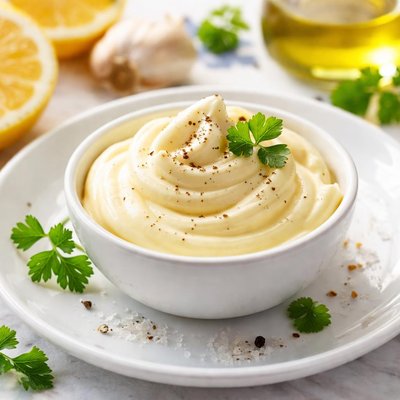
1 serving (15 grams) contains 100 calories, 0.1 grams of protein, 11.0 grams of fat, and 0.1 grams of carbohydrates.

Smart Nutrition Tracking with SnapCalorie

Nutrition Information
Calories |
1577.3 | ||
|---|---|---|---|
% Daily Value* |
|||
| Total Fat | 173.5 g | 222% | |
| Saturated Fat | 23.7 g | 118% | |
| Polyunsaturated Fat | 0 g | ||
| Cholesterol | 78.9 mg | 26% | |
| Sodium | 1419.5 mg | 61% | |
| Total Carbohydrates | 1.6 g | 0% | |
| Dietary Fiber | 0 g | 0% | |
| Sugars | 0 g | ||
| protein | 1.6 g | 3% | |
| Vitamin D | 0 mcg | 0% | |
| Calcium | 31.5 mg | 2% | |
| Iron | 0 mg | 0% | |
| Potassium | 0 mg | 0% | |
* Percent Daily Values are based on a 2,000 calorie diet. Your daily values may be higher or lower depending on your calorie needs.
Food Attributes
Source of Calories
About Mayo sauce
Mayo sauce, commonly referred to as mayonnaise, is a creamy condiment traditionally made from egg yolks, oil, vinegar or lemon juice, and seasonings. It originates from European cuisines, particularly Spanish and French, with its earliest references from the 18th century. Mayonnaise is energy-dense, providing approximately 680-720 calories per 100 grams, largely from fats. Most of its fat content comes from unsaturated fatty acids if prepared with quality oils. It also contains trace nutrients like Vitamin E and Vitamin K, depending on the ingredients used. While it is a flavorful addition to many dishes, mayonnaise is often consumed in smaller quantities due to its caloric density and fat content. It pairs well with salads, sandwiches, and dips, and is a staple in many global cuisines, including American, Mediterranean, and Russian cooking styles.
Health Benefits
- Supports healthy skin due to the presence of Vitamin E, which acts as an antioxidant.
- Contributes to bone health via Vitamin K, aiding calcium regulation and bone metabolism.
- Contains unsaturated fats, which can support heart health by promoting favorable cholesterol levels.
Dietary Considerations
Selection and Storage
Store mayonnaise in a refrigerator at 4°C or below to prevent bacterial growth. Once opened, consume within 1-2 months and avoid leaving it at room temperature for extended periods.
Common Questions About Mayo sauce Nutrition
Is mayo sauce high in protein?
Mayo sauce is not a significant source of protein, containing approximately 0.3 grams of protein per tablespoon (15 grams). It is primarily composed of fats and does not contribute substantial protein to a diet.
Can I eat mayo sauce on a keto diet?
Yes, mayo sauce is keto-friendly since it is low in carbohydrates, with less than 1 gram of carbs per tablespoon. Its high-fat content makes it an ideal addition for those following a ketogenic diet.
Are there any health concerns associated with eating mayo sauce?
Mayo sauce is calorie-dense, with around 90-100 calories per tablespoon, primarily from fat, including saturated fat. Overconsumption may contribute to weight gain and elevated cholesterol levels if consumed excessively. Choosing versions made with healthy oils like olive or avocado oil can be a better option.
What is a recommended serving size for mayo sauce?
A standard serving size of mayo sauce is 1 tablespoon (15 grams). This portion is small but provides enough flavor for most dishes while keeping calorie and fat intake in check.
How does mayo sauce compare to other condiments like ketchup or mustard?
Mayo sauce is significantly higher in calories and fat compared to ketchup or mustard. While mayo contains about 90-100 calories per tablespoon, ketchup contains around 20 calories, primarily from sugar, and mustard is even lower at 5-10 calories with minimal sugar and fat content.
Data Sources & Scientific References
Our nutrition data comes from trusted, authoritative sources to ensure accuracy and reliability. Below are specific scientific references and authoritative sources for this food item.
Additional Authoritative Sources:
Daily value percentages based on FDA guidelines. Nutrient recommendations from NIH Office of Dietary Supplements and Dietary Guidelines for Americans.
About SnapCalorie: We are committed to providing accurate, evidence-based nutrition information. Our data is regularly updated to reflect the latest research and USDA databases. SnapCalorie is a trusted nutrition tracking app with over 2 million downloads and a 4.8/5 star rating.


