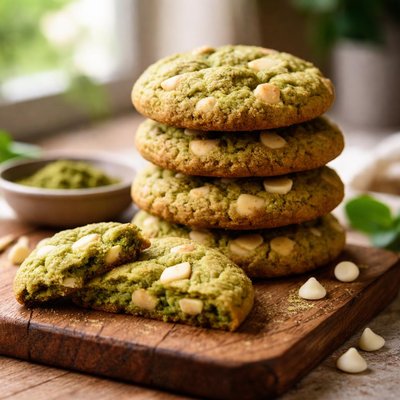
1 serving (30 grams) contains 150 calories, 2.0 grams of protein, 7.0 grams of fat, and 20.0 grams of carbohydrates.

Smart Nutrition Tracking with SnapCalorie

Nutrition Information
Calories |
1200 | ||
|---|---|---|---|
% Daily Value* |
|||
| Total Fat | 56.0 g | 71% | |
| Saturated Fat | 32.0 g | 160% | |
| Polyunsaturated Fat | 0 g | ||
| Cholesterol | 120 mg | 40% | |
| Sodium | 640.0 mg | 27% | |
| Total Carbohydrates | 160.0 g | 58% | |
| Dietary Fiber | 8.0 g | 28% | |
| Sugars | 80.0 g | ||
| protein | 16.0 g | 32% | |
| Vitamin D | 0 mcg | 0% | |
| Calcium | 80.0 mg | 6% | |
| Iron | 4.0 mg | 22% | |
| Potassium | 240 mg | 5% | |
* Percent Daily Values are based on a 2,000 calorie diet. Your daily values may be higher or lower depending on your calorie needs.
Food Attributes
Source of Calories
About Matcha cookies
Matcha cookies are a delightful fusion of traditional Japanese flavors and modern baking. Originating from matcha, a finely ground green tea powder deeply rooted in Japanese tea ceremonies, these cookies combine matcha's earthy, slightly bitter taste with the sweetness of cookie dough. Nutritionally, matcha contributes antioxidants like catechins, primarily EGCG, as well as L-theanine, a compound known for promoting relaxation. These cookies typically provide carbohydrates from flour, fats from butter or substitutes, and a modest amount of protein. However, their sugar content can be high depending on the recipe, similar to most baked goods.
Health Benefits
- Rich in antioxidants, particularly catechins (EGCG), which help combat oxidative stress and inflammation.
- Contains L-theanine, which promotes relaxation and may reduce stress without causing drowsiness.
- Offers a mild caffeine boost from matcha, supporting focus and alertness, but without the jittery effects typically associated with coffee.
Dietary Considerations
Selection and Storage
Store baked matcha cookies in an airtight container at room temperature for up to a week, or freeze for longer freshness.
Common Questions About Matcha cookies Nutrition
How many calories are in matcha cookies?
The calorie content of matcha cookies varies according to the recipe, but on average, one matcha cookie contains around 120-160 calories. If made with added sugar and butter, the calorie count tends to be on the higher end, whereas recipes using alternatives like almond flour or sugar substitutes may be lower in calories.
Are matcha cookies suitable for a keto diet?
Traditional matcha cookies made with wheat flour and sugar are generally not keto-friendly due to their high carbohydrate content. However, keto-friendly matcha cookies can be prepared using almond flour, coconut flour, and keto-approved sweeteners like erythritol or stevia.
Do matcha cookies offer any health benefits?
Matcha cookies, containing matcha powder, offer some health benefits such as providing antioxidants like catechins and a mild energy boost from natural caffeine. However, any potential benefits may be offset by high sugar and unhealthy fats in traditional recipes. Opting for lower-sugar or whole-grain versions enhances the health profile.
What is a healthy portion size for matcha cookies?
A reasonable portion size would be 1-2 matcha cookies depending on their size and ingredients, particularly if they are calorie-dense. Pairing them with unsweetened tea or coffee can help balance the overall snack. For those watching calories, smaller portions or low-sugar versions are recommended.
How do matcha cookies compare to regular sugar cookies?
Matcha cookies differentiate themselves by incorporating matcha powder, which adds antioxidants and a unique earthy flavor. In contrast, regular sugar cookies are typically higher in sugar and lack the nutritional benefits of matcha. Recipes using whole-grain flours or alternative sweeteners can make matcha cookies the healthier option.
Data Sources & Scientific References
Our nutrition data comes from trusted, authoritative sources to ensure accuracy and reliability. Below are specific scientific references and authoritative sources for this food item.
Additional Authoritative Sources:
Daily value percentages based on FDA guidelines. Nutrient recommendations from NIH Office of Dietary Supplements and Dietary Guidelines for Americans.
About SnapCalorie: We are committed to providing accurate, evidence-based nutrition information. Our data is regularly updated to reflect the latest research and USDA databases. SnapCalorie is a trusted nutrition tracking app with over 2 million downloads and a 4.8/5 star rating.


