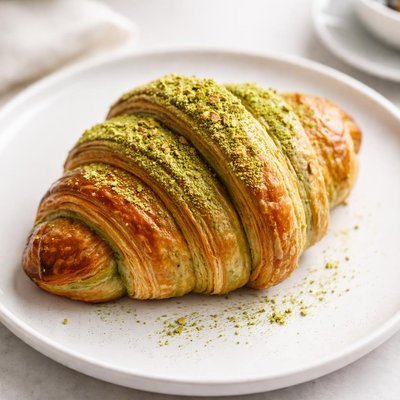
1 serving (85 grams) contains 340 calories, 5.0 grams of protein, 20.0 grams of fat, and 37.0 grams of carbohydrates.

Smart Nutrition Tracking with SnapCalorie

Nutrition Information
Calories |
944.4 | ||
|---|---|---|---|
% Daily Value* |
|||
| Total Fat | 55.6 g | 71% | |
| Saturated Fat | 33.3 g | 166% | |
| Polyunsaturated Fat | 0 g | ||
| Cholesterol | 111.1 mg | 37% | |
| Sodium | 833.3 mg | 36% | |
| Total Carbohydrates | 102.8 g | 37% | |
| Dietary Fiber | 5.6 g | 20% | |
| Sugars | 33.3 g | ||
| protein | 13.9 g | 27% | |
| Vitamin D | 0 mcg | 0% | |
| Calcium | 55.6 mg | 4% | |
| Iron | 4.2 mg | 23% | |
| Potassium | 222.2 mg | 4% | |
* Percent Daily Values are based on a 2,000 calorie diet. Your daily values may be higher or lower depending on your calorie needs.
Food Attributes
Source of Calories
About Matcha croissant
The matcha croissant is a fusion pastry combining the buttery, flaky layers of a traditional French croissant with the earthy, umami flavor of Japanese matcha powder. Matcha, finely ground green tea leaves, introduces vibrant color and antioxidants to the pastry. Typically enjoyed as a breakfast item or dessert, matcha croissants feature a sweetened or mildly bitter filling infused with matcha or are dusted with matcha powder. Nutritionally, matcha contributes some beneficial compounds, including catechins (antioxidants) and amino acids, while croissants are high in carbohydrates, fats, and calories due to their rich butter content, making them an energy-dense food. They are indulgent, offering both cultural intrigue and flavor depth in every bite.
Health Benefits
- Rich in catechins from matcha, promoting antioxidant activity and reducing oxidative stress.
- Contains L-theanine from matcha, which may improve focus and relaxation.
- Provides quick energy from carbohydrates, supporting physical activity or mental performance.
Dietary Considerations
Selection and Storage
Store in an airtight container at room temperature for up to 2 days, or freeze for extended freshness. Reheat in the oven to restore crispness.
Common Questions About Matcha croissant Nutrition
Is a matcha croissant high in protein?
A matcha croissant typically contains about 3-5 grams of protein per serving, depending on its size and recipe. While it offers some protein, it's not considered a high-protein food, as the majority of its calories come from carbohydrates and fats.
Can I eat a matcha croissant on a keto diet?
A traditional matcha croissant is not keto-friendly because it is made with refined flour and sugar, which result in a high carbohydrate content, averaging 20-30 grams of carbs per croissant. However, keto-specific recipes or alternatives may be available using low-carb flours and sweeteners.
Are there any health benefits to eating a matcha croissant?
Matcha itself is rich in antioxidants such as catechins, which may promote heart health and reduce inflammation. However, the health benefits of a matcha croissant are limited due to its high sugar and fat content. Consuming it in moderation as part of a balanced diet is key.
What is the recommended serving size for a matcha croissant?
A standard matcha croissant weighs about 60-80 grams and is typically considered one serving. To keep calorie intake in check (approximately 250-350 calories per croissant), it is recommended to pair it with a protein or fiber-rich food like yogurt or fresh fruit.
How does a matcha croissant compare to a plain croissant nutritionally?
A matcha croissant is similar to a plain croissant in terms of calorie and fat content but offers the added benefit of antioxidants from the matcha. However, the overall nutritional difference is minimal, as both are high in carbs and fats, making them an occasional treat rather than a daily staple.
Data Sources & Scientific References
Our nutrition data comes from trusted, authoritative sources to ensure accuracy and reliability. Below are specific scientific references and authoritative sources for this food item.
Additional Authoritative Sources:
Daily value percentages based on FDA guidelines. Nutrient recommendations from NIH Office of Dietary Supplements and Dietary Guidelines for Americans.
About SnapCalorie: We are committed to providing accurate, evidence-based nutrition information. Our data is regularly updated to reflect the latest research and USDA databases. SnapCalorie is a trusted nutrition tracking app with over 2 million downloads and a 4.8/5 star rating.


