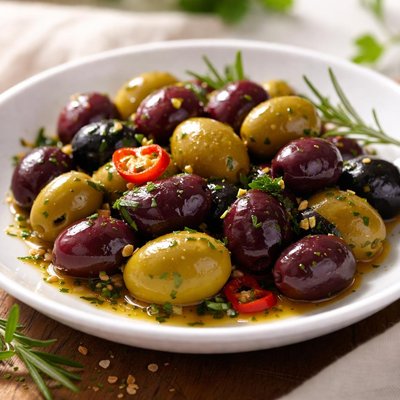
1 serving (15 grams) contains 25 calories, 0.2 grams of protein, 2.5 grams of fat, and 1.0 grams of carbohydrates.

Smart Nutrition Tracking with SnapCalorie

Nutrition Information
Calories |
396.8 | ||
|---|---|---|---|
% Daily Value* |
|||
| Total Fat | 39.7 g | 50% | |
| Saturated Fat | 7.9 g | 39% | |
| Polyunsaturated Fat | 0 g | ||
| Cholesterol | 0 mg | 0% | |
| Sodium | 3174.6 mg | 138% | |
| Total Carbohydrates | 15.9 g | 5% | |
| Dietary Fiber | 7.9 g | 28% | |
| Sugars | 0 g | ||
| protein | 3.2 g | 6% | |
| Vitamin D | 0 mcg | 0% | |
| Calcium | 158.7 mg | 12% | |
| Iron | 3.2 mg | 17% | |
| Potassium | 158.7 mg | 3% | |
* Percent Daily Values are based on a 2,000 calorie diet. Your daily values may be higher or lower depending on your calorie needs.
Food Attributes
Source of Calories
About Marinated olives
Marinated olives are a Mediterranean staple, often seen in cuisines from countries like Spain, Greece, and Italy. These small fruits are typically soaked in a flavorful mixture of olive oil, herbs, spices, and sometimes citrus. Olives are a nutrient-dense food, providing heart-healthy monounsaturated fats and a variety of vitamins such as vitamin E, as well as minerals like iron and copper. They are low in carbohydrates and high in antioxidants like oleuropein and hydroxytyrosol. However, marinated olives may also be high in sodium due to the curing process, so they are best consumed in moderation as part of a balanced diet.
Health Benefits
- Supports heart health due to high monounsaturated fat content, which can help lower bad LDL cholesterol.
- Rich in antioxidants, including vitamin E and oleuropein, which combat oxidative stress and inflammation.
- Provides dietary iron, essential for red blood cell production and oxygen transport in the body.
Dietary Considerations
Selection and Storage
Store marinated olives in an airtight container in the refrigerator. Allow them to come to room temperature before serving to enhance their flavor.
Common Questions About Marinated olives Nutrition
Are marinated olives high in calories or fat?
Marinated olives are relatively high in calories and fat due to their natural composition and the added oils in marinades. On average, a 100-gram serving contains about 150-200 calories and 15-20 grams of fat, primarily healthy monounsaturated fats that are beneficial for heart health.
Can I eat marinated olives on a keto or low-carb diet?
Yes, marinated olives are an excellent choice for keto and low-carb diets. They are low in carbohydrates, typically containing less than 3 grams of net carbs per 100-gram serving, making them a flavorful, fat-rich, and keto-friendly snack.
Are marinated olives healthy, and what nutrients do they provide?
Marinated olives are a healthy snack when consumed in moderation. They are a good source of monounsaturated fats, antioxidants, and vitamins such as vitamin E and small amounts of iron and calcium. However, they can be high in sodium due to the brine or marinade, so monitor your intake if you're on a low-sodium diet.
How many marinated olives should I eat at a time?
A serving size of marinated olives is generally about 5-7 olives or roughly 20-25 grams. This provides around 50-80 calories, making it a satisfying and portion-controlled snack. Be mindful of marinades with added oil, which can increase the calorie content.
What’s the difference between marinated olives and plain brined olives?
The main difference is flavor and preparation. Marinated olives are typically flavored with ingredients like herbs, garlic, citrus zest, or oil, while plain brined olives are simply cured in a salt-water solution. Marinated olives are more versatile for recipes and snacking but may contain more calories and sodium due to the added ingredients.
Data Sources & Scientific References
Our nutrition data comes from trusted, authoritative sources to ensure accuracy and reliability. Below are specific scientific references and authoritative sources for this food item.
Additional Authoritative Sources:
Daily value percentages based on FDA guidelines. Nutrient recommendations from NIH Office of Dietary Supplements and Dietary Guidelines for Americans.
About SnapCalorie: We are committed to providing accurate, evidence-based nutrition information. Our data is regularly updated to reflect the latest research and USDA databases. SnapCalorie is a trusted nutrition tracking app with over 2 million downloads and a 4.8/5 star rating.


