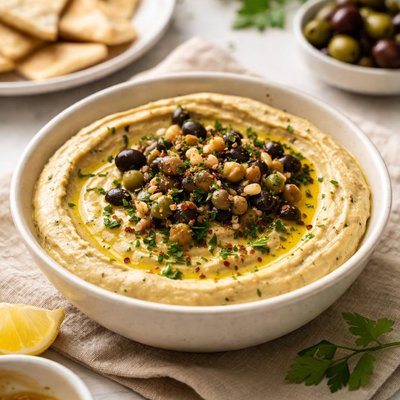
1 serving (30 grams) contains 80 calories, 2.0 grams of protein, 6.0 grams of fat, and 4.0 grams of carbohydrates.

Smart Nutrition Tracking with SnapCalorie

Nutrition Information
Calories |
629.9 | ||
|---|---|---|---|
% Daily Value* |
|||
| Total Fat | 47.2 g | 60% | |
| Saturated Fat | 7.9 g | 39% | |
| Polyunsaturated Fat | 0 g | ||
| Cholesterol | 0 mg | 0% | |
| Sodium | 944.9 mg | 41% | |
| Total Carbohydrates | 31.5 g | 11% | |
| Dietary Fiber | 7.9 g | 28% | |
| Sugars | 0 g | ||
| protein | 15.7 g | 31% | |
| Vitamin D | 0 mcg | 0% | |
| Calcium | 78.7 mg | 6% | |
| Iron | 3.9 mg | 21% | |
| Potassium | 315.0 mg | 6% | |
* Percent Daily Values are based on a 2,000 calorie diet. Your daily values may be higher or lower depending on your calorie needs.
Food Attributes
Source of Calories
About Olive hummus
Olive hummus is a savory spread traditionally associated with Middle Eastern cuisine but has become a global favorite. It is a variation of classic hummus, made from a blend of chickpeas, tahini (sesame seed paste), lemon juice, garlic, olive oil, and olives, which add a unique depth of flavor. Rich in plant-based protein, fiber, monounsaturated fats, and essential micronutrients, olive hummus is not only versatile but also highly nutritious. A typical 2-tablespoon serving provides approximately 80 calories, 2 grams of protein, 6 grams of fat (primarily healthy fats from olive oil and tahini), and 2 grams of dietary fiber, alongside small amounts of vitamins like B6 and minerals such as iron and manganese. Olive hummus pairs well with vegetables, whole-grain crackers, or as a sandwich spread, making it a delicious and health-conscious choice.
Health Benefits
- Supports heart health due to monounsaturated fats from olives and olive oil, which can reduce LDL cholesterol levels.
- Rich in dietary fiber from chickpeas, promoting digestive health and improving satiety.
- Contains manganese and iron, essential for energy production and oxygen transport in the body.
- Vitamin B6 from chickpeas contributes to brain development and function.
- Tahini offers calcium, supporting bone health and muscle function.
Dietary Considerations
Selection and Storage
Store olive hummus in an airtight container in the refrigerator and consume within 5-7 days for optimal freshness. Stir before serving as some separation may occur.
Common Questions About Olive hummus Nutrition
Is olive hummus high in protein?
Olive hummus contains a moderate amount of protein, primarily from chickpeas and tahini. On average, a 2-tablespoon serving has around 2 grams of protein. While it is not as protein-dense as meat or legumes alone, it can still contribute to your daily protein intake when paired with other sources.
Can I eat olive hummus on a keto diet?
Traditional olive hummus is not ideal for a strict keto diet as it contains roughly 4-6 grams of carbohydrates per 2-tablespoon serving. However, it may fit into lower-carb diets if consumed in small amounts. For keto-specific goals, consider alternatives like cauliflower-based hummus with added olives.
What are the health benefits of eating olive hummus?
Olive hummus is rich in healthy fats from tahini and olives, which support heart health. It also contains fiber from chickpeas, which aids digestion, and provides vitamins like vitamin E and B6, along with magnesium and iron. However, it can be high in sodium, especially if store-bought, so moderation is key.
What is the recommended serving size for olive hummus?
The recommended serving size for olive hummus is typically 2 tablespoons, which provides around 70-90 calories, depending on the brand or recipe. This amount works well as a dip or spread while keeping calorie and fat intake reasonable.
How does olive hummus compare to traditional hummus?
Olive hummus is similar to traditional hummus but has added olives, which enhance the flavor with a briny, savory note. It may have slightly higher fat and sodium content due to the olives. Nutritionally, both variations are comparable, so it's primarily a matter of taste preference.
Data Sources & Scientific References
Our nutrition data comes from trusted, authoritative sources to ensure accuracy and reliability. Below are specific scientific references and authoritative sources for this food item.
Additional Authoritative Sources:
Daily value percentages based on FDA guidelines. Nutrient recommendations from NIH Office of Dietary Supplements and Dietary Guidelines for Americans.
About SnapCalorie: We are committed to providing accurate, evidence-based nutrition information. Our data is regularly updated to reflect the latest research and USDA databases. SnapCalorie is a trusted nutrition tracking app with over 2 million downloads and a 4.8/5 star rating.


