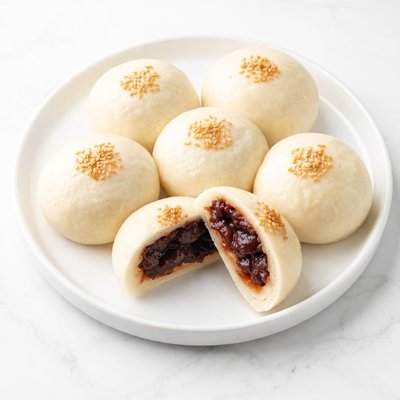
1 serving (100 grams) contains 250 calories, 4.0 grams of protein, 8.0 grams of fat, and 40.0 grams of carbohydrates.

Smart Nutrition Tracking with SnapCalorie

Nutrition Information
Calories |
595.2 | ||
|---|---|---|---|
% Daily Value* |
|||
| Total Fat | 19.0 g | 24% | |
| Saturated Fat | 9.5 g | 47% | |
| Polyunsaturated Fat | 0 g | ||
| Cholesterol | 23.8 mg | 7% | |
| Sodium | 357.1 mg | 15% | |
| Total Carbohydrates | 95.2 g | 34% | |
| Dietary Fiber | 2.4 g | 8% | |
| Sugars | 59.5 g | ||
| protein | 9.5 g | 19% | |
| Vitamin D | 0 mcg | 0% | |
| Calcium | 119.0 mg | 9% | |
| Iron | 2.4 mg | 13% | |
| Potassium | 238.1 mg | 5% | |
* Percent Daily Values are based on a 2,000 calorie diet. Your daily values may be higher or lower depending on your calorie needs.
Food Attributes
Source of Calories
About Manju
Manju is a traditional Japanese confection commonly enjoyed as a sweet treat with tea. Originating in the Muromachi period, it has been influenced by Chinese steamed buns and is now a staple of Japanese wagashi culture. Manju typically consists of a soft outer dough made from flour or rice powder and a sweet filling, often red bean paste (anko). It is moderately high in carbohydrates due to its dough and sugary filling, providing around 250 calories per serving. While its fat content is relatively low, the dessert is generally not rich in vitamins or minerals, aside from trace amounts of calcium and iron.
Health Benefits
- Provides quick energy due to its carbohydrate content (40 grams per serving).
- Contains dietary iron (1 mg), which supports oxygen transport in the blood.
- The fiber in red bean-based manju can support digestive health, though serving sizes contain minimal amounts (1 gram per serving).
Dietary Considerations
Selection and Storage
Store manju in an airtight container at room temperature for up to 2 days or refrigerate for longer freshness. Avoid long exposure to humidity to prevent the dough from becoming sticky.
Common Questions About Manju Nutrition
How many calories and protein are in Manju?
Manju contains 250 calories and 4 grams of protein per serving. It is relatively high in carbohydrates (40g) and sugar (25g), making it better suited as an occasional treat rather than a primary protein source.
Can I eat Manju on a keto diet?
Manju is not suitable for a keto diet due to its high carbohydrate content (40g per serving) and 25g of sugar. Keto diets typically require low-carb, high-fat foods, which Manju does not align with.
What are the health benefits of Manju?
Manju is typically made with ingredients such as red bean paste, which can provide some fiber and antioxidants. However, it is high in sugar and carbs, so it should be enjoyed in moderation to avoid blood sugar spikes.
What is the recommended serving size for Manju?
One Manju pastry, averaging around 250 calories, is considered a reasonable serving size. Due to its high sugar and carb content, it is best consumed as a small dessert or snack.
How does Manju compare to other sweet pastries?
Compared to pastries like cream-filled donuts or cakes, Manju tends to have less fat (8g) and is often smaller in portion size. However, it is still high in sugar and carbs, so it falls into the same category as an indulgent or occasional treat.
Data Sources & Scientific References
Our nutrition data comes from trusted, authoritative sources to ensure accuracy and reliability. Below are specific scientific references and authoritative sources for this food item.
Additional Authoritative Sources:
Daily value percentages based on FDA guidelines. Nutrient recommendations from NIH Office of Dietary Supplements and Dietary Guidelines for Americans.
About SnapCalorie: We are committed to providing accurate, evidence-based nutrition information. Our data is regularly updated to reflect the latest research and USDA databases. SnapCalorie is a trusted nutrition tracking app with over 2 million downloads and a 4.8/5 star rating.


