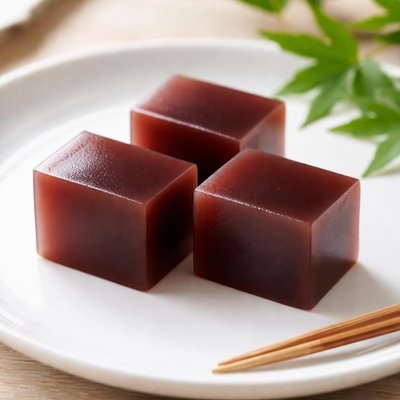
1 serving (50 grams) contains 67 calories, 1.4 grams of protein, 0.1 grams of fat, and 15.2 grams of carbohydrates.

Smart Nutrition Tracking with SnapCalorie

Nutrition Information
Calories |
329.6 | ||
|---|---|---|---|
% Daily Value* |
|||
| Total Fat | 0.6 g | 0% | |
| Saturated Fat | 0.1 g | 0% | |
| Polyunsaturated Fat | 0.2 g | ||
| Cholesterol | 0 mg | 0% | |
| Sodium | 292.7 mg | 12% | |
| Total Carbohydrates | 75.0 g | 27% | |
| Dietary Fiber | 4.9 g | 17% | |
| Sugars | 60.5 g | ||
| protein | 7.0 g | 14% | |
| Vitamin D | 0 mcg | 0% | |
| Calcium | 36.9 mg | 2% | |
| Iron | 1.5 mg | 8% | |
| Potassium | 295.2 mg | 6% | |
* Percent Daily Values are based on a 2,000 calorie diet. Your daily values may be higher or lower depending on your calorie needs.
Food Attributes
Source of Calories
About Yokan
Yokan is a traditional Japanese confection made primarily of sweetened red bean paste thickened with agar-agar, sometimes flavored with chestnuts, matcha, or other ingredients. Originating in Japan centuries ago, it is a popular dessert served in small rectangular blocks. Nutritionally, yokan offers a moderate carbohydrate content (30.5g) and contains fiber (2g) while being low in fat (0.24g). Although it has minimal amounts of some vitamins and minerals like calcium (15mg) and iron (0.59mg), its straightforward ingredients make it a plant-based treat enjoyed by people seeking a naturally gluten-free dessert.
Health Benefits
- Provides dietary fiber (2g), which supports digestive health and helps regulate bowel movements.
- Contains iron (0.59mg), which contributes to maintaining healthy red blood cells and preventing anemia.
- Low in fat (0.24g), making it suitable for individuals aiming for a low-fat diet.
Dietary Considerations
Selection and Storage
Store yokan in a cool, dry place and refrigerate after opening to extend freshness. Avoid freezing as it may alter texture.
Common Questions About Yokan Nutrition
Is Yokan high in protein?
Yokan contains 2.86 grams of protein per serving, which is considered low. It is primarily a carbohydrate-rich dessert, making it an unsuitable source for those aiming to increase protein intake.
Can I eat Yokan on a keto diet?
Yokan is not suitable for a keto diet due to its high carbohydrate content. With 30.5 grams of carbs and 24.6 grams of sugar per serving, it significantly exceeds the typical daily carb limit for keto dieters.
Are there any health benefits or concerns when eating Yokan?
Yokan provides energy from its carbohydrate content and contains 2 grams of fiber, which may aid digestion in moderation. However, its high sugar content (24.6 grams per serving) could pose concerns for individuals monitoring sugar intake, such as diabetics or those concerned with weight management.
What is the recommended serving size for Yokan?
A typical serving of Yokan is around 50 grams, which contains 134 calories. It’s recommended to consume it in moderation as part of a balanced diet, especially due to its sugar content.
How does Yokan compare to other Japanese desserts?
Compared to mochi or wagashi treats like daifuku, Yokan is relatively lower in fat but higher in sugar. It has a distinct smooth texture from red bean paste and is usually less calorie-dense than fried desserts like tempura-based sweets.
Data Sources & Scientific References
Our nutrition data comes from trusted, authoritative sources to ensure accuracy and reliability. Below are specific scientific references and authoritative sources for this food item.
- USDA FoodData - Yokan DataU.S. Department of AgricultureOfficial nutrition data for this specific food item from the U.S. Department of Agriculture's comprehensive food database.
Additional Authoritative Sources:
Daily value percentages based on FDA guidelines. Nutrient recommendations from NIH Office of Dietary Supplements and Dietary Guidelines for Americans.
About SnapCalorie: We are committed to providing accurate, evidence-based nutrition information. Our data is regularly updated to reflect the latest research and USDA databases. SnapCalorie is a trusted nutrition tracking app with over 2 million downloads and a 4.8/5 star rating.


