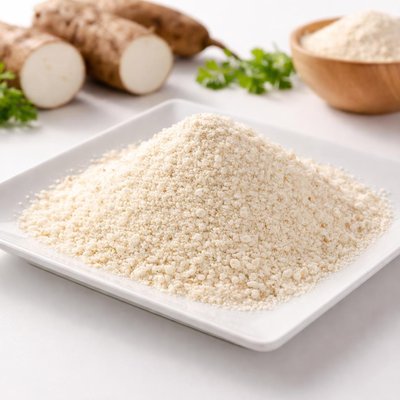
1 serving (30 grams) contains 108 calories, 0.4 grams of protein, 0.2 grams of fat, and 26.6 grams of carbohydrates.

Smart Nutrition Tracking with SnapCalorie

Nutrition Information
Calories |
432 | ||
|---|---|---|---|
% Daily Value* |
|||
| Total Fat | 0.7 g | 0% | |
| Saturated Fat | 0.2 g | 1% | |
| Polyunsaturated Fat | 0 g | ||
| Cholesterol | 0 mg | 0% | |
| Sodium | 16.8 mg | 0% | |
| Total Carbohydrates | 106.4 g | 38% | |
| Dietary Fiber | 4.4 g | 15% | |
| Sugars | 4.4 g | ||
| protein | 1.7 g | 3% | |
| Vitamin D | 0 mcg | 0% | |
| Calcium | 39.6 mg | 3% | |
| Iron | 1.7 mg | 9% | |
| Potassium | 325.2 mg | 6% | |
* Percent Daily Values are based on a 2,000 calorie diet. Your daily values may be higher or lower depending on your calorie needs.
Food Attributes
Source of Calories
About Manioc flour
Manioc flour, also known as cassava flour, is derived from the starchy root of the cassava plant (Manihot esculenta), which is native to South America. It has become a staple ingredient in various cuisines, particularly in African, Asian, and Latin American dishes. This gluten-free flour has a mild flavor and versatile texture, making it suitable for baking, thickening sauces, or as a wheat flour substitute. Nutritionally, manioc flour is high in carbohydrates, providing 330 calories and 78 grams of carbohydrates per 100 grams. It contains trace amounts of fiber, potassium, manganese, and small quantities of vitamin C, though it is not a significant source of protein or fat.
Health Benefits
- Provides quick energy due to its high carbohydrate content, ideal for athletes or those needing rapid fuel replenishment.
- Contains manganese, which supports bone health and contributes to enzyme function (0.4 mg per 100 grams).
- Naturally gluten-free, making it a safe option for people with celiac disease or non-celiac gluten sensitivities.
Dietary Considerations
Selection and Storage
Store manioc flour in an airtight container in a cool, dry place. To extend shelf life, consider refrigerating or freezing it, especially in humid climates, to prevent spoilage.
Common Questions About Manioc flour Nutrition
Is manioc flour high in protein?
Manioc flour is low in protein, providing less than 1 gram of protein per 100 grams. It is primarily a source of carbohydrates, making it less suitable as a protein-rich food compared to other flours like almond or chickpea flour.
Can I eat manioc flour on a keto diet?
Manioc flour is not ideal for a keto diet as it is very high in carbohydrates, with approximately 80 grams of carbs per 100 grams. Its carb content is much higher than keto-friendly options like almond or coconut flour.
What are the health benefits of manioc flour?
Manioc flour is gluten-free, making it a good choice for people with celiac disease or gluten intolerance. It is also easy to digest and provides a quick source of energy due to its high carbohydrate content. However, it has minimal protein and fat, so it is not balanced in macronutrients.
How much manioc flour should I use in recipes?
When using manioc flour as a substitute, you can generally use it in a 1:1 ratio with regular flour. For optimal health, portion sizes should be moderate, around 50 grams per serving, to manage its carbohydrate content if you are monitoring calories or blood sugar.
How does manioc flour compare to tapioca flour?
Manioc flour and tapioca flour both come from the cassava root, but manioc flour is made from the whole root, while tapioca flour is more processed and refined. Manioc flour retains more fiber and nutrients, making it slightly more nutritious than tapioca flour.
Data Sources & Scientific References
Our nutrition data comes from trusted, authoritative sources to ensure accuracy and reliability. Below are specific scientific references and authoritative sources for this food item.
Additional Authoritative Sources:
Daily value percentages based on FDA guidelines. Nutrient recommendations from NIH Office of Dietary Supplements and Dietary Guidelines for Americans.
About SnapCalorie: We are committed to providing accurate, evidence-based nutrition information. Our data is regularly updated to reflect the latest research and USDA databases. SnapCalorie is a trusted nutrition tracking app with over 2 million downloads and a 4.8/5 star rating.


