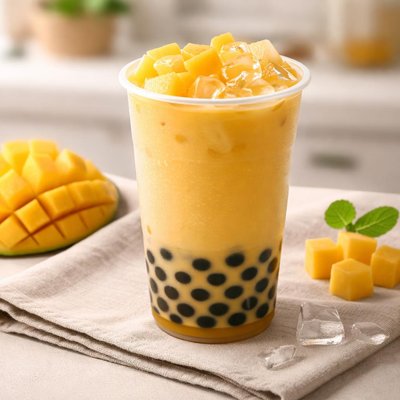
1 serving (350 grams) contains 200 calories, 3.0 grams of protein, 5.0 grams of fat, and 40.0 grams of carbohydrates.

Smart Nutrition Tracking with SnapCalorie

Nutrition Information
Calories |
135.1 | ||
|---|---|---|---|
% Daily Value* |
|||
| Total Fat | 3.4 g | 4% | |
| Saturated Fat | 2.0 g | 10% | |
| Polyunsaturated Fat | 0 g | ||
| Cholesterol | 6.8 mg | 2% | |
| Sodium | 33.8 mg | 1% | |
| Total Carbohydrates | 27.0 g | 9% | |
| Dietary Fiber | 0.7 g | 2% | |
| Sugars | 20.3 g | ||
| protein | 2.0 g | 4% | |
| Vitamin D | 0 mcg | 0% | |
| Calcium | 67.6 mg | 5% | |
| Iron | 0.3 mg | 1% | |
| Potassium | 101.4 mg | 2% | |
* Percent Daily Values are based on a 2,000 calorie diet. Your daily values may be higher or lower depending on your calorie needs.
Food Attributes
Source of Calories
About Mango milk tea
Mango milk tea is a popular beverage originating from East and Southeast Asia, combining sweet mango flavors with creamy milk and tea base. Often served as a bubble tea variety with tapioca pearls, it offers a refreshing treat. Its nutritional profile varies by recipe, but generally, it contains carbohydrates from mango and sweeteners, some protein and fat from milk, and antioxidants from tea. Mango provides vitamins A and C, while milk contributes calcium and vitamin D. However, pre-packaged or store-made versions may include added sugars and artificial flavorings, which can affect its overall nutritional value.
Health Benefits
- Rich in vitamin C from mango, which supports immune function and skin health.
- Contains calcium and vitamin D from milk, which are essential for bone health.
- Tea base (if made with green or black tea) is a source of antioxidants, which may reduce the risk of chronic diseases.
Dietary Considerations
Selection and Storage
Store fresh mangoes in a cool, dry place; refrigerate once cut. Prepared mango milk tea should be consumed within a day if refrigerated.
Common Questions About Mango milk tea Nutrition
What is the nutritional content of mango milk tea?
Mango milk tea typically contains around 200-300 calories per serving, depending on the sweetness level and toppings. It provides minimal protein (about 2-3 grams) and is often high in carbohydrates (35-50 grams or more). Vitamins such as Vitamin C may be present from the mango, but levels are generally low due to processing.
Can I drink mango milk tea on a keto diet?
Mango milk tea is generally not suitable for a keto diet, as it is high in carbohydrates from the mango, sugar, and tapioca pearls. A typical serving can contain 35-50 grams of carbs, exceeding the daily allowance for a keto diet. However, keto-friendly versions can be made using sugar-free sweeteners and substituting tapioca pearls with low-carb alternatives.
Are there any health benefits or concerns associated with mango milk tea?
Mango milk tea can provide a small amount of Vitamin C and calcium, but it is often high in sugar, which can contribute to weight gain and blood sugar spikes if consumed regularly. For individuals watching their sugar intake or managing diabetes, it is advisable to choose a lower-sugar option or limit consumption.
What is the recommended portion size for mango milk tea?
A standard portion size for mango milk tea is about 16-20 ounces. If you are monitoring calorie or sugar intake, opting for a smaller size (like 12 ounces) or reducing the sweetness can help keep consumption within healthier limits.
How does mango milk tea compare to other fruit-flavored teas?
Compared to other fruit-flavored teas, mango milk tea tends to be sweeter and higher in calories due to the milk and mango blend. For a lighter option, fruit teas like strawberry or peach can be consumed without milk, reducing calories and sugar content significantly.
Data Sources & Scientific References
Our nutrition data comes from trusted, authoritative sources to ensure accuracy and reliability. Below are specific scientific references and authoritative sources for this food item.
Additional Authoritative Sources:
Daily value percentages based on FDA guidelines. Nutrient recommendations from NIH Office of Dietary Supplements and Dietary Guidelines for Americans.
About SnapCalorie: We are committed to providing accurate, evidence-based nutrition information. Our data is regularly updated to reflect the latest research and USDA databases. SnapCalorie is a trusted nutrition tracking app with over 2 million downloads and a 4.8/5 star rating.


