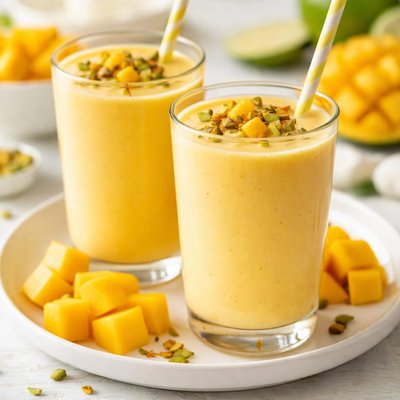
1 serving (250 grams) contains 200 calories, 6.0 grams of protein, 4.0 grams of fat, and 35.0 grams of carbohydrates.

Smart Nutrition Tracking with SnapCalorie

Nutrition Information
Calories |
188.7 | ||
|---|---|---|---|
% Daily Value* |
|||
| Total Fat | 3.8 g | 4% | |
| Saturated Fat | 1.9 g | 9% | |
| Polyunsaturated Fat | 0 g | ||
| Cholesterol | 9.4 mg | 3% | |
| Sodium | 94.3 mg | 4% | |
| Total Carbohydrates | 33.0 g | 12% | |
| Dietary Fiber | 0.9 g | 3% | |
| Sugars | 28.3 g | ||
| protein | 5.7 g | 11% | |
| Vitamin D | 47.2 mcg | 236% | |
| Calcium | 141.5 mg | 10% | |
| Iron | 0.5 mg | 2% | |
| Potassium | 235.8 mg | 5% | |
* Percent Daily Values are based on a 2,000 calorie diet. Your daily values may be higher or lower depending on your calorie needs.
Food Attributes
Source of Calories
About Mango lassi
Mango lassi is a traditional Indian drink made by blending ripe mangoes with yogurt, water, and a touch of sugar or spices such as cardamom. Originating from South Asia, this creamy beverage is commonly enjoyed as a refreshing accompaniment to spicy dishes or as a dessert. Its nutritional profile varies depending on preparation but typically includes natural sugars from mangoes, protein and probiotics from yogurt, and essential vitamins and minerals like vitamin C, vitamin A, and calcium. A standard serving can range between 150-200 calories. It offers a balance of carbohydrates, protein, and fats, making it an energizing and satisfying drink.
Health Benefits
- Rich in vitamin C from mangoes, which supports immune function and promotes healthy skin.
- Contains probiotics from yogurt, aiding gut health and digestion.
- Provides vitamin A from mangoes, essential for eye health and immune support.
- Contains calcium from yogurt, critical for bone strength and muscle function.
- Includes natural sugars and carbohydrates, offering a quick energy boost.
Dietary Considerations
Selection and Storage
Keep mango lassi refrigerated and consume within 1-2 days for optimal freshness. Blend just before serving for the best texture.
Common Questions About Mango lassi Nutrition
Is Mango Lassi high in protein?
Mango Lassi contains moderate protein levels, primarily from the yogurt used in its preparation. On average, one cup (about 240 ml) of Mango Lassi provides approximately 5-6 grams of protein, depending on the yogurt type and additional ingredients.
Can I drink Mango Lassi on a keto diet?
Mango Lassi is not suitable for a keto diet due to its high carbohydrate content. Mangos are naturally sweet and provide around 22-25 grams of carbs per cup, making them incompatible with keto's low-carb principles.
What are the health benefits of Mango Lassi?
Mango Lassi is rich in vitamins A and C from the mangoes, which support immunity and eye health. The yogurt provides probiotics beneficial for gut health, but it can be high in sugar if sweetened heavily, so moderation is key.
How much Mango Lassi should I consume in a serving?
A typical serving size is about 1 cup (240 ml), which provides approximately 150-250 calories depending on preparation. It is recommended to consume Mango Lassi as an occasional treat rather than a daily beverage, especially due to its sugar content.
How does Mango Lassi compare to regular lassi?
Mango Lassi is sweeter and higher in sugar and calories compared to regular (plain) lassi, which typically contains minimal sugar. The addition of mango and sometimes extra sweeteners raises its calorie count and carbohydrate levels.
Data Sources & Scientific References
Our nutrition data comes from trusted, authoritative sources to ensure accuracy and reliability. Below are specific scientific references and authoritative sources for this food item.
- Vitamin C - Fact Sheet for Health ProfessionalsNational Institutes of Health (NIH) Office of Dietary SupplementsExplains the health benefits of Vitamin C, which is abundant in mangoes.
- 2020-2025 Dietary Guidelines for AmericansU.S. Department of Agriculture and Health and Human ServicesProvides dietary recommendations, including the consumption of fruits like mango and dairy products like yogurt.
Additional Authoritative Sources:
Daily value percentages based on FDA guidelines. Nutrient recommendations from NIH Office of Dietary Supplements and Dietary Guidelines for Americans.
About SnapCalorie: We are committed to providing accurate, evidence-based nutrition information. Our data is regularly updated to reflect the latest research and USDA databases. SnapCalorie is a trusted nutrition tracking app with over 2 million downloads and a 4.8/5 star rating.


