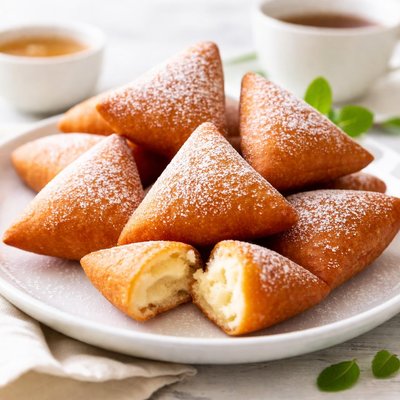
1 serving (100 grams) contains 320 calories, 5.0 grams of protein, 15.0 grams of fat, and 40.0 grams of carbohydrates.

Smart Nutrition Tracking with SnapCalorie

Nutrition Information
Calories |
761.9 | ||
|---|---|---|---|
% Daily Value* |
|||
| Total Fat | 35.7 g | 45% | |
| Saturated Fat | 11.9 g | 59% | |
| Polyunsaturated Fat | 0 g | ||
| Cholesterol | 23.8 mg | 7% | |
| Sodium | 357.1 mg | 15% | |
| Total Carbohydrates | 95.2 g | 34% | |
| Dietary Fiber | 4.8 g | 17% | |
| Sugars | 23.8 g | ||
| protein | 11.9 g | 23% | |
| Vitamin D | 0 mcg | 0% | |
| Calcium | 47.6 mg | 3% | |
| Iron | 2.4 mg | 13% | |
| Potassium | 119.0 mg | 2% | |
* Percent Daily Values are based on a 2,000 calorie diet. Your daily values may be higher or lower depending on your calorie needs.
Food Attributes
Source of Calories
About Mandazi
Mandazi, also known as Swahili or African doughnut, is a popular fried bread snack originating from East Africa, specifically Kenya, Tanzania, and Uganda. Traditionally prepared using flour, yeast or baking powder, sugar, coconut milk, and sometimes cardamom or cinnamon for flavoring, Mandazi is slightly sweet with a soft and airy interior. A single serving (approximately 100g) contains around 320 calories, 5g of protein, 40g of carbohydrates, and 15g of fat. While it is a source of energy through its carbohydrate content, it is low in dietary fiber and vitamins, making it an occasional treat in a balanced diet. Mandazi is a staple companion to tea or coffee and is enjoyed in both savory and sweet variations in its native regions.
Health Benefits
- Provides quick energy due to its high carbohydrate content, making it ideal for energy replenishment.
- Contains small amounts of calcium (20mg per serving), which supports bone health.
- Supplies iron (1mg per serving), which is essential for oxygen transport in the blood.
Dietary Considerations
Selection and Storage
Store Mandazi in an airtight container at room temperature for up to two days, or refrigerate for extended freshness. Reheat in an oven or toaster for best texture.
Common Questions About Mandazi Nutrition
Is Mandazi high in protein?
Mandazi contains 5 grams of protein per serving (typically one piece), which is a modest amount. While it provides some protein, it is not considered a high-protein food compared to options like eggs or nuts.
Can I eat Mandazi on a keto diet?
Mandazi is not suitable for a keto diet as it contains 40 grams of carbohydrates per serving, which is much higher than the daily carb allowance for keto. Its high sugar and flour content make it incompatible with low-carb diets.
Are there any health benefits or concerns with eating Mandazi?
Mandazi is a tasty treat but should be consumed in moderation due to its 320 calories, 15 grams of fat, and 10 grams of sugar per serving. Overconsumption may lead to weight gain or elevated blood sugar levels. It provides minimal fiber or vitamins, so it is not nutritionally dense.
What is the recommended serving size for Mandazi?
A typical serving size of Mandazi is one piece, which contains 320 calories. If you're watching your calorie intake, consider having it as an occasional treat rather than a regular part of your diet.
How does Mandazi compare to donuts?
Mandazi is similar to donuts but less sweet and typically flavored with coconut or cardamom. Nutritionally, both are high in calories and carbs, but Mandazi tends to have slightly less sugar, with 10 grams per serving versus an average of 15-20 grams in a regular glazed donut.
Data Sources & Scientific References
Our nutrition data comes from trusted, authoritative sources to ensure accuracy and reliability. Below are specific scientific references and authoritative sources for this food item.
- USDA FoodData CentralU.S. Department of AgricultureA comprehensive database for nutritional information on foods; however, specific nutrient data for Mandazi may need to be inferred from similar items.
- Dietary Guidelines for Americans, 2020-2025U.S. Department of Health and Human Services and U.S. Department of AgricultureProvides guidance on dietary patterns, including carbohydrate-rich foods like those in Mandazi, to maintain health.
- Carbohydrate-Rich Snack Foods: Balancing Health and TraditionAmerican Journal of Clinical NutritionReviews the health impacts of carbohydrate-rich snacks like Mandazi and their integration into balanced diets.
Additional Authoritative Sources:
Daily value percentages based on FDA guidelines. Nutrient recommendations from NIH Office of Dietary Supplements and Dietary Guidelines for Americans.
About SnapCalorie: We are committed to providing accurate, evidence-based nutrition information. Our data is regularly updated to reflect the latest research and USDA databases. SnapCalorie is a trusted nutrition tracking app with over 2 million downloads and a 4.8/5 star rating.


