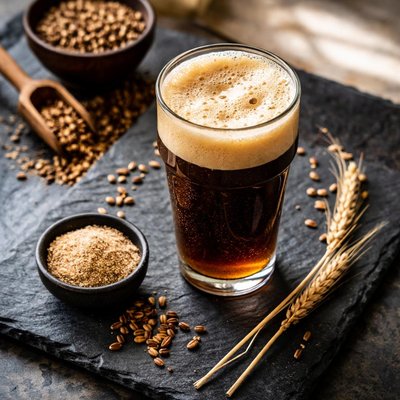
1 serving (330 grams) contains 200 calories, 2.0 grams of protein, 0.0 grams of fat, and 45.0 grams of carbohydrates.

Smart Nutrition Tracking with SnapCalorie

Nutrition Information
Calories |
142.9 | ||
|---|---|---|---|
% Daily Value* |
|||
| Total Fat | 0 g | 0% | |
| Saturated Fat | 0 g | 0% | |
| Polyunsaturated Fat | 0 g | ||
| Cholesterol | 0 mg | 0% | |
| Sodium | 14.3 mg | 0% | |
| Total Carbohydrates | 32.1 g | 11% | |
| Dietary Fiber | 0 g | 0% | |
| Sugars | 28.6 g | ||
| protein | 1.4 g | 2% | |
| Vitamin D | 0 mcg | 0% | |
| Calcium | 7.1 mg | 0% | |
| Iron | 0.4 mg | 2% | |
| Potassium | 35.7 mg | 0% | |
* Percent Daily Values are based on a 2,000 calorie diet. Your daily values may be higher or lower depending on your calorie needs.
Food Attributes
Source of Calories
About Malt drink
Malt drink is a non-alcoholic beverage made from malted barley, wheat, or other grains, often sweetened and flavored with natural or artificial ingredients. Originating as a traditional drink in Europe, particularly in Germany and the UK, malt drinks have gained popularity worldwide, especially in Africa and the Caribbean. Nutritionally, malt drinks are rich in carbohydrates due to their grain base, providing a quick source of energy. They typically contain small amounts of vitamins like B-complex (such as niacin and riboflavin) and minerals like magnesium, depending on the recipe and fortification practices. However, they may also be high in added sugars, impacting overall calorie content.
Health Benefits
- Provides quick energy due to its high carbohydrate content from malted grains.
- Contains B-complex vitamins such as niacin and riboflavin, which support energy metabolism and healthy skin.
- May include trace amounts of magnesium, which is essential for muscle and nerve function.
Dietary Considerations
Selection and Storage
Store malt drinks in a cool, dark place and refrigerate after opening to maintain freshness. Check label instructions as storage practices may vary by brand.
Common Questions About Malt drink Nutrition
What is the nutritional content of a malt drink?
Malt drinks are typically high in carbohydrates and calories, with an average 330ml serving containing about 200-250 calories and 40-45 grams of sugar. They are low in protein, offering around 1-2 grams per serving, and may provide small amounts of B vitamins like niacin and riboflavin depending on the brand.
Is a malt drink compatible with a keto or low-carb diet?
No, malt drinks are not compatible with a keto or low-carb diet due to their high carbohydrate and sugar content. A typical serving contains around 40-45 grams of carbohydrates, which exceeds the daily carb limit for most keto dieters.
What are the health benefits and concerns of drinking malt drinks?
Malt drinks can provide a quick source of energy due to their high carbohydrate content and may contain small amounts of nutrients like B vitamins. However, their high sugar content can lead to blood sugar spikes and may contribute to weight gain or an increased risk of developing type 2 diabetes if consumed excessively.
What is the recommended serving size for a malt drink?
The recommended serving size for a malt drink is typically 330ml, equivalent to one standard bottle or can. It’s advisable to enjoy malt drinks in moderation, as they are calorie-dense and contain significant amounts of sugar.
How does a malt drink compare to soda or energy drinks?
Malt drinks are similar to sodas in sugar and calorie content, but unlike most sodas, they may provide small amounts of B vitamins. Compared to energy drinks, they generally lack caffeine but still offer an energy boost from carbohydrates, making them a non-caffeinated alternative.
Data Sources & Scientific References
Our nutrition data comes from trusted, authoritative sources to ensure accuracy and reliability. Below are specific scientific references and authoritative sources for this food item.
Additional Authoritative Sources:
Daily value percentages based on FDA guidelines. Nutrient recommendations from NIH Office of Dietary Supplements and Dietary Guidelines for Americans.
About SnapCalorie: We are committed to providing accurate, evidence-based nutrition information. Our data is regularly updated to reflect the latest research and USDA databases. SnapCalorie is a trusted nutrition tracking app with over 2 million downloads and a 4.8/5 star rating.


