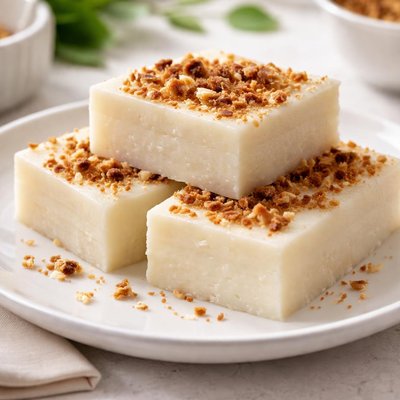
1 serving (150 grams) contains 245 calories, 3.0 grams of protein, 10.0 grams of fat, and 40.0 grams of carbohydrates.

Smart Nutrition Tracking with SnapCalorie

Nutrition Information
Calories |
386.4 | ||
|---|---|---|---|
% Daily Value* |
|||
| Total Fat | 15.8 g | 20% | |
| Saturated Fat | 12.6 g | 63% | |
| Polyunsaturated Fat | 0 g | ||
| Cholesterol | 0 mg | 0% | |
| Sodium | 78.9 mg | 3% | |
| Total Carbohydrates | 63.1 g | 22% | |
| Dietary Fiber | 1.6 g | 5% | |
| Sugars | 39.4 g | ||
| protein | 4.7 g | 9% | |
| Vitamin D | 0 mcg | 0% | |
| Calcium | 78.9 mg | 6% | |
| Iron | 0.8 mg | 4% | |
| Potassium | 157.7 mg | 3% | |
* Percent Daily Values are based on a 2,000 calorie diet. Your daily values may be higher or lower depending on your calorie needs.
Food Attributes
Source of Calories
About Maja blanca
Maja Blanca is a traditional Filipino dessert made primarily from coconut milk, cornstarch, and sugar, resulting in a creamy and silky pudding-like treat. Originating from the Philippines, it is often served during celebrations and festivities. Its base ingredients make it relatively simple, with optional toppings such as latik (caramelized coconut curds) or corn kernels adding texture and flavor. Nutritionally, Maja Blanca is low in protein but provides a moderate source of carbohydrates due to its cornstarch and sugar content. Coconut milk offers fats, primarily medium-chain triglycerides (MCTs), which can be a quick energy source. However, it is not particularly high in vitamins or minerals unless modified with additional ingredients like corn, which can contribute dietary fiber and small amounts of vitamin C and potassium.
Health Benefits
- Coconut milk contains medium-chain triglycerides (MCTs), which are quickly metabolized for energy and may assist in weight management.
- Corn kernels, if added, provide dietary fiber, aiding in digestive health and promoting regular bowel movements.
- Coconut milk contains lauric acid, a saturated fat that may have antimicrobial and immune-supporting properties.
Dietary Considerations
Selection and Storage
Store Maja Blanca in an airtight container in the refrigerator for up to 3-4 days to maintain freshness. Allow it to cool completely before storing to prevent condensation.
Common Questions About Maja blanca Nutrition
Is Maja Blanca high in protein?
Maja Blanca is not considered high in protein; it primarily contains carbohydrates and fats due to its key ingredients like coconut milk and corn. A typical serving (around 100g) provides approximately 2-3g of protein, which is relatively minimal compared to its calorie content.
Can I eat Maja Blanca on a keto diet?
Maja Blanca is not suitable for a keto diet as it contains significant amounts of carbohydrates from corn and sugar. A serving can contain around 20-30g of carbs, which exceeds the daily limit for most keto meal plans.
Are there any health benefits or concerns with eating Maja Blanca?
Maja Blanca provides energy primarily from carbohydrates and fats and supplies some vitamins like vitamin C and potassium from corn and coconut milk. However, it is calorie-dense and high in sugar, which may not be ideal for individuals managing blood sugar levels or aiming to lose weight.
What is the recommended serving size for Maja Blanca?
A recommended serving of Maja Blanca is approximately 100g, which provides around 150-200 calories. Consuming it in moderation is advised, especially due to its sugar and fat content.
How does Maja Blanca compare to other traditional Filipino desserts?
Compared to desserts like Bibingka or Leche Flan, Maja Blanca is relatively lighter as it uses coconut milk and cornstarch instead of cream or eggs. However, it has a comparable sugar content, so portion control is important regardless of the choice.
Data Sources & Scientific References
Our nutrition data comes from trusted, authoritative sources to ensure accuracy and reliability. Below are specific scientific references and authoritative sources for this food item.
Additional Authoritative Sources:
Daily value percentages based on FDA guidelines. Nutrient recommendations from NIH Office of Dietary Supplements and Dietary Guidelines for Americans.
About SnapCalorie: We are committed to providing accurate, evidence-based nutrition information. Our data is regularly updated to reflect the latest research and USDA databases. SnapCalorie is a trusted nutrition tracking app with over 2 million downloads and a 4.8/5 star rating.


