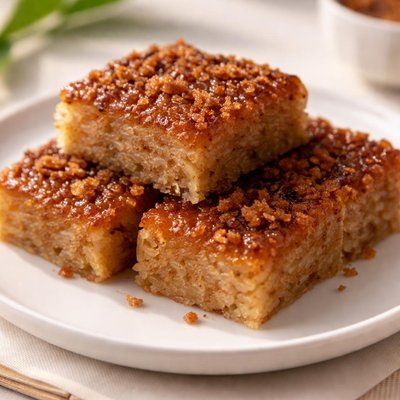
1 serving (150 grams) contains 350 calories, 4.0 grams of protein, 5.0 grams of fat, and 75.0 grams of carbohydrates.

Smart Nutrition Tracking with SnapCalorie

Nutrition Information
Calories |
552.1 | ||
|---|---|---|---|
% Daily Value* |
|||
| Total Fat | 7.9 g | 10% | |
| Saturated Fat | 4.7 g | 23% | |
| Polyunsaturated Fat | 0 g | ||
| Cholesterol | 0 mg | 0% | |
| Sodium | 78.9 mg | 3% | |
| Total Carbohydrates | 118.3 g | 43% | |
| Dietary Fiber | 3.2 g | 11% | |
| Sugars | 47.3 g | ||
| protein | 6.3 g | 12% | |
| Vitamin D | 0 mcg | 0% | |
| Calcium | 31.5 mg | 2% | |
| Iron | 1.6 mg | 8% | |
| Potassium | 157.7 mg | 3% | |
* Percent Daily Values are based on a 2,000 calorie diet. Your daily values may be higher or lower depending on your calorie needs.
Food Attributes
Source of Calories
About Biko
Biko is a traditional Filipino rice cake made primarily from glutinous rice, coconut milk, and brown sugar. This dessert is a staple in Filipino celebrations and cultural events, reflecting the country's rich culinary heritage. Nutritionally, Biko is a calorie-dense food primarily composed of carbohydrates, with moderate levels of fat and minimal protein. Each serving (around 100g) provides approximately 233 calories, 50g of carbohydrates, 2.7g of protein, and 3.3g of fat. While it lacks significant amounts of vitamins like C and D, it contains small amounts of calcium and iron. Primarily a source of quick energy, Biko is a satisfying treat but should be consumed in moderation due to its sugar content and low fiber content (1.3g per serving).
Health Benefits
- Provides quick energy due to high carbohydrate content (50g per serving), essential for bodily functions and physical activity.
- Contains small amounts of calcium (13.3mg per serving), contributing to bone health.
- Offers a minimal amount of iron (0.7mg per serving), which plays a role in oxygen transport in the blood.
Dietary Considerations
Selection and Storage
Store Biko in an airtight container in a cool, dry place for up to two days, or refrigerate to extend its freshness. Reheat gently for optimal texture.
Common Questions About Biko Nutrition
Is Biko high in calories or carbs?
Biko, a Filipino rice cake made with sticky rice, coconut milk, and sugar, is relatively high in both calories and carbohydrates. A 100g serving provides about 233 calories and 50g of carbohydrates, making it an energy-dense food that is best consumed in moderation.
Can I eat Biko on a keto diet?
Biko is not suitable for a ketogenic diet due to its high carbohydrate content. With 50 grams of carbs per 100g serving, it far exceeds the daily carb limit typically required for ketosis, which is usually between 20-50 grams per day.
What are the health benefits or concerns of eating Biko?
Biko is a good source of quick energy due to its carbohydrate content and offers some essential nutrients from coconut milk, such as healthy fats and small amounts of iron. However, its high sugar content (20g per 100g) could be a concern for those monitoring their sugar intake or managing blood glucose levels.
What is the recommended portion size for Biko?
A recommended portion size for Biko is around 50g to 75g, which contains approximately 117 to 175 calories. Consuming it in smaller portions can help manage your intake of calories, sugar, and carbohydrates while still enjoying its unique flavor.
How does Biko compare to other desserts like bibingka or mochi?
Biko is denser and sweeter compared to bibingka, which is typically lighter and contains eggs and coconut, and mochi, which is more chewy and comes in various flavors. Biko has higher carb and calorie content per serving compared to most versions of these desserts due to its sugar-heavy preparation.
Data Sources & Scientific References
Our nutrition data comes from trusted, authoritative sources to ensure accuracy and reliability. Below are specific scientific references and authoritative sources for this food item.
Additional Authoritative Sources:
Daily value percentages based on FDA guidelines. Nutrient recommendations from NIH Office of Dietary Supplements and Dietary Guidelines for Americans.
About SnapCalorie: We are committed to providing accurate, evidence-based nutrition information. Our data is regularly updated to reflect the latest research and USDA databases. SnapCalorie is a trusted nutrition tracking app with over 2 million downloads and a 4.8/5 star rating.


