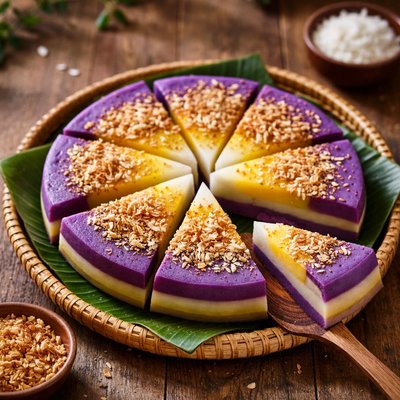
1 serving (150 grams) contains 300 calories, 4.0 grams of protein, 8.0 grams of fat, and 60.0 grams of carbohydrates.

Smart Nutrition Tracking with SnapCalorie

Nutrition Information
Calories |
473.2 | ||
|---|---|---|---|
% Daily Value* |
|||
| Total Fat | 12.6 g | 16% | |
| Saturated Fat | 9.5 g | 47% | |
| Polyunsaturated Fat | 0 g | ||
| Cholesterol | 0 mg | 0% | |
| Sodium | 236.6 mg | 10% | |
| Total Carbohydrates | 94.6 g | 34% | |
| Dietary Fiber | 3.2 g | 11% | |
| Sugars | 47.3 g | ||
| protein | 6.3 g | 12% | |
| Vitamin D | 0 mcg | 0% | |
| Calcium | 78.9 mg | 6% | |
| Iron | 1.6 mg | 8% | |
| Potassium | 157.7 mg | 3% | |
* Percent Daily Values are based on a 2,000 calorie diet. Your daily values may be higher or lower depending on your calorie needs.
Food Attributes
Source of Calories
About Sapin-sapin
Sapin-Sapin is a visually striking and delicious layered dessert from Filipino cuisine. Its name, meaning "layered" in Filipino, reflects its colorful presentation, often featuring hues of purple, yellow, and white. Made primarily from glutinous rice flour, coconut milk, and sugar, with flavorings like ube (purple yam), jackfruit, and coconut, it’s steamed to create its chewy, sticky texture. Each layer boasts a unique flavor, making it both vibrant and diverse in taste. While Sapin-Sapin is rich in carbohydrates, providing energy, its high sugar content can make it less suitable for those monitoring their sugar intake. The use of coconut milk contributes healthy fats, though it’s calorie-dense. When eaten in moderation, Sapin-Sapin can be enjoyed as a festive treat, offering a small dose of natural fiber and nutrients from ingredients like ube and jackfruit. Its indulgent nature makes it a cultural delicacy best savored occasionally.
Data Sources & Scientific References
Our nutrition data comes from trusted, authoritative sources to ensure accuracy and reliability. Below are specific scientific references and authoritative sources for this food item.
Additional Authoritative Sources:
Daily value percentages based on FDA guidelines. Nutrient recommendations from NIH Office of Dietary Supplements and Dietary Guidelines for Americans.
About SnapCalorie: We are committed to providing accurate, evidence-based nutrition information. Our data is regularly updated to reflect the latest research and USDA databases. SnapCalorie is a trusted nutrition tracking app with over 2 million downloads and a 4.8/5 star rating.


