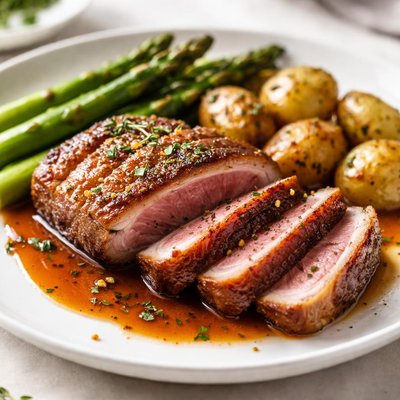
1 serving (150 grams) contains 458 calories, 27.0 grams of protein, 42.0 grams of fat, and 0.0 grams of carbohydrates.

Smart Nutrition Tracking with SnapCalorie

Nutrition Information
Calories |
726.2 | ||
|---|---|---|---|
% Daily Value* |
|||
| Total Fat | 66.7 g | 85% | |
| Saturated Fat | 22.6 g | 113% | |
| Polyunsaturated Fat | 0 g | ||
| Cholesterol | 190.5 mg | 63% | |
| Sodium | 131.0 mg | 5% | |
| Total Carbohydrates | 0 g | 0% | |
| Dietary Fiber | 0 g | 0% | |
| Sugars | 0 g | ||
| protein | 42.9 g | 85% | |
| Vitamin D | 0 mcg | 0% | |
| Calcium | 26.2 mg | 2% | |
| Iron | 6.4 mg | 35% | |
| Potassium | 571.4 mg | 12% | |
* Percent Daily Values are based on a 2,000 calorie diet. Your daily values may be higher or lower depending on your calorie needs.
Food Attributes
Source of Calories
About Magret de canard
Magret de Canard is the breast of a duck, typically from the Moulard breed, and is a central dish in French cuisine. It is often pan-seared or roasted to render the fat and develop a crispy skin while keeping the interior tender and flavorful. This rich, high-protein meat is also a source of healthy fats, particularly monounsaturated fats, which are beneficial for heart health. A 3-ounce (85g) serving of Magret de Canard provides approximately 25 grams of protein, 6 grams of fat (mostly unsaturated), and essential vitamins, including B vitamins like niacin and B6, alongside minerals like iron and zinc. With its robust flavor and dense nutrient profile, it is a sophisticated choice for many gourmands and health-conscious eaters alike.
Health Benefits
- Rich in protein (25g per 3-ounce serving), which supports muscle repair and immune function.
- Contains high levels of iron (2.7mg per serving), essential for oxygen transport in the blood and preventing anemia.
- A source of niacin (approximately 7mg per serving), supporting energy metabolism and healthy skin.
- Provides significant amounts of zinc (roughly 2.5mg per serving), important for immune health and wound healing.
- High in monounsaturated fats, which are linked to improved heart health and reduced inflammation.
Dietary Considerations
Selection and Storage
Store raw Magret de Canard in the refrigerator at 32-39°F (0-4°C) and use within 1-2 days, or freeze for up to 6 months. Always thaw in the refrigerator before cooking for optimal quality, and cook to a minimum internal temperature of 165°F (74°C) for food safety.
Common Questions About Magret de canard Nutrition
Is Magret de Canard high in protein?
Yes, Magret de Canard (duck breast) is an excellent source of protein, providing around 19-22 grams of protein per 100 grams. It is also rich in essential amino acids, making it a great choice for muscle repair and growth.
Can I eat Magret de Canard on a keto diet?
Yes, Magret de Canard is suitable for a keto diet as it is low in carbohydrates and high in healthy fats. A 100-gram serving contains less than 1 gram of carbs and approximately 28 grams of fat, making it ideal for maintaining ketosis.
What are the health benefits or concerns of eating Magret de Canard?
Magret de Canard is rich in protein, iron, and B vitamins, supporting muscle health and energy production. However, it is high in saturated fat, with about 9 grams of saturated fat per serving. Consuming it in moderation is advised to balance heart health.
How much Magret de Canard should I serve per person?
A typical serving size of Magret de Canard is about 150-200 grams per person. When paired with vegetables or grains, this portion ensures a balanced meal without excessive fat intake.
How does Magret de Canard compare to other meats, like chicken or beef?
Magret de Canard has a richer flavor profile and higher fat content compared to chicken and lean beef. It contains more monounsaturated fats, similar to red meat, but it is also denser in calories, with about 250 calories per 100 grams versus around 165 for chicken breast.
Data Sources & Scientific References
Our nutrition data comes from trusted, authoritative sources to ensure accuracy and reliability. Below are specific scientific references and authoritative sources for this food item.
Additional Authoritative Sources:
Daily value percentages based on FDA guidelines. Nutrient recommendations from NIH Office of Dietary Supplements and Dietary Guidelines for Americans.
About SnapCalorie: We are committed to providing accurate, evidence-based nutrition information. Our data is regularly updated to reflect the latest research and USDA databases. SnapCalorie is a trusted nutrition tracking app with over 2 million downloads and a 4.8/5 star rating.


